Wiki Maintenance - alexherrero/crickets GitHub Wiki
Wiki Maintenance keeps a repo's docs alive instead of letting them rot. It sets up a wiki from scratch, holds every page to a clear Diátaxis shape and your own writing voice, and watches the code so the docs move with it rather than falling behind. The idea is that a wiki fails when it's hand-tended and inconsistent, so this plugin makes the structure enforce itself, teaches the agent your voice from your own edits, and runs the upkeep safely enough to leave on. It stands alone — you can use it in any repo on its own — and it slots naturally into Development Lifecycle when that plugin is installed, updating pages as part of the normal loop.
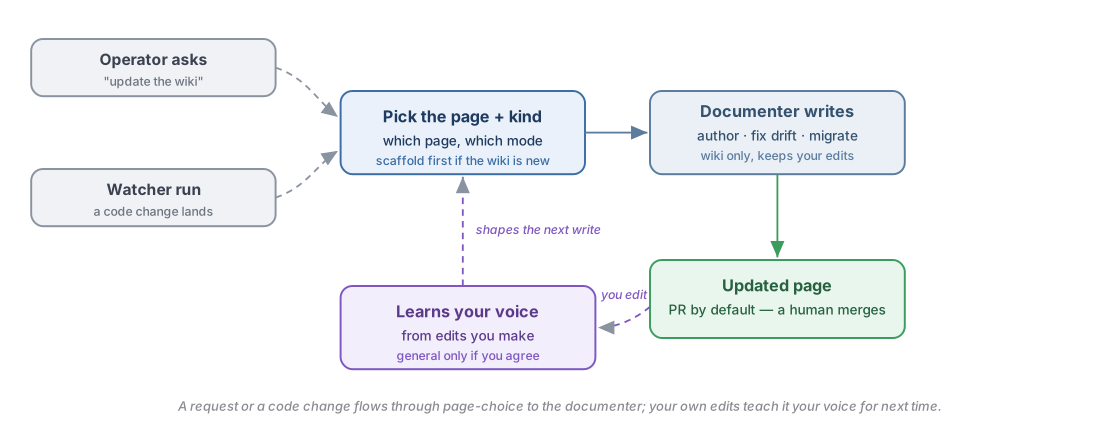
How the authoring flow runs — from a request or a code change through page-choice to the documenter, with your edits teaching it your voice:
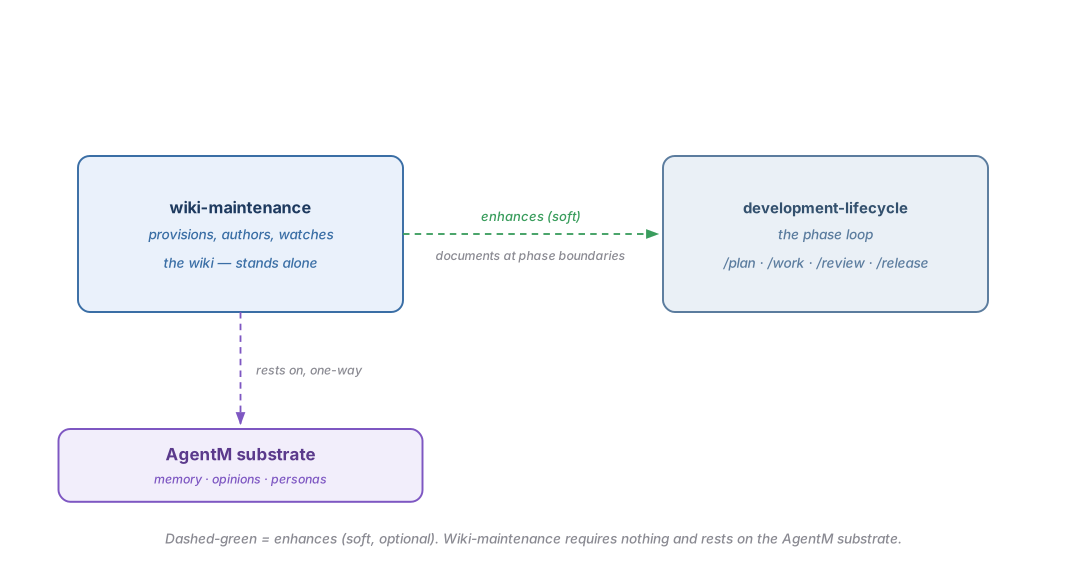
How it composes — standalone, resting on the AgentM substrate, softly enhancing Development Lifecycle when both are installed:
You start by scaffolding the wiki — the plugin lays down the folders, sidebars, and section landing pages, and it never overwrites anything that already exists, so it's safe to run on a wiki you've already begun. After that, a plain request like "update the wiki with what we just shipped" is enough: the plugin works out which page should change, then hands the actual writing to a documenter that only ever touches the wiki, keeps your hand edits intact, and never edits code. Behind that write sits the real discipline — picking the right kind of page, filling it to the template, fixing pages that have drifted, and, when you're moving an older wiki over, reshaping it into the standard layout. It also learns your voice: when you edit a page, it can pick up a lasting lesson from your change, and it checks with you before treating that lesson as a general rule.
For ongoing upkeep, a watcher can run on its own. Each run looks at what's changed in the code, decides whether it's worth documenting, and, when it is, sends the documenter to write the update — opening a pull request by default so a human still merges it. It's built to be run on a schedule without ever doubling up or dropping a change. And when Development Lifecycle is installed, the same documenter is called at the end of each phase, so the docs get refreshed as a normal part of the loop rather than as a separate chore.
| Direction | Plugin | How |
|---|---|---|
| Enhances (soft) | Development Lifecycle | Dispatches the documenter to author or repair pages at phase boundaries — only when both are installed (enhances: documentation). |
| Enhanced by (soft) | — | None. |
| Requires (hard) | — | None. Wiki Maintenance is fully standalone (requires: []). |
| Required by (hard) | — | None. |
Wiki Maintenance is opinionated, and it will not fit every project. Reach for something else if:
- You already run a wiki generator or docs pipeline you're happy with — this plugin wants to own
wiki/'s shape and voice, and it will fight a competing convention. - You don't want Diátaxis single-mode discipline. The structure is enforced, not suggested, and a free-form wiki will read as constant drift to the linter and the documenter.
- The change is small. Scaffolding a wiki, wiring the watcher, and learning your voice is overhead a one-page README or a quick hand edit doesn't need.
Each primitive links to the source that implements it.
| Primitive | Kind | What it does |
|---|---|---|
/wiki-init |
command | Scaffold a repo's wiki to the intent-group structure — idempotent, preview-first. |
/wiki-watch |
command | Run one watcher cycle; the thin entry for driving the watcher on a loop or cron. |
/recent-wiki-changes |
command | List wiki pages modified recently across registered repos. |
wiki-author |
skill | Operator-facing dispatcher — resolve the target page and hand the write to the documenter. |
diataxis-author |
skill | Author, repair, migrate, and classify pages; learn voice lessons from your edits. |
wiki-watch |
skill | The single-cycle watcher engine /wiki-watch delegates to. |
documenter |
sub-agent | The write-executor — creates, updates, and prunes pages; preserves human edits; never touches code. |
diataxis-evaluator |
sub-agent | Read-only — classifies a page whose Diátaxis mode is ambiguous. |
style-scope-evaluator |
sub-agent | Read-only — recommends where a captured voice lesson should live. |
The authoring primitives work out of the box; only the watcher is opt-in. wiki-watch stays a clean no-op until you enable it in two places:
-
Device toggle — set
wiki_watch.enabled: true(orwiki_watch_enabled: true) in<install-prefix>/.agentm-config.json. -
Per-repo marker — add a
<repo>/.harness/wiki-watch.jsonfile; its presence is the opt-in. It carrieswatch_sourcesanddispatch_mode(prdefault, ordirectfor a trusted repo).
Per-repo voice and structure overrides live in wiki/.diataxis-conventions.md. Global structure conventions come from the diataxis-*.md files in <vault>/standards/, and global voice lessons come from <vault>/standards/voice/. A vault from before the memory-root trims keeps them in the retired _always-load/ and _global/wiki-style/ folders, which are read as the fallback.
- Provision a repo's wiki · Run the wiki-watcher — the how-tos.
- Style-Learning Loop · Wiki Watch Config — the voice layer and the watcher config.
- Wiki design — why provisioning joins authoring, and the gate-distribution split.
- Development Lifecycle — the base plugin this enhances at phase boundaries.
- Antigravity Limitations — which surfaces are Claude-first.