Architecture - alexherrero/agentm GitHub Wiki
AgentM is the substrate an agent runs on: a durable memory engine with four pillars — Memory, Experience, Opinions, and Personas. It installs onto your host (Claude Code or Antigravity), the crickets toolkit composes its capabilities on top, and the memory persists to a storage backend you choose.
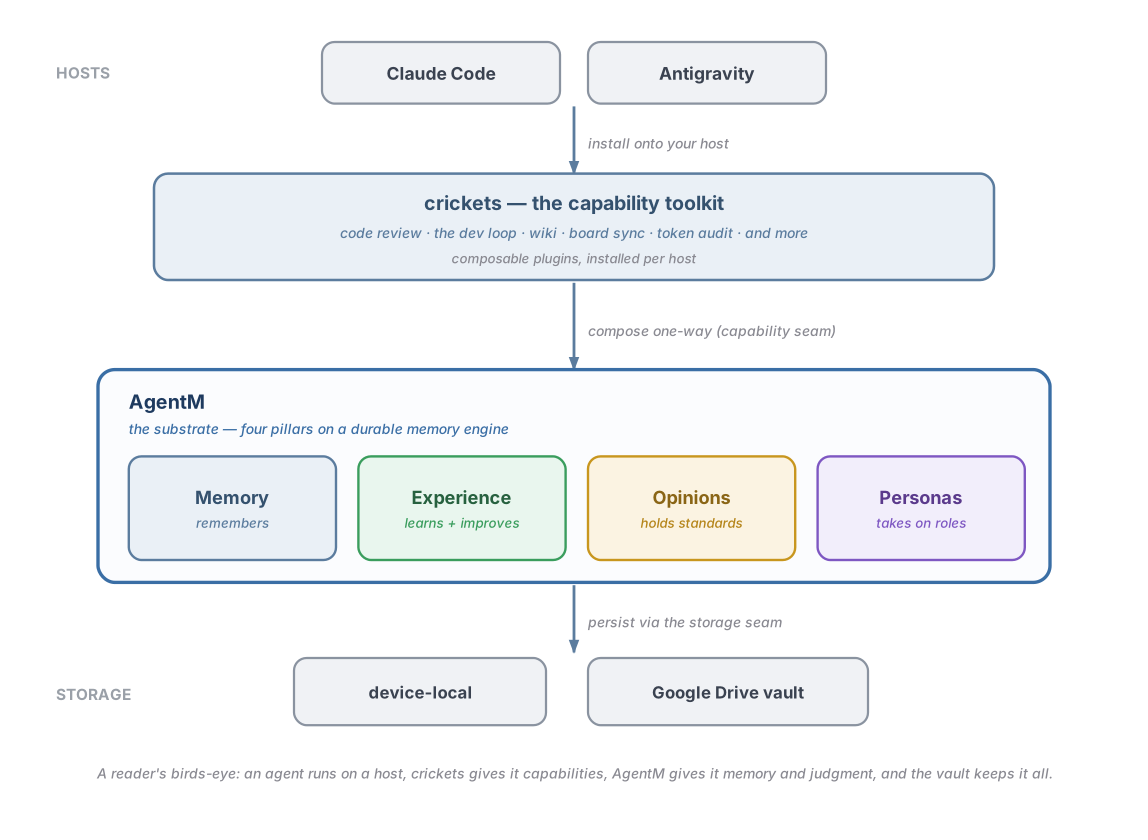
Everything inherits the shared Foundations, and the AgentM HLD is the parent that frames AgentM as four pillars on a memory engine. The designs under each pillar:
Memory — what AgentM remembers, and how it stores and recalls it.
- Memory System — how AgentM saves what it learns and pulls the right pieces back when they're useful.
-
Memory↔Storage Seam — the clean line between the engine and wherever your files actually live, plus the safeguards that keep writes from clobbering each other when devices sync.
- Vault Storage & Presentation — where your notes are kept and how they reach your other devices (proposed).
- Memory index — the local search index that keeps recall fast and lets it match on meaning, not just keywords.
Experience — how AgentM learns and improves between sessions.
- Experience & Dreaming — how it looks back on its work to learn from it, and reaches out on a schedule to learn new things (its "dreaming").
- Runner — the part that runs AgentM's scheduled background work, using your host's own scheduler.
- Goal contract — the rules for letting AgentM chase a goal on its own: what counts as done, and when to stop.
Opinions — the standards AgentM holds about how good work gets done.
- Opinions & Gates — the standards it holds (what done, good, and efficient mean) that any tool can ask for by name.
- Opinion registry — how a tool asks for one of those standards by name and gets back AgentM's current take.
- Model + effort routing — how it picks the right model and effort for a job, to run as cheaply as the work allows without dropping quality.
Personas — the roles AgentM steps into for a task.
-
Personas — the roles it can take on (Engineer, Reviewer, Planner, and more) and how each one is defined.
- Persona tier — what makes something a role rather than a tool: it borrows capabilities to do a job instead of owning them.
- Persona activation — how it picks a role and puts it on for the task at hand.
(The older MemoryVault design and its parts are being folded into the designs above; Designs has the full index.)
- AgentMemory — the four-pillar substrate, read top-down.
- Device-Wide Substrate — the per-device install that every project on the machine shares.
- Phases — the phase-gated workflow surface crickets' development-lifecycle plugin composes onto this substrate.
- Orchestration and Auto-Detection — how a session proposes and runs automatic work.
- Host adapters — how a single canonical spec reaches each supported host.
- Toolkit interface ↔ crickets — the seam with the sibling crickets toolkit.