Desktop components - ObjectVision/GeoDMS GitHub Wiki
User Guide GeoDMS GUI - desktop components
starting the application
Since GeoDMS 20.16.0 the GeoDMS GUI starts with an empty project: no configuration is loaded until you open one. Earlier versions reopened the configuration of the previous session, from GeoDMS 20.0.4 after a Reopen last configuration? confirmation dialog. That dialog is gone.
A configuration can be opened in the following ways:
- File > Open Configuration (Ctrl-O): select a configuration file.
- File > Recent configurations: pick one of the previously opened configurations.
- File > Reopen last Configuration (Alt-R): opens the configuration that was open last, i.e. the first entry of the Recent configurations list. With a configuration already loaded, the same menu option and shortcut reload that configuration (see Main menu).
- From a shortcut or the command line: pass the configuration file as argument, e.g.
GeoDmsGuiQt.exe C:/prj/myproject/cfg/main.dms. This is the recommended way to open a project you use often. Optionally add the full name of a tree item to activate after loading. - Automatically at start-up: activate Reopen last configuration at startup in the GUI Options dialog, section Startup. The GeoDMS then loads the configuration of the previous session again, without asking.
The splash screen is only shown when the GeoDMS starts empty. When a configuration is loaded at start-up -- from the command line or through the option above -- the main window is presented right away and the configuration is read behind it, so that any error message about the configuration is reported on top of a window that is already there.
desktop
After activating the application, the following window is presented:
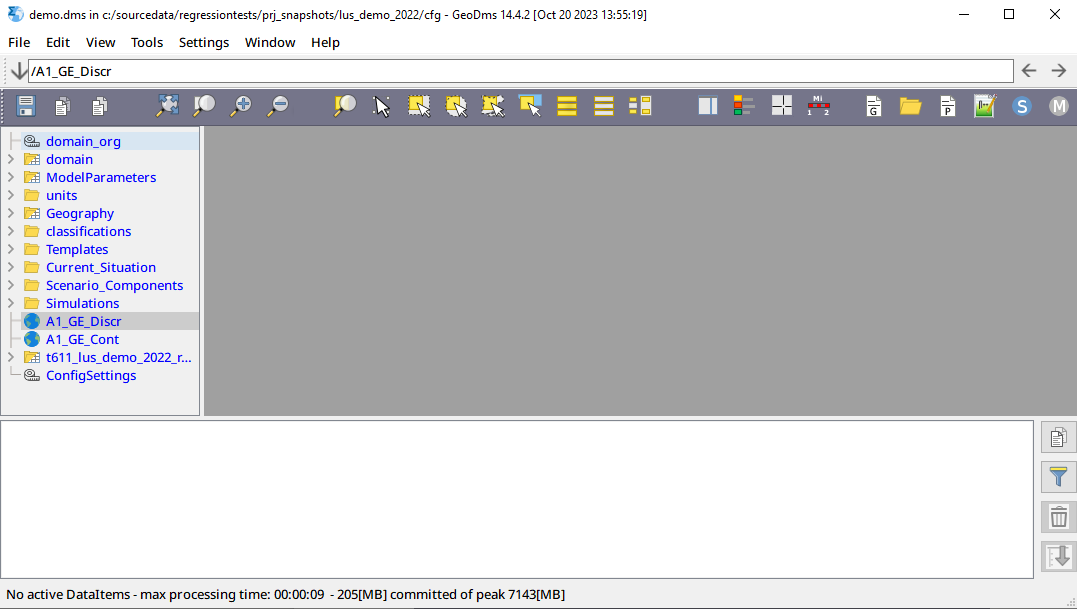 In this main window the following components can be distinguished:
titlebar

Titlebar with the opened configuration and GeoDMS version information
main menu

Menu bar with main menu options. For a description of all menu options, see section menu options
addressbar

Address bar with the active item. The full name of an item can be copied to or from this address bar.
Use the buttons with the left/right arrows to the right to go to the next or previous items. The arrow button down at the left can be used to get a list of all visited tree items.
toolbar

Toolbar with view type specific tools (see Map View or Table View for a description) and the tools to activate a detailpage.
treeview

The treeview with the first level items expanded and the active item indicated. See the section TreeView for more information.
detailpage
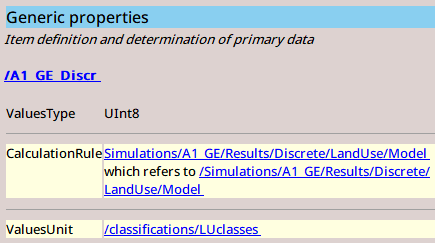
The Detail Pages are a set of tabs that present information on the selected Treeview item. These pages will be described in the section Detail pages
eventlog

This Eventlog provides progress information on reading, calculating or writing data and presents warnings and errors. More information can be found in the Eventlog section.
statusbar

The statusbar presents information on the number of items to be calculated, the memory usage and, if a map view is opened, the coordinates (X, Y and ZoomLevel) in the map.
Fixed versus toggleable components
The titlebar, main menu and statusbar are always visible. The other components can be made invisible (and visible again) from the menu option > View or with an Alt number keyboard combination.