1. Overview - papamac/PiGPIO GitHub Wiki
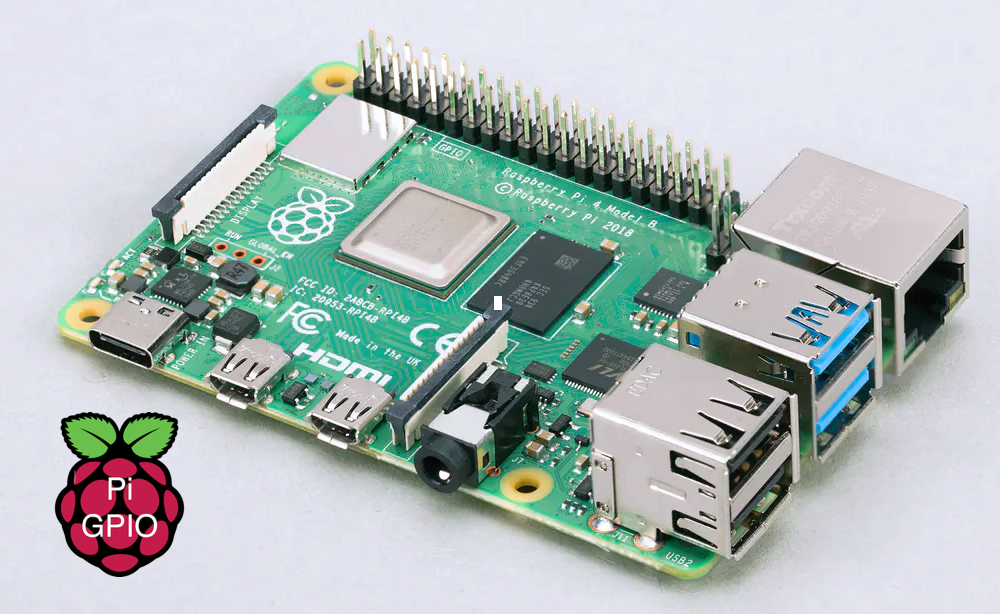
Raspberry Pi is a powerful credit card sized computer with extensive General Purpose Input/Output (GPIO) capabilities. The Pi GPIO plugin allows Indigo to access these capabilities using standard Indigo devices. Physical analog and digital input/output devices, hosted on the Pi, are linked to Indigo device objects, giving Indigo the ability to sense the real world and manage it in near real time.
The Pi GPIO plugin can poll input devices at a user-specified rate, or it can utilize interrupts/callbacks if available for the device. One or more pi hosts connect to the Indigo plugin via wired or wireless ethernet. Each pi host runs an rgpio server daemon that performs the physical I/O and manages the interface to the plugin.
Each pi has 40 header pins with 27 GPIO pins that are available for digital I/O or special functions, including Inter-Integrated Circuit (I2C) and Serial Peripheral Interface (SPI) buses. Excluding pins allocated to common special functions, there are 17 pins remaining for user Digital Input/Output (DIO). See GPIO and the 40-pin Header for more details.
In addition to the 17 user DIO pins, the Pi GPIO plugin supports many chip-level devices and add-on HAT (Hardware Attached on Top) boards. These chips and HATs are connected using the pi's special purpose GPIO pins (I2C and SPI busses). They include devices with additional DIO pins, Analog to Digital Converter (ADC) devices, Digital to Analog Converter (DAC) devices, and Relay (RLY) devices. Please see the latest list of supported devices in the Pi GPIO wiki.
The following table lists the top level requirements for the Pi GPIO plugin:
| Requirement | Description |
|---|---|
| Indigo | Version 2022.1 or later |
| Python Library (API) | Official (3.X) |
| Macintosh computer for pi configuration |
Large display preferred SD card reader |
| Raspberry Pi | Model 4 or 5 with 1 GB RAM or more microSD card with 16 GB or more, U3 / A2 rated 5V USB-C power adapter for the rpi model chosen |
| Local Network | Wired network preferred (1000 Mb/sec) Wireless OK if 100 Mb/sec or greater |
| Internet | At least 25 Mb/sec for software downloads |
| Hardware Interfaces | Raspberry Pi GPIO pins Pi I/O devices and HATs from the supported devices list |
The Pi GPIO plugin fully supports the new Raspberry Pi 5. It utilizes the latest Raspberry Pi OS based on the Debian bookworm distribution. Access to the GPIO pins is provided by the rgpio daemon in the lg archive written by joan2937.
This Pi GPIO wiki provides details on the design, configuration, and use of the plugin and its Raspberry Pi host. See additional sections as follows:
The wiki Design section is incomplete in the current version. It will be augmented in the future as time permits. There is, however, ample documentation in the remaining sections to facilitate full use of the plugin.
You can download the latest version of the plugin at the Indigo Plugin Store. Your bug reports, comments and suggestions will be greatly appreciated. Please post them on papamac's Pi GPIO user forum.