Hardware - nh-finescale/ln2block GitHub Wiki
ln2block started as a way to send block messages to and from a SMF switch board between block enabled station. From those versions (1 and 2) it has evolved into a board that contains the entire fremo-block logic stack and support a number of different switch panels
Overview
| Board | Image | Main feature | link to board | AT Mega8 | Arduino Nano | ISP* | USB* | SMD | THT | I2C | DIN |
|---|---|---|---|---|---|---|---|---|---|---|---|
| V6 | 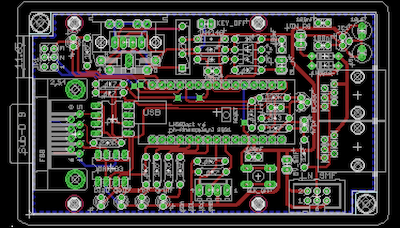 |
newest version | v6 | X | X | X | X | X | |||
| V5 | 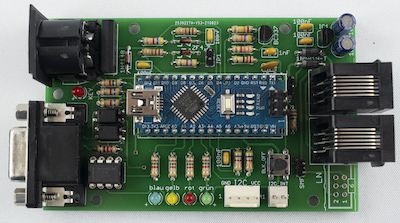 |
USB programmable | v5 | X | X | X | X | X | |||
| V4 | 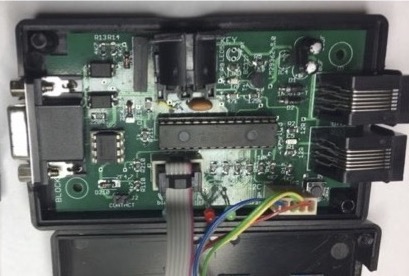 |
last SMD, ISP programming | v4 | X | X | X | X | X | |||
| V3 | 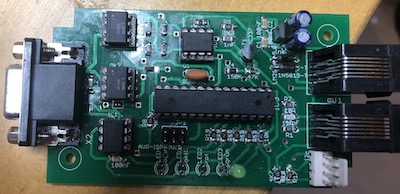 |
no DIN | v3 | X | X | X | X | ||||
| V1-2 | 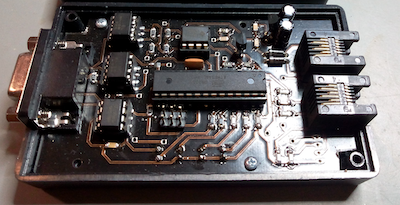 |
no DIN | v2 | X | X | X | X |
- ISP: Programming with Arduino and ISP programmer
- USB: Programming with Arduino and USB cable
Current versions
V5
Since V5 the board has been redesigned so that is built mostly with THT parts, so that almost anybody can build the boards. Also, the processor has been changed from a ATMEGA chip to an Arduino Nano, thereby simplifying programming the processor. The V5 contains a number of additional features from the basic hardware from v1-v4:
- Arduino Nano on 16MHz instead of 8MHz
- I2C interface for extra ports and a status OLED (supported in current software)
- additional SMF internal Loconet connector so it can be built in under a SMF switch board
- board can be powered by railsync or 9-15V on Loconet cables or by 5V from the SMF lines
- DIN connector for key interface. See explanation at Schlüsselsperre on fremo-block
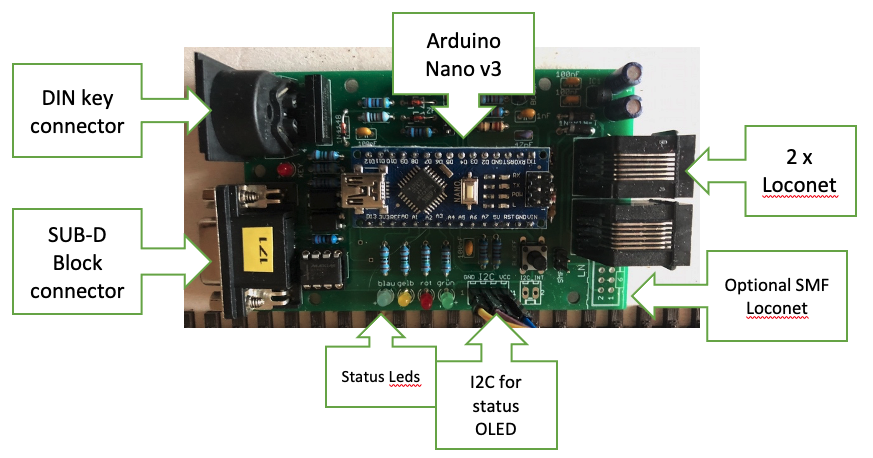
V6
For V6 the board has been redesigned (again) to be able to fit in the Strapubox SP2000 housing again like all versions before V5. This has meant moving the DIN plug to the side of the board. Functionality has remained the same compared to V5, some small hw changes. Software written for V5 requires no changes.

Older Versions
Boards v1 and v2 were designed to send plain block messages. For an image see here.

V3-v4 were designed so that a full fremo-block logic stack could be run on the board. V4 also included the key interface and I2C. V4 is fully functional with the current software, but superseded by V5/6