General Analysis - deiridh-studios/Samurai-Shodown--Project-1 GitHub Wiki
Page Content
Genre
Samurai Shodown is a fighting video game. To be more concrete, it is a 2D fighting video game, a sub-genre of the versus fighting video games (which it is at the same time a sub-genre of the fighting video games). Like all the 2D fighting games, Samurai Shodown consists in the player choosing one character of the game's cast and fight another character controlled by either the machine or another player. The main goal of the game is to beat the other fighter by using attacks, combos or special attacks, by doing so, the rival's health bar will be drained until it is fully empty, when it will finish the round. Logically, the player will have to dodge and block the enemie's attacks to avoid the drain of his/her health bar. The fight usually finishes after one fighter has won two rounds.
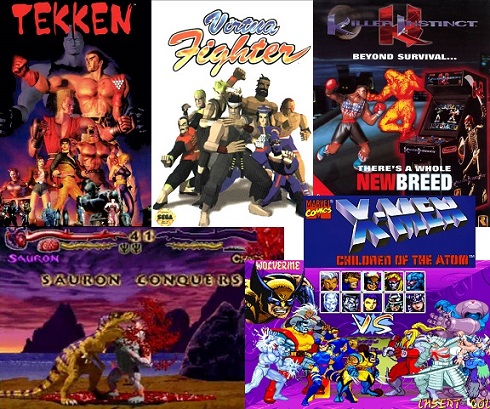
Some famous fighting games
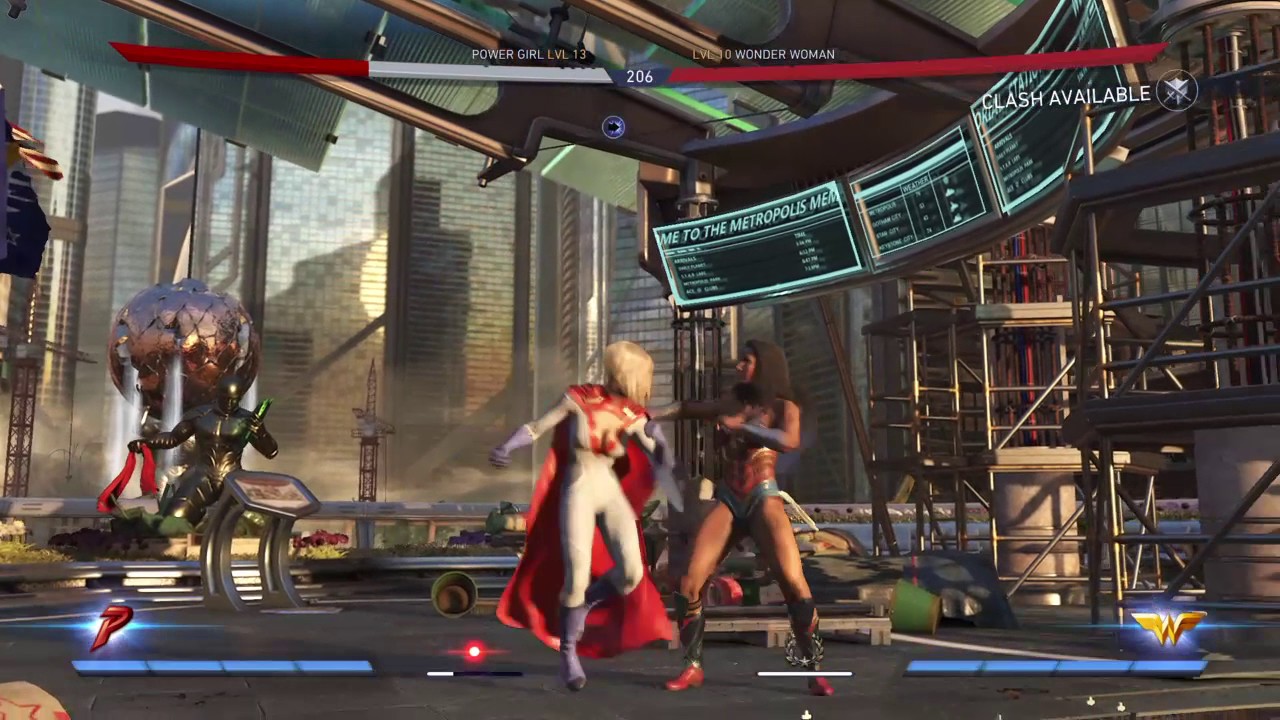
An example of a modern 2D fighting game (Injustice 2)
The first 2D video game created was Heavyweight Champ realeased in 1976 by SEGA and consisted in a fight between two boxers, the game had a side-view perspective and the controls were one pair of boxing gloves attached to levers that were used to determine where the punch would go.
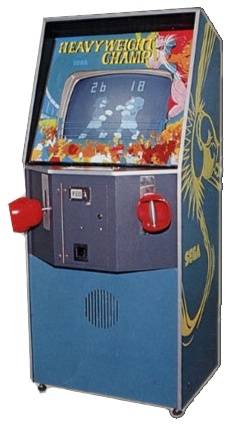
The arcade machine of Heavyweight Champ
After Heavyweight Champ there were released some fighting video games, but it wasn't until Karate Champ released in 1984 by Technōs Japan that the genre truly evolved. Karate Champ included for the first time the system of rounds (best-of-three) and extra stages. Also, thanks to Karate Champ, the martial arts were seen by lots of people as the best basis for 2D fighting games.
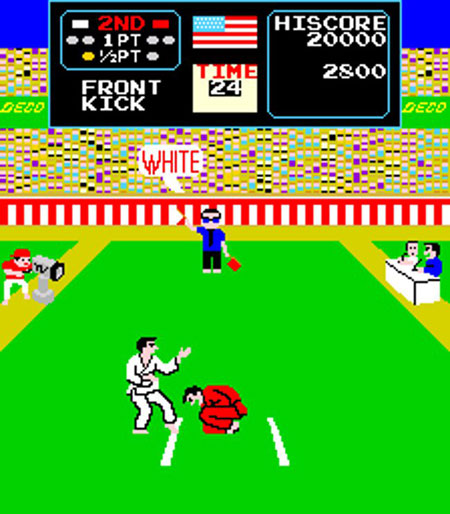
Karate Champ
Even though there were made a lot of fighting video games, the next breakthrough was Street Fighter II released in 1991 by Capcom (although Street Fighter was also a popular game, it never achieved the popularity or importance to the genre as its sequel). The game let the player for the first time to choose between different characters with different looks, techniques and fighting styles, it is also credited for starting the boom of fighting video games.
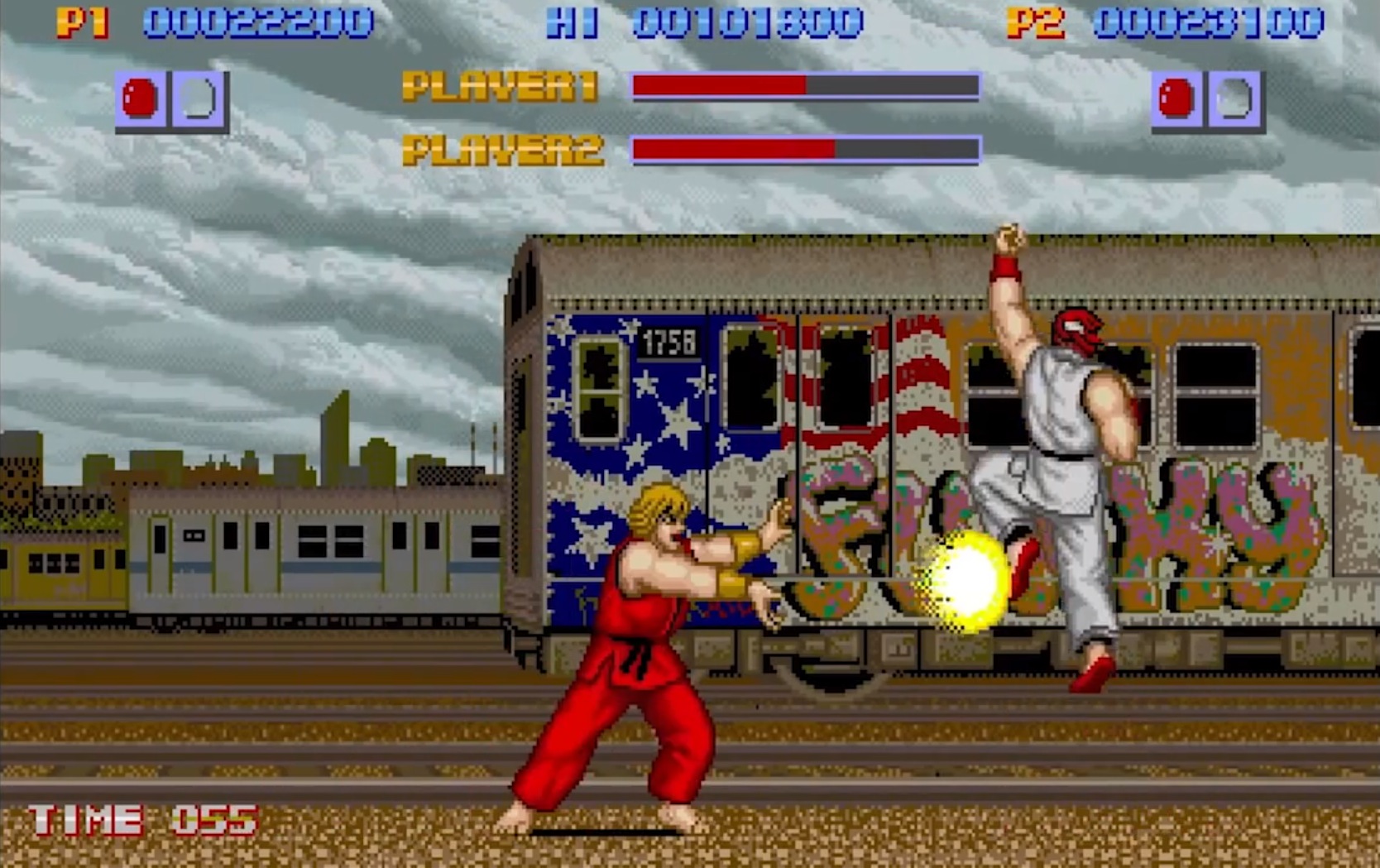
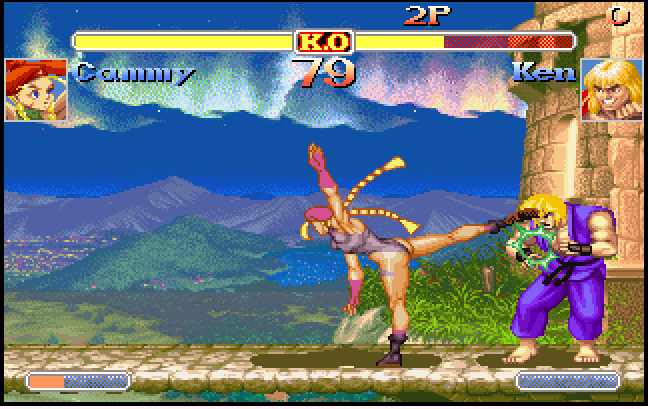
Street Fighter (up) & Street Fighter II (down)
The last 2D fighting video game to make a huge impact before the release of Samurai Shodown was Mortal Kombat released in 1992 by Midway Games, unlike the other fighting video games (which were usually made in Japan), Mortal Kombat was made in the USA. Mortal Kombat was a big impact in the market because of its graphics (they were photorealistic digitized) and its violence (more prominent in the finishing moves or fatalities).
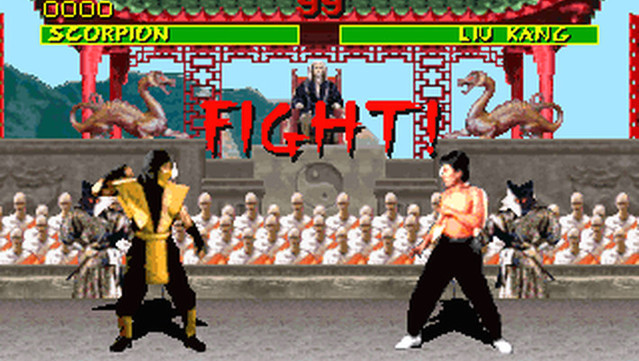
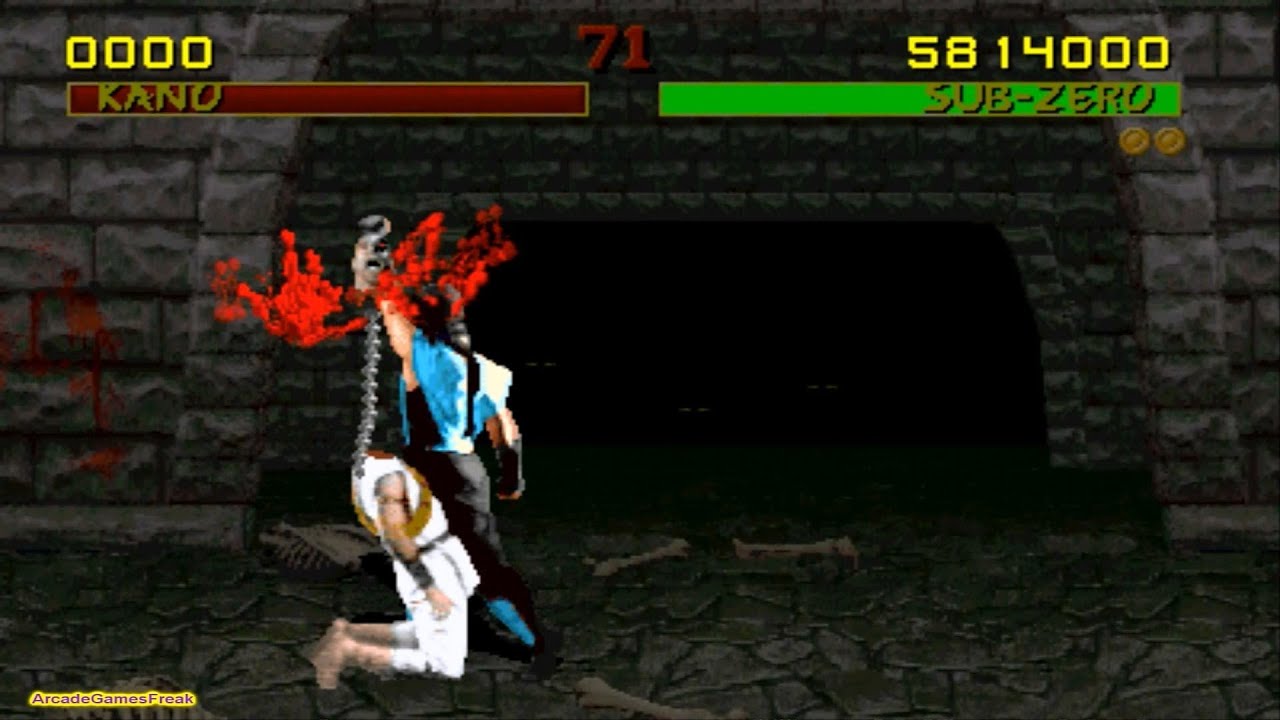
Mortal Kombat (up) & Fatality of Mortal Kombat (down)
Similar Games
Street Fighter II
As seen in the brief history of the 2D fighting video game genre, Street Fighter II is one of the most important and influential video games that the history of video games have seen. The game released by Capcom as an arcade video game in 1991 consists of the World Warrior tournament sponsored by Bison, the main villain of the game who wants to use this tournament for his own benefits. This game was the one that achieved the popularity of the public, so every company tried to replicate it or make a better one (this is one of the main reasons Samurai Shodown was made). Samurai Shodown also has some similarities with Street Fighter II, such as a rooster of more than two characters to play, a world map that shows each character's location and some aspects of the story (like the close connection that the main villain and some playable character share), not to mention the similarities of their design that share the main character of both games (Ryu from Street Fighter II and Haohmaru from Samurai Shodown).
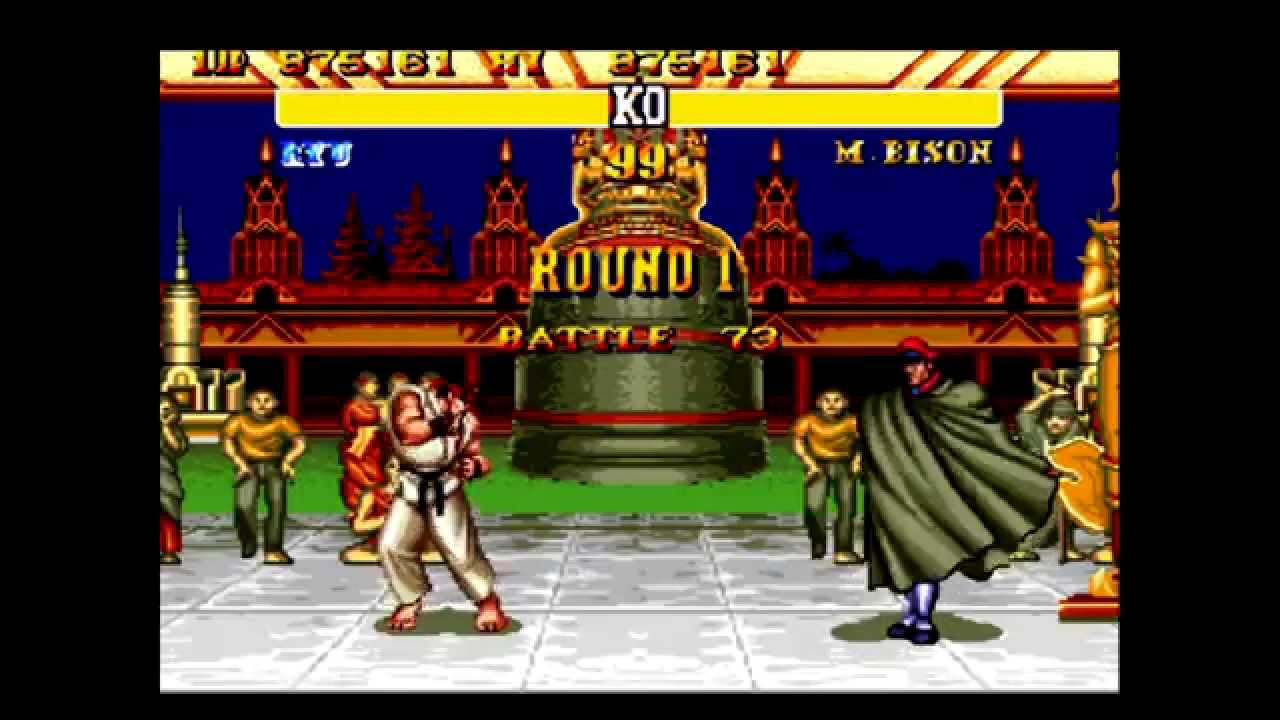

Ryu vs Bison in Street Fighter II (up) & Haohmaru from Samurai Shodown (down)
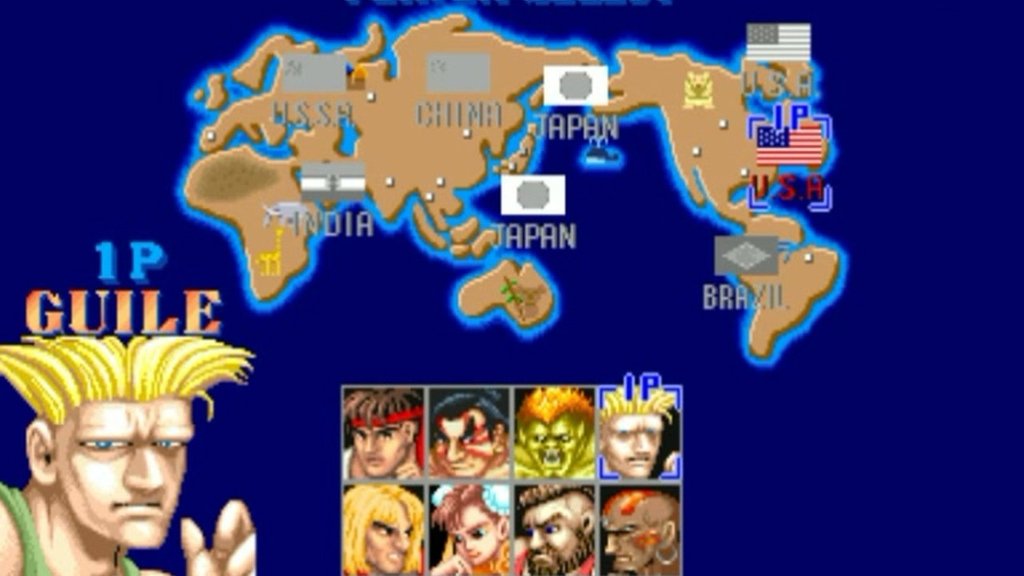
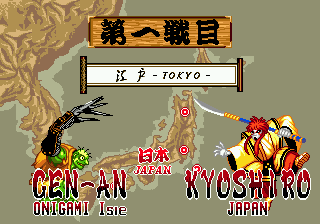
World map of Street Fighter II (up) & world map of Samurai Shodown (down)
Fatal Fury
Fatal Fury: King of Fighters is the first 2D fighting video game made by SNK (the company that has also made Samurai Shodown) and was released as an arcade video game for the Neo Geo system (the system used in SNK video games) in 1991. This game consists of a tournament called "King of Fighters" which is sponsored by the main villain Geese Howard, the sons of a fighter who Geese killed ten years ago helped join the tournament with a friend in order to get revenge. Even though this game is created by the same company, Fatal Fury almost has no similarities with Samurai Shodown (apart from the ones that share every 2D fighting video game of the time). However, Fatal Fury has some singular aspects that Samurai Shodown will also have, for example the combos aren't shown in the arcade machine like most of the fighting games, but instead, they are shown throughout the game between fights.
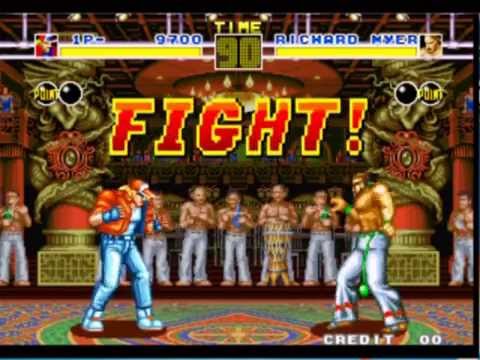
Fatal Fury: King of fighters
Shogun Warriors
One of the most similar video games to Samurai Shodown is Shogun Warriors, created by Kaneko in 1992 as an arcade game. This game, even though it wasn't as popular as Samurai Shodown has a lot of ideas and concepts that the latter game would pick up later and perfection them. The first and most obvious similarity between the two games is the art and the setting (both games are set in the feudal era of Japan), the art is so similar that some characters of both games are quite similar (such as Ninja from Shogun Warriors and Hanzo from Samurai Shodown). Also, both games have weapons that change depending on the character (a characteristic that was quite unusual in the 2D fighting video games of the time) and the inclusion of blood after attacks.
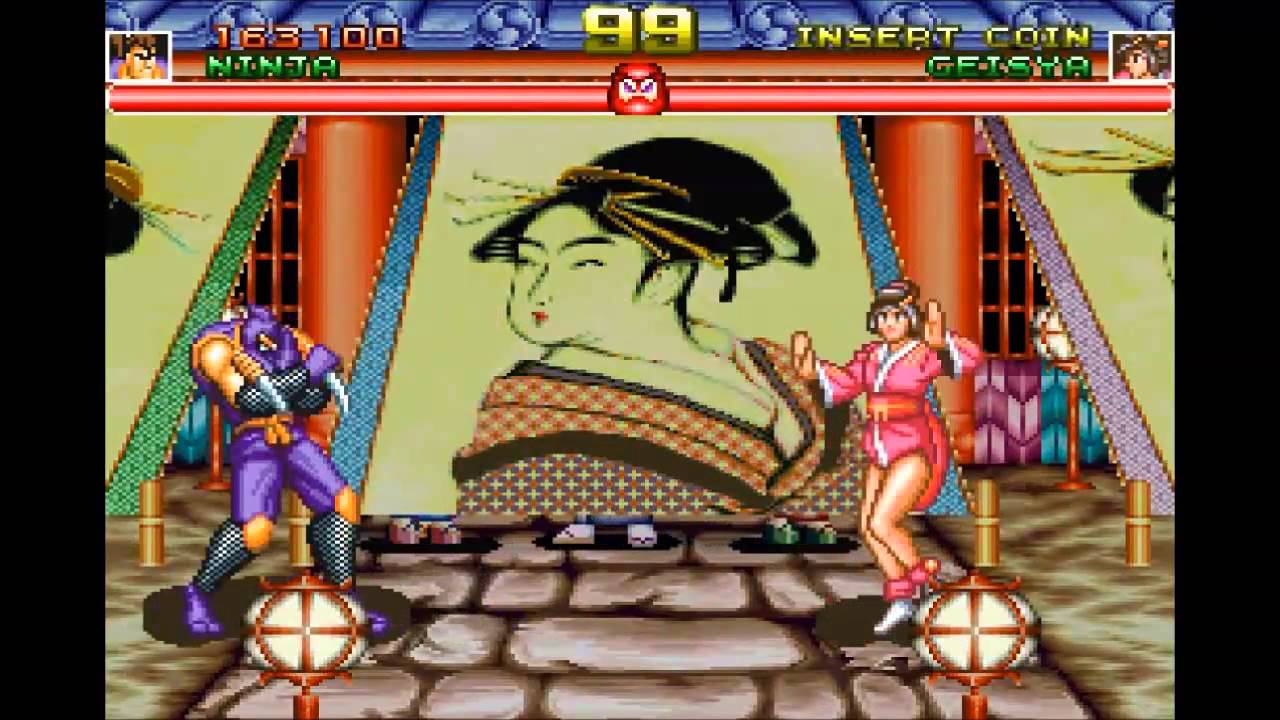
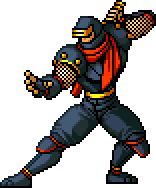
Ninja in Shogun Warriors (up) & Hanzo from Samurai Shodown (down)
Art of Fighting
Another game by SNK that was made before Samurai Shodown is Art of Fighting, this game was released in 1992 as an arcade game that uses the Neo Geo system. The game consists of the search of Ryo's sister, who has been kidnapped by Mr. Big. Ryo, with the help of a friend will fight with some people in order to find his sister and defeat Mr. Big. This game contains two characteristics that Samurai Shodown will improve, the first one is the camera zoom that happens in the fights depending on the attacks used. On the other hand, the second characteristic is the spirit gauge, which will evolve in Samurai Shodown into the pow bar or rage gauge, even though the spirit gauge doesn't have almost anything in common with the later rage gauge, the inclusion of a bar that increases or decreases depending on the attacks and that makes these ones stronger is a concept that wasn't common in the time.
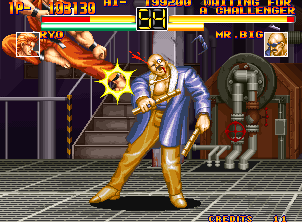
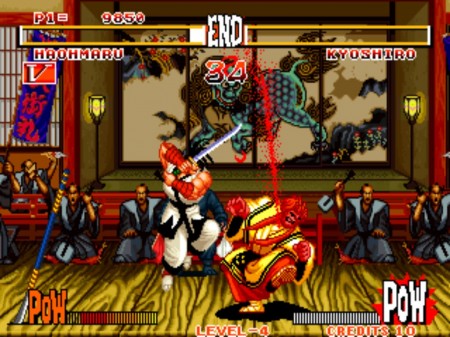
Ryo vs Mr. Big in Art of fighting (up) & battle of Samurai Shodown (down)
Market positioning
Samurai Shodown (or Samurai Spirits as it's called in Japan) was released in 1993 in Japan as an arcade using the Neo Geo system as all the SNK games, also known as Neo Geo MDS (Multi Video System). The game was a quickly success, in the same year it was released worldwide and also it was sold a version for the Neo Geo AES (Advanced Entertainment System), a home console version of the Neo Geo MDS, then in the next year, the game ended up winning lots of awards in Japan.
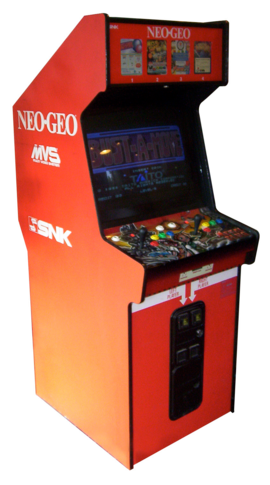
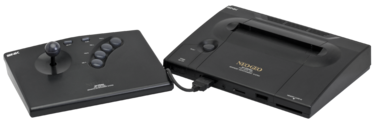
Neo Geo MDS (left) & Neo Geo AES (right)
Samurai Shodown was such a success, that in 1994 (one year after its release), there was made an anime film called Samurai Shodown: The Motion Picture. After a year this film was released also in the United States, and in 1999 a sequel was made in the format of 2 OVAs (Original Video Animation) that was never released outside of Japan. Even though there was a sequel, the critics of the first movie weren't really good, having a 4.4 out of 10 in the IMDb website.
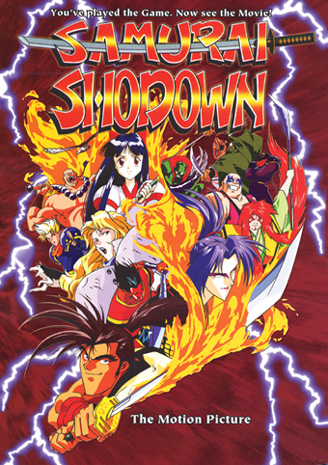

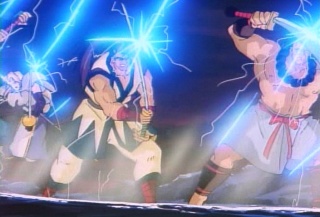
American DVD cover (left), Japanese VHS cover (middle) & screenshot of the movie (right)
Even though a lot of versions for diferents platforms were made of the game, most of them were censored because of the critics that violent fighting video games such as Mortal Kombat had (even the games for the Neo Geo outside of Japan were censored). Because of that reason, in some versions the blood was either eliminated or had a different color, the dialogs were changed, some animations were eliminated or changed, the Japanese voices were eliminated and some characters were eliminated. This, of course, wasn't pleasant for the people who bought those versions in order to be able to play in their homes the arcade game. This censor is considered by some people as the birth of the modchips that enabled the players to avoid the censorship.
Advertisement of Samurai Shodown for Super Famicon in youtube
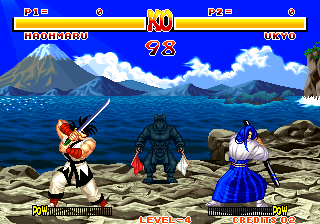
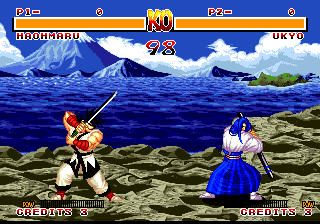
A battle between Haohmaru and Ukyo (the refereree is censored): Neo Geo version (left) & Genesis version (right)
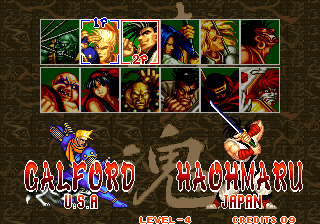
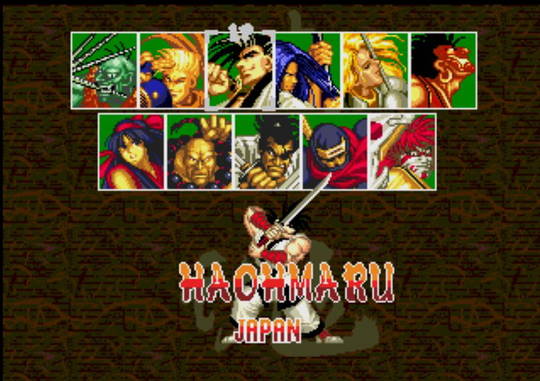
The playable characters: Neo Geo version (left) & Genesis version (right)
However, despite all the censorship, Samurai Shodown gained some popularity around the world and made a sequel called Samurai Shodown II. After Samurai Shodown II, SNK has been making more games, and even though the main focus has been fighting video games, the Samurai Shodown series has had a few mobile games, an rpg game (Samurai Shodown RPG) and even a visual novel (Nakoruru: Ano Hito kara no Okurimono). Nowadays, Samurai Shodown is still alive and is going to release a new game (Samurai Shodown 2019) the summer of 2019.
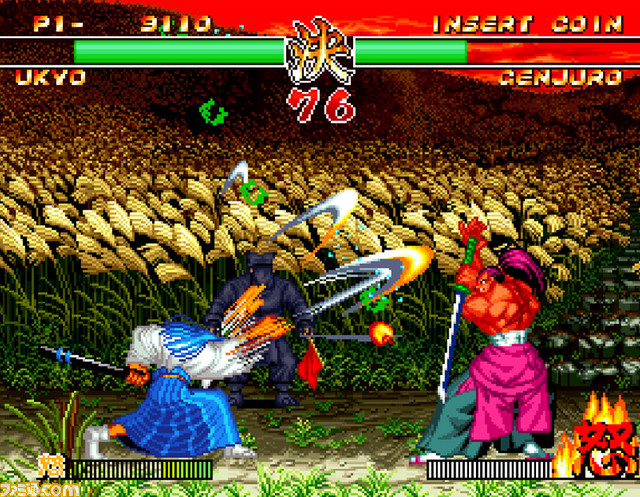

Samurai Shodown II (up) & Samurai Shodown 2019 (down)
Technical profile
Our group is going to do the game Samurai Shodown for the Neo Geo because it is the original device for which it was thought to play with. However, there are two types of Neo Geo, the Neo Geo MVS (the arcade version) and the Neo Geo AES (the home console), we are going to use the Neo Geo AES which has dimensions of 325 mm x 237 mm x 60 mm (width x depth x height).
CPU: 16-bit Motorolla 68000 running at 12 MHz 8-bit Zilog Z80 running at 4MHz.
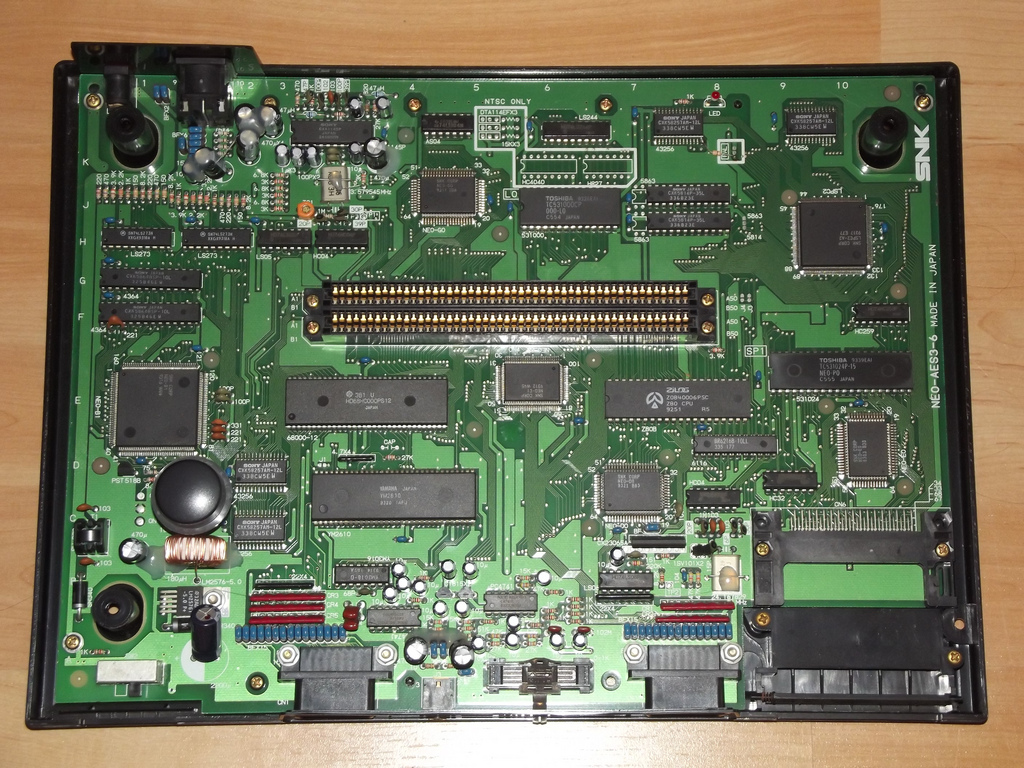


Neo Geo AES motherboard (up), microprocessor Motorolla 68000 (left) & microprocessor Zilog Z80 (right)
Memory: 214 Kilobytes of RAM divided into 64 KBytes for the main CPU (Motorolla 68000), 84Kbytes for Video RAM, 2 Kbytes for the Sound RAM (Zilog Z80) and 64 Kbytes for battery-backup save NVRAM.
Display: A resolution of 320x224 (even though some games use a resolution of 304x224). The sprites had a maximum size of 16x512 pixels and a minimum size of 16x16 pixels, a maximum of 380 sprites could be onscreen, 96 per scanline (a maximum of 256 sprite pixels per scanline). Neo Geo AES has a non-scrolling tilemap (called fix layer), and has to use layers of sprites to generate scrolling backgrounds.
Color: In the SNES there's a total of 65,536 colors available, even though there can be only a maximum number of 4096-3840 colors on screen (there's a discrepancy of the number of colors between pages).
Sound: Yamaha YM2610 sound chip which is able to work with 15 different sound channels while working with the microprocessor Zilog Z80.
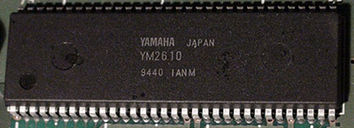
Sound chip Yamaha YM2610
Power: In order to properly work, the Neo Geo AES has tow be connected to a current of 2A and a voltage of 5V. Having a voltage higher or lower than 5V by 0.2V could generate some problems (more voltage could kill the components quickly while less voltage could be the cause of resets or glitches). If the voltage reaches 9V, the console will be cooked.
Game cartridge: The Neo Geo AES uses ROM cartridges of 19 cm by 13.6 cm and 330 megabits, however, it was later modified in order to make the cartridges with a size of 716 megabits.
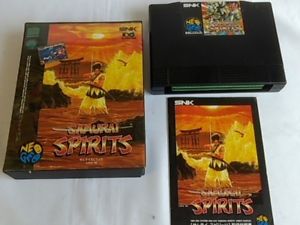
Samurai Shodown Cartridge for Neo Geo AES
Memory Card: Neo Geo was the first console device to use memory cards in order to save games, also, the memory cards were compatible with the Neo Geo MVS, so the players could take their saved games in home to the arcade or save their games in the arcade and take it home. The memory cards had sizes between 2KiB to 16 KiB (all the sizes were multiples of 2 KiB).
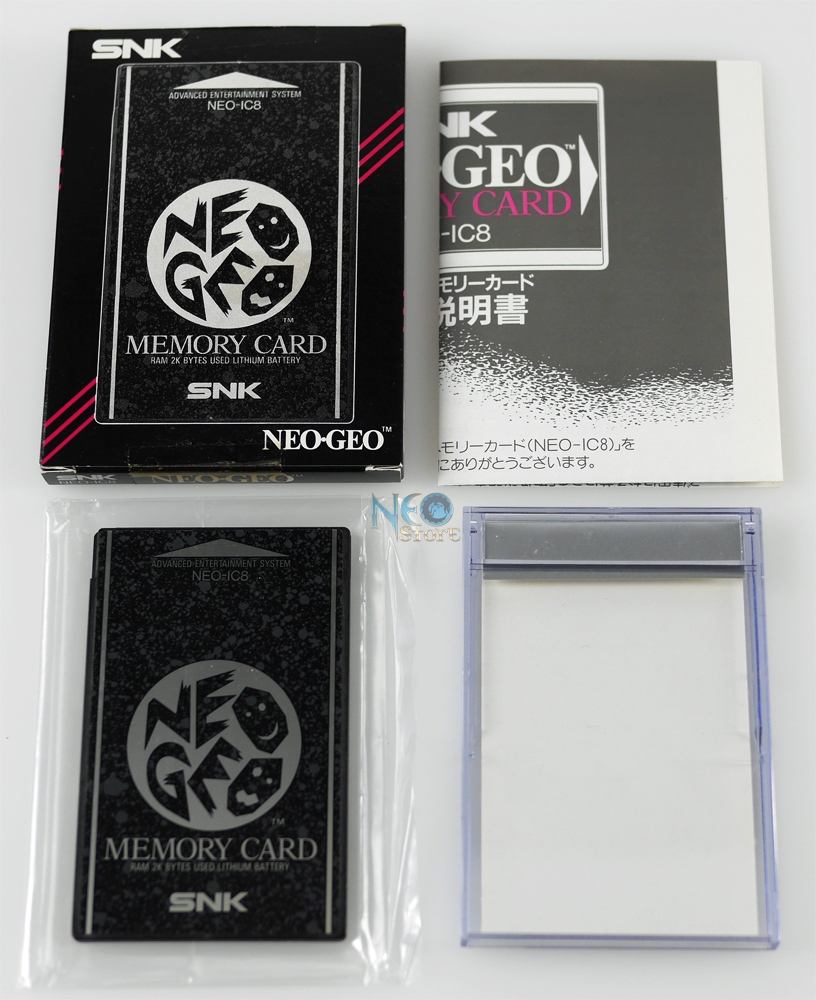
Neo Geo Memory Card
Controller: 2 available controllers of 280 mm x 190 mm x 95 mm (width x depth x height) with a joystick on the left side, four buttons on the right side (Pad A, Pad B, Pad C & Pad D) and two buttons on the upper side in the middle (Select & Start).
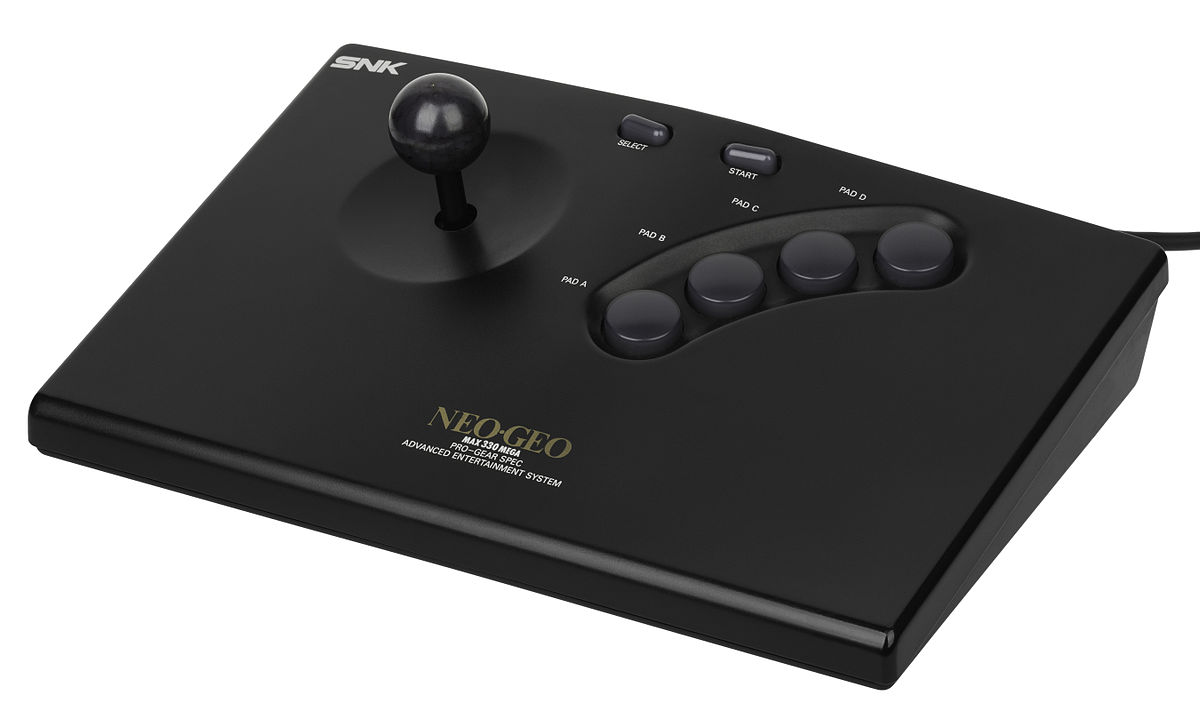 Neo Geo AES controller
History of the game:

SNK logo
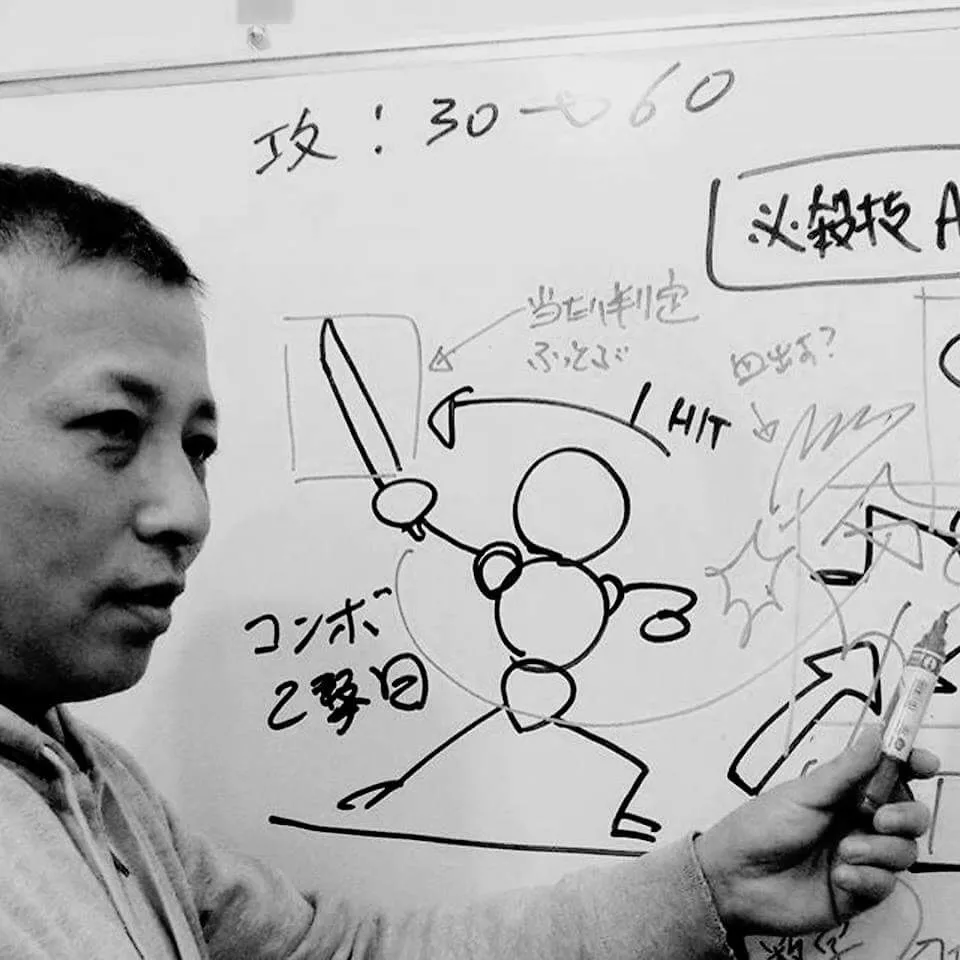
Samurai Shodown was a 2D fighting video game created by SNK for the Neo Geo MVS (arcade) and released on the 7th of July of 1993. Even though they aren't given credit enough, some members of the team who developed Samurai Shodown are: Yasushi Adachi (the creator, planner, producer and director), Tomoki Fukui (background designer) and Norio Tate (compositor).
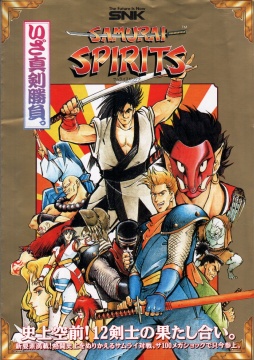
Flyer of Samurai Shodown for Neo Geo MVS
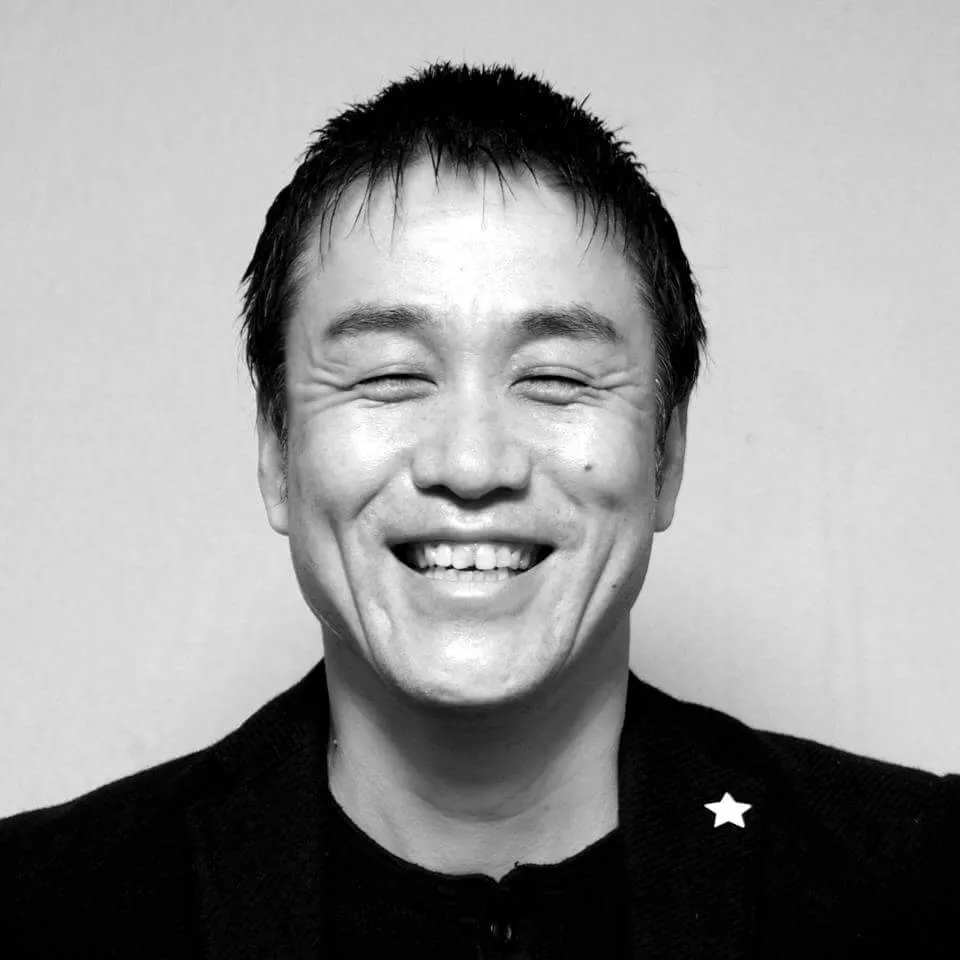
Yasushi Adachi
Tomoku Fukui
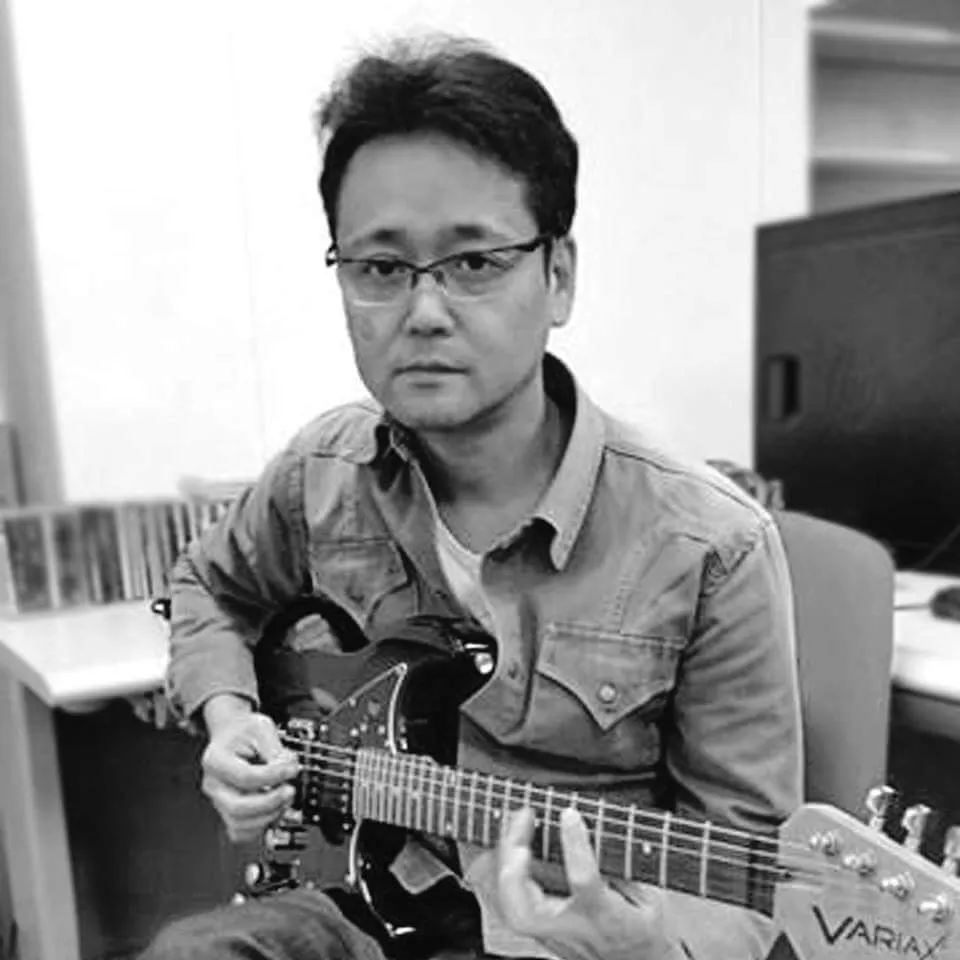
Norio Tate
Samurai Shodown originally was planned as an action game which had a lot of monsters, however, after realizing that a fighting game with distinct Japanese characters would sell more, they changed the concept (being Genan the only character who was reused as a character). After that, they also created foreign characters and stages to interest a global and wider audience. The rage gauge (or Pow bar) was integrated after a fight in Street Fighter which Adachi lost, after being so frustrated, the team though of putting that rage of losing into the game.
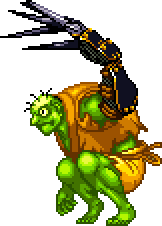
Genan from Samurai Shodown
After a month and four days (11th of August of 1993), Samurai Shodow was released for Neo Geo AES, a home console version of the Neo Geo MVS. Also at that year, Samurai Shodown was available around the world (for both Neo Geo MVS & Neo Geo AES), however, the voice in the introduction was removed in the "world" version.
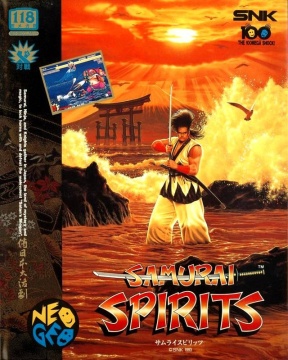
Cover of Samurai Shodown for Neo Geo AES
Samurai Shodown was then ported to different consoles in order to sell as much as possible, these ports were done usually by Takara, a Japanese toy company. The ports of Samurai Shodown are very well-known because of its censor, sometimes even ending up losing playable characters. The different consoles for which the ports were made are listed chronologically:
- Game Boy on June 30, 1994.
- Neo Geo CD on September 9, 1994.
- SNES on September 22, 1994.
- Sega Genesis on November 19, 1994.
- Game Gear on December 9, 1994.
- Sega CD in 1995.
- 3DO on February 10, 1995.
- FM Towns in September 1995.
- PlayStation on March 26, 1998.
- Neo Geo Pocket Color on December 25, 1998.
- PlayStation Network on May 30, 2007.
- Wii on October 16, 2007.
- PlayStation 4 on December 8, 2016.
- Xbox One on May 2, 2017.
- Nintendo Switch on July 20, 2017.
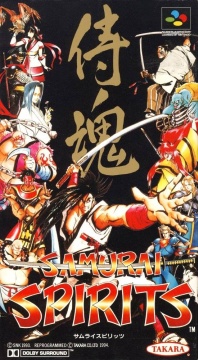
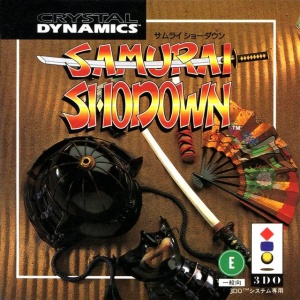
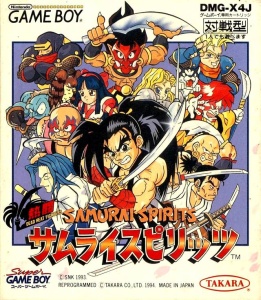
Cover of Samurai Shodown for Super Famicon (SNES) (left), cover of Samurai Shodown for 3DO (middle) & cover of Samurai Shodown for Game Boy (right)
Among the differences between versions (appart from the censor that most versions suffered) are usually changes in graphics and sound (mostly because of the differences of capacities of the consoles). An interesting change that some ports have is the use of two extra buttons for the strong attacks (instead of pressing two buttons at the same time, there's only need of pressing one) or the limitation of using only two buttons instead of the usual four (one button for kicks, one for light slashes and the two of them for strong attakcs) which happened in Game Boy and Game Gear. The most notable of the changes, however, is the inclusion of two extra playable characters (with the boss, Amakusa) in the Game Boy port after using a secret code, the two extra characters are Kuroko (the referee that appears in the game with the two flags) and Hikyaku (the man who throws objects in the middle of the fights).
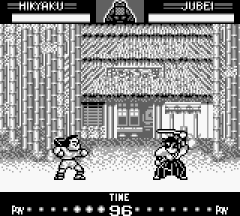
Hikyaku vs Jubei in Samurai Shodown for Game Boy