LEAN - allikvaleria/Phyton GitHub Wiki
Lean Management Definition
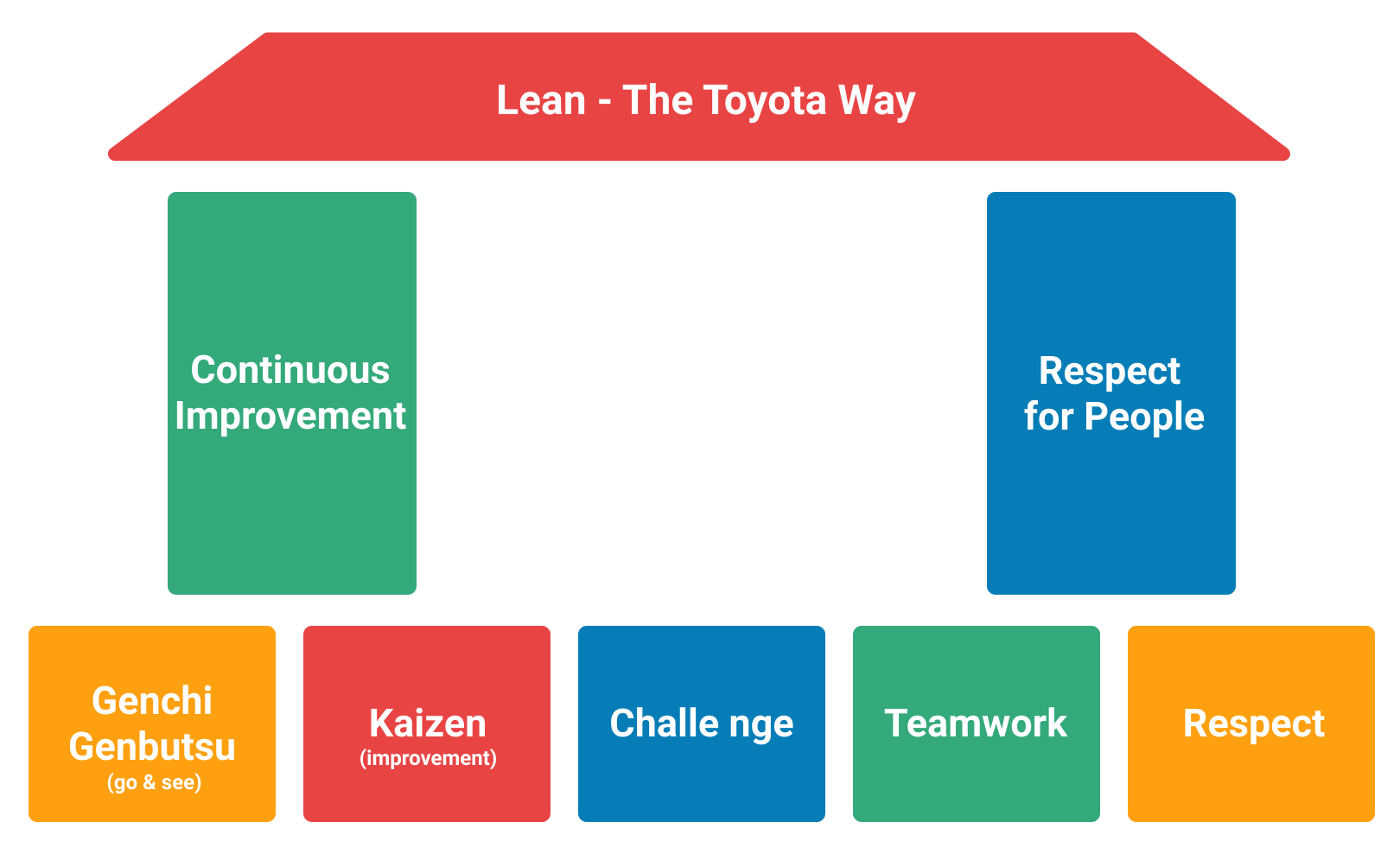
Lean management is a systematic approach to optimizing efficiency by minimizing waste and maximizing value for the customer. Originating from the Toyota Production System (TPS), it is characterized by a relentless pursuit of improvement and a focus on value creation through waste elimination.
The main goal of Lean management is to improve efficiency and effectiveness by reducing the time spent on non-value-adding activities and optimizing the flow of work. Such waste in Lean can include overproduction, waiting time, unnecessary transportation, excess inventory, unnecessary processing, and defects.
The Lean concept is successfully applied to any business or production process, from manufacturing to healthcare, engineering, and software development.
What Are the 5 Lean Management Principles?
-
Identify Value Every company aims to offer a product or service that customers are willing to pay for. To do this, companies must focus on adding value based on customers' needs. The value lies in solving a problem the customer is willing to pay for, while anything else is considered waste.
-
Value Stream Mapping Map your company’s workflow, including all actions and people involved in delivering the product. This helps identify which parts of the process add no value. Value stream mapping shows where value is being generated and helps you eliminate waste by removing non-value-adding activities.
-
Create a Continuous Workflow Ensure smooth workflow between teams, even when there are cross-functional tasks. Break work into smaller batches and visualize the process to detect and eliminate roadblocks, improving efficiency.
-
Create a Pull System A pull system ensures that tasks are initiated only when there’s actual demand, optimizing resources and reducing waste. For example, in a restaurant, a baker starts making your pizza only when you place the order, avoiding unnecessary preparation of dishes.
-
Continuous Improvement Even with a Lean system in place, continuous improvement is essential. Involve all employees in refining processes. Techniques like daily stand-up meetings can help identify and solve issues, promoting daily progress.
What are the benefits and drawbacks of lean management?
| Benefits | Drawbacks |
|---|---|
| Increased employee engagement and focus: Encourages employees to identify and solve problems, leading to higher engagement and focus on value-added activities. | Initial resistance to change: Employees may resist new processes, especially if they are used to traditional methods. |
| Improved productivity and efficiency: Streamlines processes and eliminates waste, enabling organizations to achieve more with the same or fewer resources. | Risk of overworking employees: Lean often pushes for continuous improvement, which can result in burnout if not managed properly. |
| Faster time to market: A pull system ensures work is only done when there's actual demand, reducing lead times. | Requires significant upfront investment: Implementing Lean can require substantial time, training, and resources to change the culture and processes. |
| Improved quality: Lean focuses on eliminating defects, leading to better product and service quality. | May not be suitable for all industries: Some industries may have complex, non-standard processes where Lean principles may not fully apply. |
| Continuous improvement: Encourages a culture of ongoing refinement, helping organizations adapt to market changes and stay competitive. | Potential for over-optimization: Focusing too much on efficiency can result in overly optimized processes that lack flexibility, reducing the ability to innovate. |
Lean Management Examples
Lean Software Development In 2003, Mary and Tom Poppendieck published Lean Software Development: An Agile Toolkit, outlining how Lean principles can be applied to software development. Initially slow to gain popularity, it became one of the leading methods for software development.
The Lean Startup Eric Ries developed a Lean-based methodology to help startups succeed, which he described in his 2011 book The Lean Startup. It focuses on 5 principles aimed at making startups more flexible and responsive to change, helping them shorten product development cycles and test business concepts quickly.
Lean Accounting Lean accounting applies Lean principles, like waste reduction and delivering value to customers, to financial practices. It helps streamline financial processes, making them clearer and more relevant across teams, and aligns financial goals with overall business strategy.
Lean Management in Healthcare Lean management principles are increasingly applied in healthcare to improve patient care, service quality, worker satisfaction, and cost-effectiveness.
What Are the Different Tools of Lean Management?
Some of the most common lean tools and techniques used by organizations and teams new to the Lean philosophy include:
- Value-Stream Mapping (VSM): for visualization, analysis, and improvement of all the steps in a product or service delivery process.
- 5 Whys Root Cause Analysis: for uncovering the root cause of process bottlenecks and constraints.
- Kanban: for defining, managing, and improving services that deliver knowledge work.
- 5S Method: for workspace optimization to reduce waste and streamline processes.
- Gemba Walk: the main idea of the Gemba walk is for managers and leaders on every level to take regular walks around the shop floor and be involved in finding wasteful activities.
- Andon: a system developed to alert operators about an issue on the production line in lean manufacturing.
- Continuous Flow: allows you to move a single product through every step of your process instead of grouping work items into batches.
- Heijunka: reduce unevenness and minimize the risk of overburdening in processes.
- Hoshin Kanri: a 7-step planning process used to communicate strategic goals across the company.
Linemanagement: Looking to the Future
As technology continues to evolve, lin-management continues to adapt. The integration of digital tools and data analytics is significantly changing lin practices. For example, lin-manufacturing now makes heavy use of Industry 4.0 technologies such as IoT sensors and artificial intelligence to make real-time decisions and further optimize processes. In addition, lin-management is increasingly being applied to achieve sustainability, including reducing environmental losses and carbon emissions.