Gabriel's TT6 Vocab - TheRadRabbidRabbit/Team-Lovelace GitHub Wiki
Gabriel Boudreau's Vocab Page
Binary/Hexadecimal, Bit, Nibble, Byte
- Binary is a number system used to represent data. It uses two numerical values (0 and 1), and can be converted to other data values such as decimal, hexadecimal, ASCII, etc. It is the base unit in which all other data is converted from.
- Hexadecimal is a base 16 unit converted from binary in order to simplify data. Hexadecimal is often used for image processing and RGB values. Hexadecimal uses nibbles, which is a group of 4 bits and represents one hexadecimal digit.
- A bit is the smallest unit to measure data. It is one binary value (One 0 or 1). 8 bits composed together makes up a byte. The greatest Binary value possible from 8 bits is 256(2^8). A value from 0-256 composed of 8 bits makes up one byte of information.

Data, Data Abstraction
- Data is information that can be written out. It can be characters, images, sounds, or any other information that written out and defined by binary. Data is often transferred between sources.
- Data Abstraction is a way of simplifying data further by displaying only the important aspects of information. The simplifies and assists with ease of use as well as safeguarding information.
Lossless/Lossy Compression
- Data compression can be lossy or lossless. Lossless keeps image quality the same when compressing a file, while Lossy data approximates an image and permanently removes data that is unnecessary.
- Lossy compression worsens image quality and is often used in pictures and strings.
- Lossless compression requires larger as it holds more data.

Metadata
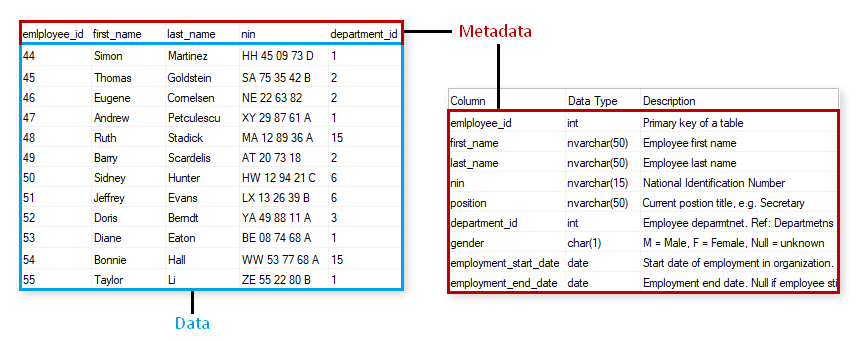
Metadata is the data defining the characteristics of other data. It is typically in reference to images, audio files, and websites. Types of metadata include pixels, name, file size, etc.
Computer Network, Parallel/Distributed computing
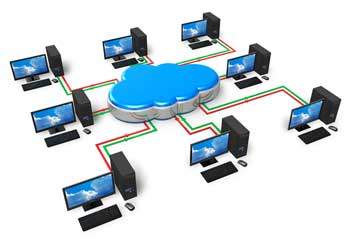
- A computing network is a network containing several interconnected devices able to exchange data and share resources. Networks contain a minimum of two devices, however more can be added to create a complex network known as network topology. This spider web of network allows for connection to a new network if the original disappears.
- Parallel computing is when multiple calculations on a computer are carried out at the same time. This is used to optimize processing by not wasting time to individually do shorter tasks when having a larger timeframe.
- A distributed computing system has multiple software elements on separate computers while running them on a single system. An example of this would be cloud computing.

Protocol, TCP/IP, HTTP, GET, POST
- A protocol is a set of rules that determines how data can be transmitted between devices on the same network. It allows devices to communicate with one another.
- Protocols are organized into layers: The first being the application layer, the transport layer, the network layer, and the link layer.
- TCP (transmission control protocol) is used with IP to ensure reliable transport of packets. It solves many problems with packets such as corrupted, out of order, and duplicate packets. It contains IP data, the source port, and other important metadata.
- IP or internet protocol address gives every device on the internet and identifiable and trackable address that is unique to each individual network.
- GET and POST are two HTTP methods. GET requests data from a specified source, and POST submits data to be processed through a specified source.
- A web browser uses two protocols, a domain name system protocol and a hypertext transfer protocol, or HTTP
Library, Dependencies, Import
- A library refers to a collection of programs, files, functions, etc. that can be referenced while coding. These collections can be easily referenced and are often used to optimize tasks.
- When one function uses the function of another object, creating a dependent relationship between the two programs.
- An import refers to grabbing or using data from another source that compliments and can be reused. An import can often lead to a dependency.
Web API, REST, FETCH, Async, Request, Response
- An API is an application programming interface.
- A web API uses simple architecture. It is a accessed using an HTTP protocol and data is accessed in one system by another system.
- A rest API uses more complex architecture. It sends and receives data over systems in a simple and flexible way. They often access resources using CRUD and will use JSON or XML in order to communicate data.
- FETCH refers to the retrieval of data by a software program, script, or hardware device.
- Async refers to functions that operate independently from the main program.
- A request is when a message is sent between two objects asking for something. If one object asks for a request for certain data then a response containing the data will be sent in response.
- The response is the data returned by the secondary object after a request.
Blueprints
- Using blueprints allows for code segments to link to a main segment in a logical way. It allows for the you to import and organize code in an effective way that makes it easier to traceback and connect certain pieces together. It also is effective in fixing errors as certain sections of code are isolated and thereby easier to troubleshoot.
MVC
- MVC (Model View Control) is a software pattern that separates different aspects of a software program. These aspects can be assigned a term that correlates to the name, with a model, a view, and a controller. This can be used as a baseline framework in web development. The model is the data that a user may work with and is the data being transferred between the view and controller. The View is the user-interface of the application and displays data using the model object. The controller is the interface between the view and the model that can process requests.
Code Sequence, Procedures/Functions, Procedural Abstraction
- Code sequence refers to the order in which actions must be performed within the code. The code will break when the sequence is finished being carried out.
- A procedure or function is a small segment of code with specific instructions small intended purpose (a program of calculation) that contributes to an overall picture. This purpose is enacted every time a procedure or function is called by the main segment of the program. It is like a recipe to make a sauce that can be added to the rest of a dish, that can be referenced whenever it is needed.
- Procedural abstraction is a set of parameters that describe what we want a procedure to do. This does not tell the procedure how to do it.
OOP, Class, Attribute, Method, Object
- An object is a variable, data structure, function, or method that can be defined.
- A class is written by a programmer in order to create and object with certain defined properties and methods that are similar to all objects within the class. For example American, Provolone, Pepper-Jack would all be a class of cheese.
- An attribute refers to a defined property given to an object. This refers to the unique characteristics of an object located within a class.
- A method is a procedure that can be associated with a message and an object. This procedure performs certain operations on a variable thereby producing an output.
- OOP (object orientated programming) is a way of programming that focuses on objects and how they interact with one another. These objects contain data and is something defined by an attribute and method.
CRUD
- CRUD are the four basic types of functionality when building APIs or utilizing persistent storage. They stand for Create, Read, Update, and Delete. Create allows the user to add new entries; read is retrieve or view existing entries; update is editing entries; deleting allows for the removal of existing entries.
Sort, Search-Linear/Binary
- Sorting is the process of ordering data in an increasing or decreasing method. They can be done on strings, numbers, records, and files.
- Linear search is the simplest method of searching for an element in a data set, and does so by examining an element until a match is found, starting at the beginning of the data set and moving to the end. The program terminates once the linear search finds its target.
- Binary search is a search algorithm that fetches data from a sorted list, and divides the data in half until the value is located. Each section divided by half is known as an iteration. In most cases, binary search is much faster than linear search.