CARLA - SethKitchen/ThreeMojo GitHub Wiki
CARLA
The extensions/carla/ modules port the CARLA driving simulator: everything that CARLA runs without its game engine and its network transport. This port adds its own physics and its own renderer. It loads OpenDRIVE maps and simulates vehicles, walkers, traffic lights and signs. It drives the traffic manager and the agents, and reads every CARLA sensor. It records, replays and renders towns in CARLA's weathers.
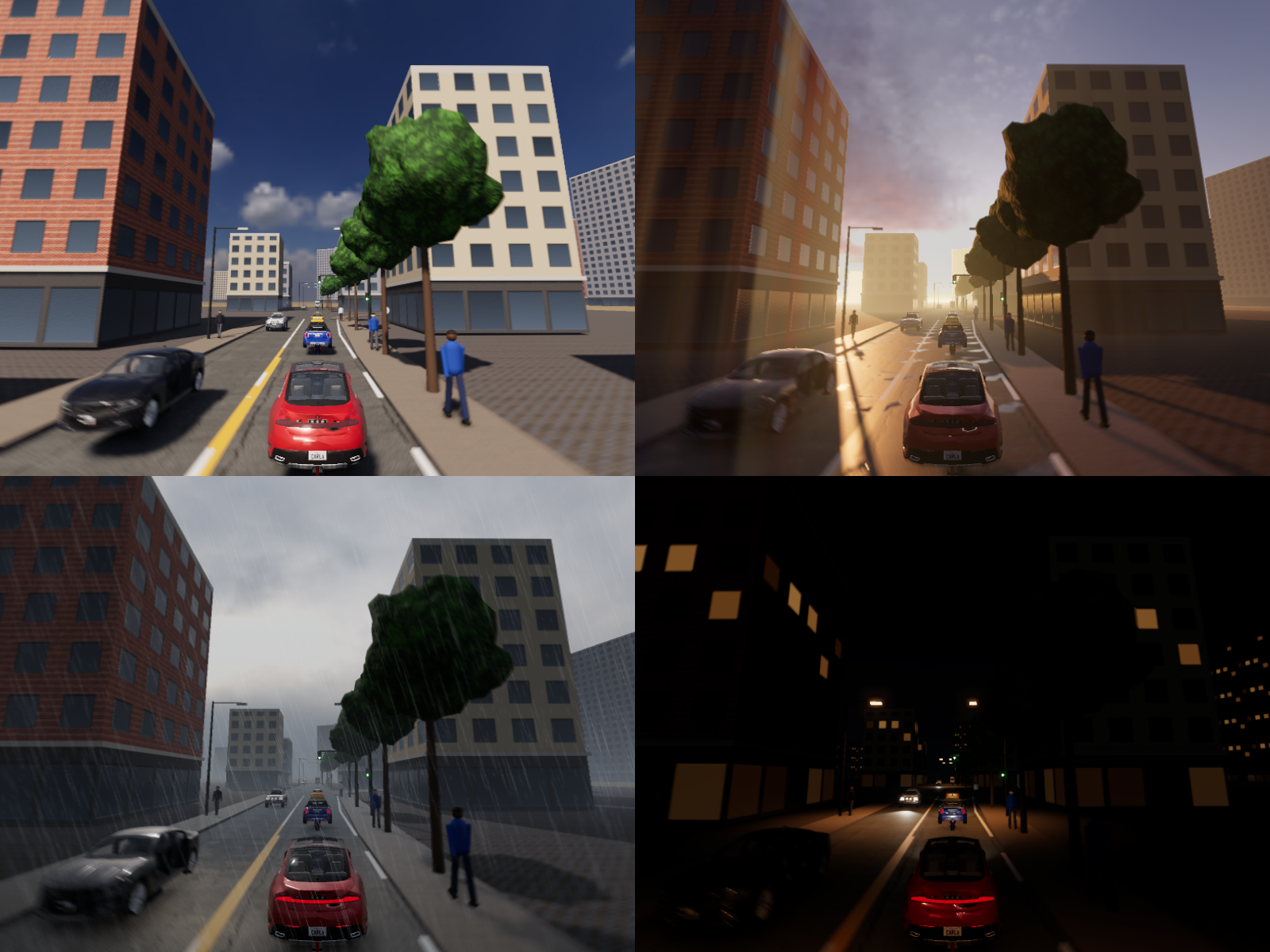
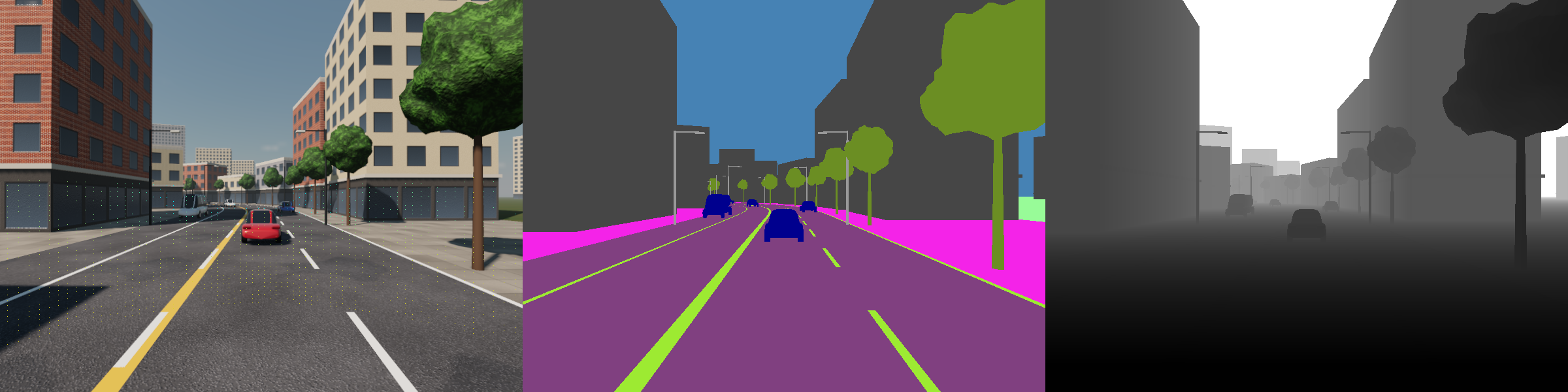
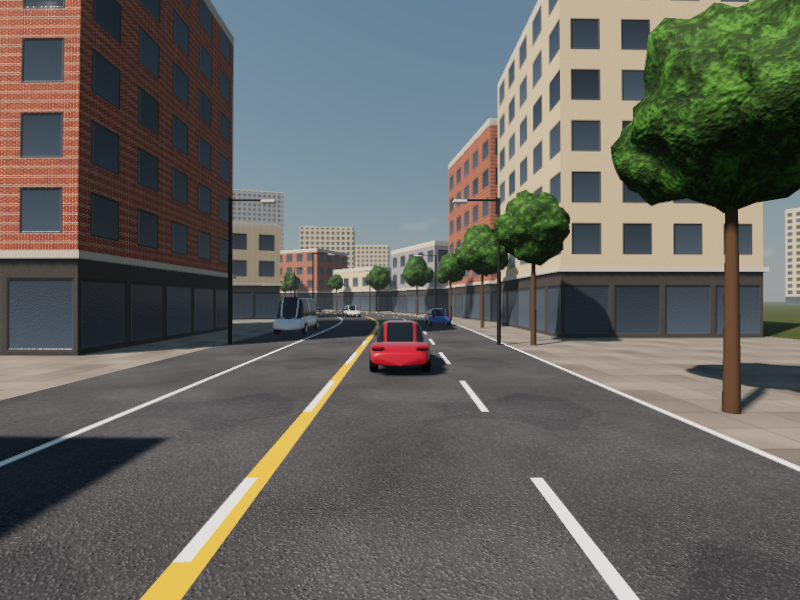
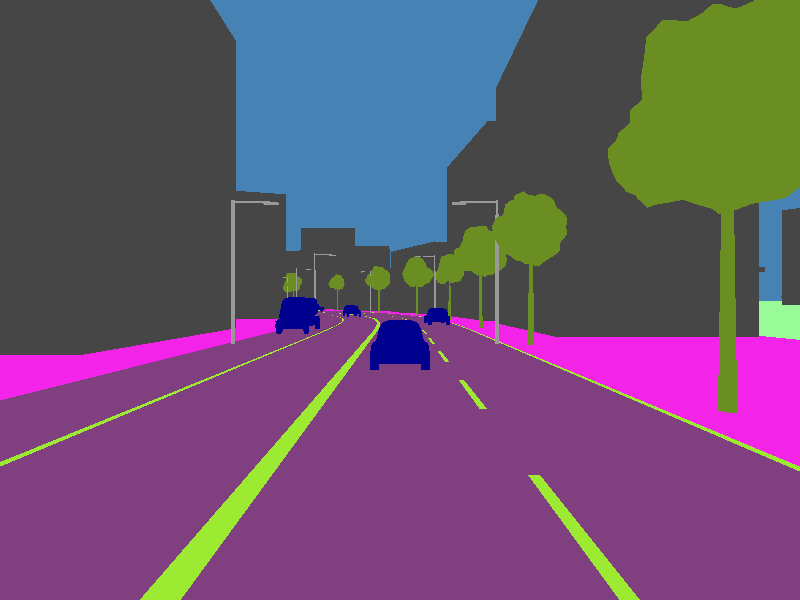
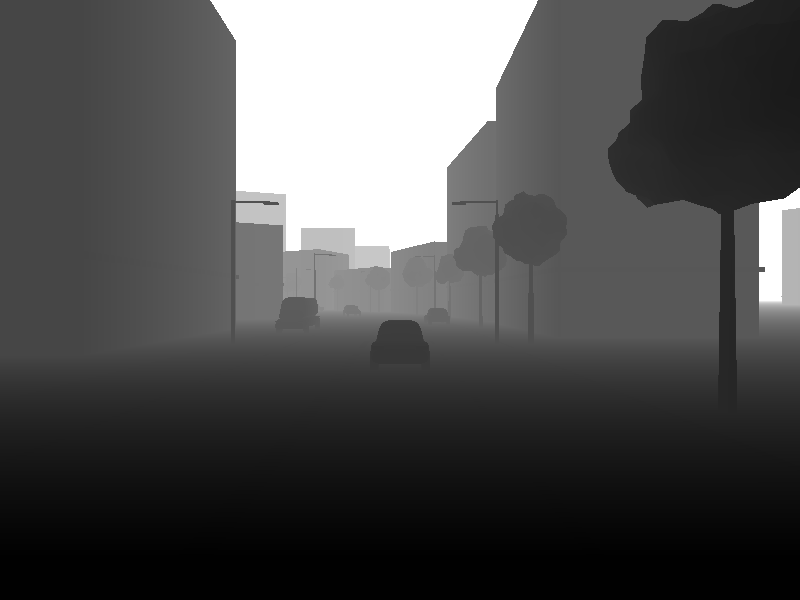
Images can include CC BY 4.0 CARLA vehicles and town content. Keep the asset credits with shared images.
CARLA is by the Computer Vision Center at the Universitat Autonoma de Barcelona (MIT). This port follows CARLA's source at commit 1360bb9. See Extensions.
To render the images, run mojo run -I . examples/carla_town.mojo out/carla_town.png and mojo run -I . examples/carla.mojo out/carla.png. Each view is 800 x 600, the size of CARLA's default RGB camera.
Parts
| Page | What it covers |
|---|---|
| CARLA geometry | CARLA's vector and arc math, bounding boxes, geo-projections, the R-tree, meshes, point clouds and image converters |
| CARLA maps | The OpenDRIVE parser, the road map and its queries, and the road meshes |
| CARLA lane orientation | Lane heading, pitch and the corrected rotation basis |
| CARLA fixed-s nearest | Nearest lane at one s, with exact stored centers |
| CARLA point distance | Exact ordering of stored point distances |
| CARLA physics | The rigid-body solver, the vehicle model and the walker controller |
| CARLA world | Actors, the tick, snapshots, traffic lights, signs, blueprints and weather |
| CARLA sensors | Every CARLA sensor, its raw data and the sensor manager |
| CARLA traffic manager | The local traffic manager and its stages |
| CARLA agents | The route planner, the navigation agents and walker navigation |
| CARLA recorder | The recorder, the replayer and the recorder queries |
| CARLA rendering | Towns, materials, weather and camera effects |
| CARLA assets | The photoscanned assets and CARLA's own vehicles, and how to fetch them |
Build a road
Read an OpenDRIVE file with load_opendrive_file, or build a map in code with MapBuilder. See CARLA maps for the map, its queries and its meshes.
from extensions.carla.map import Waypoint
from extensions.carla.mesh_factory import MeshFactory, to_three_frame
from extensions.carla.opendrive import load_opendrive_file
from extensions.carla.road_info import LaneId, RoadId, SectionId

var map = load_opendrive_file("assets/carla/town.xodr")
var pose = map.compute_transform(
    Waypoint(RoadId(1), SectionId(0), LaneId(-1), 10.0)
)
var surface = to_three_frame(
    MeshFactory().generate_whole_lane(map.road(RoadId(1)), 0, 1)
)
compute_transform returns the pose of a vehicle in that lane, in CARLA's frame. generate_whole_lane returns the lane's surface in CARLA's frame, and to_three_frame turns it into the three.js frame.
Records
RoadGeometryKind names five records. Each record starts at an s, a point and a heading.
| Kind | Helper | What it adds |
|---|---|---|
LINE |
line |
Nothing. The heading stays the same. |
ARC |
arc |
A curvature other than zero. |
SPIRAL |
spiral |
A start and an end curvature. |
POLY3 |
poly3 |
The cubic v(u) in the record's frame. |
PARAM_POLY3 |
param_poly3 |
The cubics u(p) and v(p), and a ParamPoly3Range. |
The frame is OpenDRIVE's. It is right-handed, and the heading turns counter-clockwise from plus x.
CARLA uses the odrSpiral Fresnel code for a spiral. This port uses Gauss-Legendre quadrature. The retained reference fixtures agree with a fine numerical integral to 1e-5 meters, including equal curvatures where odrSpiral divides by zero. These fixtures do not establish a general true-clothoid error bound. Canonical lane positions use compensated stored-term summation; the separate reference APIs keep their existing arithmetic.
A poly3 and a paramPoly3 keep CARLA's sample tables and its linear interpolation. A poly3 samples u every 0.3 meters. A paramPoly3 has one interval for each 0.5 meters, and at least five.
Lanes
A LaneId is minus for a lane on the right of the reference line and plus for a lane on the left. Lane 0 is the reference line. It has no width, but it carries the center mark.
On a road that keeps traffic to the right, a right lane faces along the road. A left lane faces against it, so its yaw gains 180 degrees.
LaneMarkingType names CARLA's eleven marking types. The mesh factory draws SOLID as one strip and BROKEN as dashes of three resolutions with gaps of three. It draws no other type, as CARLA does.
Frames
In CARLA's frame, plus x is forward, plus y is right and plus z is up. The frame is left-handed.
carla_to_three swaps y and z. CarlaTransform.three_matrix places a three.js node where CARLA places an actor. CarlaTransform.camera_matrix also turns the node so that a three.js camera looks along CARLA's forward axis.
CarlaRotation keeps CARLA's pitch sign from 2026. The z part of the forward vector is minus the sine of the pitch.
DirectedPoint.to_carla negates y and the heading. CARLA calls this its "Y axis hack".
Sensors
encode_depth packs a planar depth into 24 bits of RGB. Red is the low byte. The full scale is DEPTH_FAR, 1000 meters. decode_depth and normalized_depth unpack it. logarithmic_gray gives CARLA's logarithmic depth view.
SemanticTag names CARLA's 30 tags. cityscapes_color gives each tag its CityScapes color. CARLA wraps a tag past the palette. This port refuses it.
CameraIntrinsics is the K matrix from CARLA's PythonAPI examples. The focal length is the width divided by twice the tangent of half the horizontal field of view.
depth_frame and semantic_frame cast one ray through the center of each pixel with the scene's Raycaster. CARLA reads these images from its renderer's G-buffer.
LiDAR
LidarDescription holds the settings of sensor.lidar.ray_cast with CARLA's defaults. scan_lidar casts one tick against a scene.
- The lasers spread evenly from
upper_fovdown tolower_fov. - Each laser fires
points_per_laser(tick)rays across the angle that one tick turns. - A general drop-off removes a fraction of the rays before the cast.
- A hit's intensity is exp(-a d), where a is the attenuation and d the distance.
- A hit at or below the intensity limit stays with a probability that rises with its intensity.
The random numbers come from a seeded generator, so one seed gives the same scan. Plus elevation is above the horizon. Plus azimuth turns from forward to right.
Not ported
These parts are not ported:
- The network transport: the RPC server and client, streaming, ROS 2 and multi-GPU.
- The RSS sensor. It wraps a third-party library.
- CARLA's game engine and its assets. This port has its own physics and its own renderer. A physics step and an image are therefore not the same as CARLA's.