GROGPOD Rankings Explained - ScottBurger/going_rogue_podcast GitHub Wiki
Whose Number Is It Anyway?
A question I posed to the UFO 50 discord before our episode on it:


Here at GROGPOD Industries, we play a roguelike game for two weeks, talk about it, and slap some ratings number on it to attempt to quantify how we feel about it. Those numbers help to balance out the games when we recap the season at the end of the year. The games that we come back to should be ones the four of us generally agree on are good and creates the best and most balanced bracket for us to put games head-to-head. Otherwise it would be filled with one-and-done first round bounces that we spend 2 seconds on and move on to the games we all want to talk about anyway.
To what end, you say? Well since we're not professional games journalists and don't get paid to do this podcast, it's more of a book club experience of "what did we think about this?" The ratings numbers give us a way to see how each of the 4 hosts of the podcast wildly differ in what we find fun, what we agree or disagree on amongst ourselves, and help to shape the text of games we've ranked thus far.
There are many instances in which 3/4 of the hosts will like a game and have it be a wet fart for the 4th. Maybe also the reverse: one person picked a game they thought was interesting, and the rest of the panel shits all over it. Some of those experiences and takeaways may resonate with how you personally felt with the game, sometimes the complete opposite, and that's okay.
You Woldn't Be Mad If We Used Letter Tiering

This is what our podcast rankings would look like if we used an S-F tier ranking system instead. As you can see, most games are mid and that's perfectly okay. Not every game belongs in S tier, nor should they. No one would get mad if we called their favorite game a "C-tier" roguelike. Well at least it's not D-tier or god forbid, F-tier! But as soon as you say "C=6/10" people lose their minds. The thing is, we also lose a lot of nuance with our numeric rating system if we just went by letter grouping. How do we rank games WITHIN that group? How do we pick out games that are hidden gems?
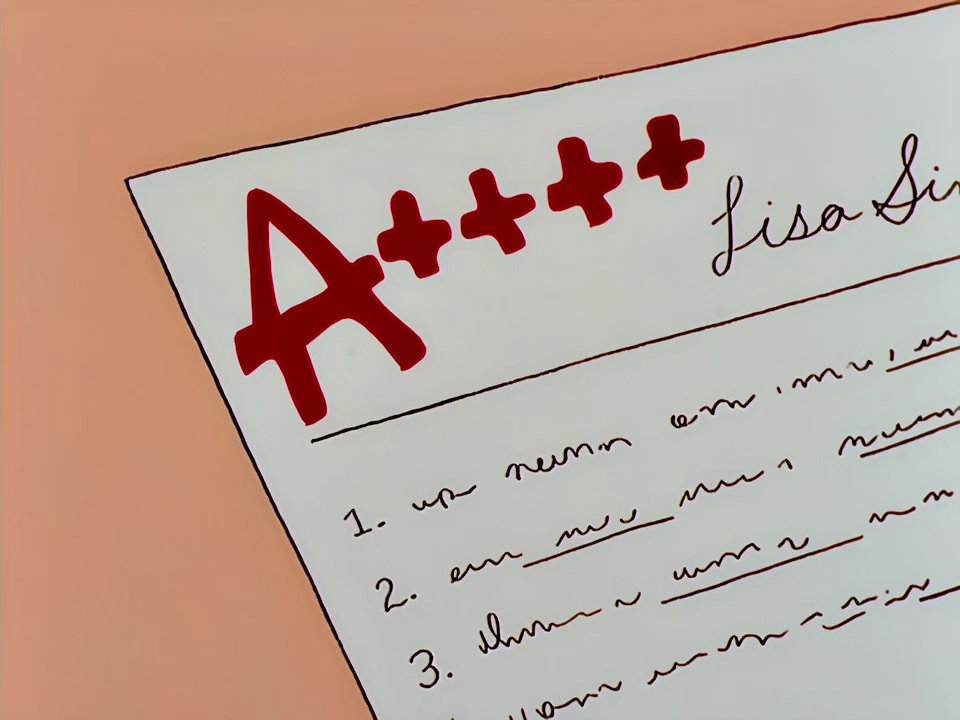
Gaming publications still rely on 10 point scoring systems in order to drive headlines and appear to be objective in their analysis. You wouldn't be wrong to think that if IGN gave a game a 9.8, it would be better under any circumstance than a game rated 9.7. Would those both be S tier? How would you compare an S+++ versus an S- game? Is S tier just grade-washing of A tier? What if we just used a tier system of S+++++, S++++, S+++, S++, S+, S. Everyone's feelings would be protected, but nothing useful would come out of the data.
Rankings, Games Journalism, and Data
You see it all over IGN, Gamespot, Metacritic, etc. A game comes out, gets a 99/100, best game ever ratings, and is...fine? Not groundbreaking in any sense? Similarly: games coming out that are objectively okay, not revolutionary, getting a 75/100 or an 80% and people losing their minds about the scores. The likely culprit here is that games journalism has devolved into using Net Promoter Scores

Basically: anything under a 7 is bad, 8 is passing, and 9-10 is the expectation. This creates a really shitty ecosystem for nuanced discussion. Games that are truly revolutionary and ground-breaking should be rare and recognized as such. If every game is a 9/10, then no game is groundbreaking. Yeah, it might be your favorite game of all time and that's okay. But then that's what your own personal ranking system is for.
Podcast Rankings

The podcast rankings distribution as of 2026-04-24. Overall, most games fall into a 6-8. In the end, the actual score itself doesn't really matter, but more where it's relative ranking to the other games is. Don't like how we default to ranking things by average? Sort it by median! Don't like my scores? Jump to Colin's ranking tab instead. The raw data is out there. Pick and choose what story best suits what you want out of the ranking system.
The hosts have independent 0-10 scores, with different reasoning and rationales behind their numbers. Some try to adhere to a normal distribution, where most games would be a 6 or 7, great games an 8, and truly groundbreaking innovative actual GOAT titles a 9 or higher.
Not every game can, or should, be a 10/10 in our eyes for the most part. It's not like a checklist of "has a tutorial, so there's one point - has controller support, another point...". There are quite literally genre-defining games that are titanic hegemons in which other games truly do exist in their shadow. Which games those are depends on your own personal tastes. But it's that kind of idea that pushes us into 10/10 territory.
Generally we try to stick to a 0-10 scale, with "okay" games being somewhere around a 6 or 7. If we were strictly Gaussian, most games would be between 4 and 6, but since we have a bit of selection bias going on (why would we proactively seek out a 4/10 game to play?) that average is most likely going to drift to the 6-7 range.
Games and Identity
Look, we get that people are big fans of certain games. Sometimes to the extent that people are streamers of that game exclusively. You have a game, you have a brand, and they are intertwined. A lowly podcast with tens of subscribers saying "eh this game wasn't for me" is not the same as us saying "lol your game is bad and you too should feel bad for enjoying it". That's why we always say:
- It's okay to like or not like a game
- All devs go to heaven
Gamedev is hard work. A lot harder than any of our day jobs here on the pod. Especially for solo devs whose entire bank account is predicated on this 10 year weird passion project of theirs. So while a game might not jive with us for whatever reason, there's always respect to the hard work devs put in behind it. You'd really have to go out of your way to be injecting shitty microtransactions or predatory gameplay behavior into your game for us to have the opinion that you should feel bad for playing or developing that kind of game.
An important point to note is that a lot of the games we cover do have a nonzero price point as well. That matters in terms of consumer critique. If I'm paying for something, I should have some right to express my opinion on it, even if it is some niche $10 indie game that 20 people have every played total.
"Imperfection Needs No Improvement"
Look, we aren't professional game journalists. We aren't even popular enough to be clickbait youtubers with shitty takes to farm for ad dollars so we can sell the brand to some private equity firm in 5 years. Think of this more as a book club. Are you really going to blow your wig off because Betty and Gable's old lady book reviews down the street gave Infinite Jest a 6/10? Is that a productive use of your rage? Sometimes we only have 2 weeks to review a game in which people can spend 10,000 hours mastering. We're also adults (most of the time) that have to like pay bills and shit, so sometimes we can't spend 50 hours a week playing a game for a podcast no one is paying us to do just to have internet strangers yell at us in the youtube comment section.
Related, when podcasts go commercial and start taking money for things, they well smooth out the spikeyness of their originality in order to not upset that income stream. We aren't popular enough here to bring in money anyway, so there's no real reason for us to smooth out our criticism of a game to appease donors.
People seldomly complain about how one cohost will have a "bad faith" take on a game, and they're likely right. Some game podcasts or youtubers or whoever sound like they're walking on broken glass to avoid criticizing a game. If one of the podcast co-hosts didn't vibe with something, that's on them, not on the listener who put 600 hours into said game.
There's also an engagement trap here that no one talks about. Where do you want us to fall on this chart to make you happy with the bad rating we gave a game?
0 to 5 hours = "why are you rating a game you played for only 5 hours!?"
5 to 10 hours = "why are you rating a game you played for only 10 hours!?"
10 to 15 hours = "why are you rating a game you played for only 15 hours!?"
15 to 20 hours = "why are you rating a game you played for only 20 hours!?"
20 to 25 hours = "if you didn't like the game, why did you play it for so long!?"
25+ hours = "if you didn't like the game, why did you play it for so long!?"
For bigger games that DO have a "rogue hump" to them, we do try and have at least one person on the podcast beat it and play the expert role telling others why they're wrong. In other cases, bringing in a guest who can tell us why we're wrong. But the end result is that someone out there isn't going to like how we rated a game for whatever reason and there's no way to assuage that person of their opinion. GROGPOD BAD AND YOU SHOULD FEEL BAD.
Movie Critic Analogues
Scott - Gene Siskel / Roger Ebert
Colin - Roger Ebert / Gene Siskel
Will - Rex Reed
Andrew - Gene Shalit
Why the Scores Don't Matter*
The scores we give games only really matter to the podcast hosts. But in aggregate, our combined rankings list does pretty well match the overall popularity level of rogue games. It's pretty clear there are some games where we wildly disagree on, and others where one person is the major outlier. Unhappy with how the overall ranking is defaulted to the average? Well that's why we have the median ranking on there as a secondary metric. Some games that have a low average have a high median, but if we went with sorting the scores that way, it would feel like that person's opinion is being filtered out.
An accidentally useful feature of ranking the games gives us a way to see how over or under-rated a game is relative to its steam review popularity. That gives us the ability to surface up "hidden gem" games that we liked a lot more relative to the rest of the gaming universe.

Are they the highest rated games on our list? Not always, in fact maybe never due to the algorithm. But it's one way we can find some fun in the heap of 10,000+ roguelike games out there. Even if we rate it a 7.5/10.
In the end, none of these scores are going to make or break someone's game from selling a gajillion copies. Nor do we have enough clout to sink popular games.
Is Only A Podcast. Why You Heff To Be Mad?

Look, I get that you wanted your favorite game that you've put 675 hours into to be recognized as a 10/10 on a roguelike podcast. But what if someone didn't have fun playing it? I mean, I experience it all the time when I propose a game to my co-hosts and it drops like a led balloon. It's like that meme of the person saying "hey check out this cool show", watching your friend's reaction the whole time and they're blank faced and struggling to not pull out their phone and look at Simpsons memes the whole time.
Just because you like something and someone else didn't doesn't invalidate your fandom of it (I say to myself as I look at our collective Cube Chaos rankings). If you think the podcast did a bad or unfaithful job of reviewing a game, you're probably right. But we aren't going to blow smoke up our own ass to avoid telling others how we felt if we didn't like it.
GROGPOD Isn't Popular Enough To Make You Truly Mad
Look, this podcast only has like 10 active listeners to it anyway. If someone on our podcast says "this game stinks", do you really think it's going to carry as much weight as someone who regularly gets 1M+ views on their youtube video who says the same thing? Or the opposite? There's 50+ youtubers out there who have more visibility than we do. So why is the GROGPOD raked over the coals for not liking a game when anyone else on the interwebs that has 10-100x as much clout as we do may have a similar opinion?
If you need a place to be an echo chamber, there are communities and spaces for that. If you want a place in which opinions might differ from yours and to have your biases challenged, then the GROGPOD might be right for you.