Diamond Problem - RJAE5/2143-OOP GitHub Wiki
A certain problem that arises when using inheritance is known as the diamond problem which gets its name from the inheritance chain resembling a diamond. It occurs when A base class has 2 derived classes, and then a fourth derived class inherits both from the two originally derived classes. This creates ambiguity in the inheritance chain, as the derived class ends up with two copies of the base class's members, leading to potential conflicts or confusion about which version of the base class to use. This problem is resolved in C++ using virtual inheritance, which ensures that the base class is shared among the derived classes rather than duplicated.
Illustrated more simply:
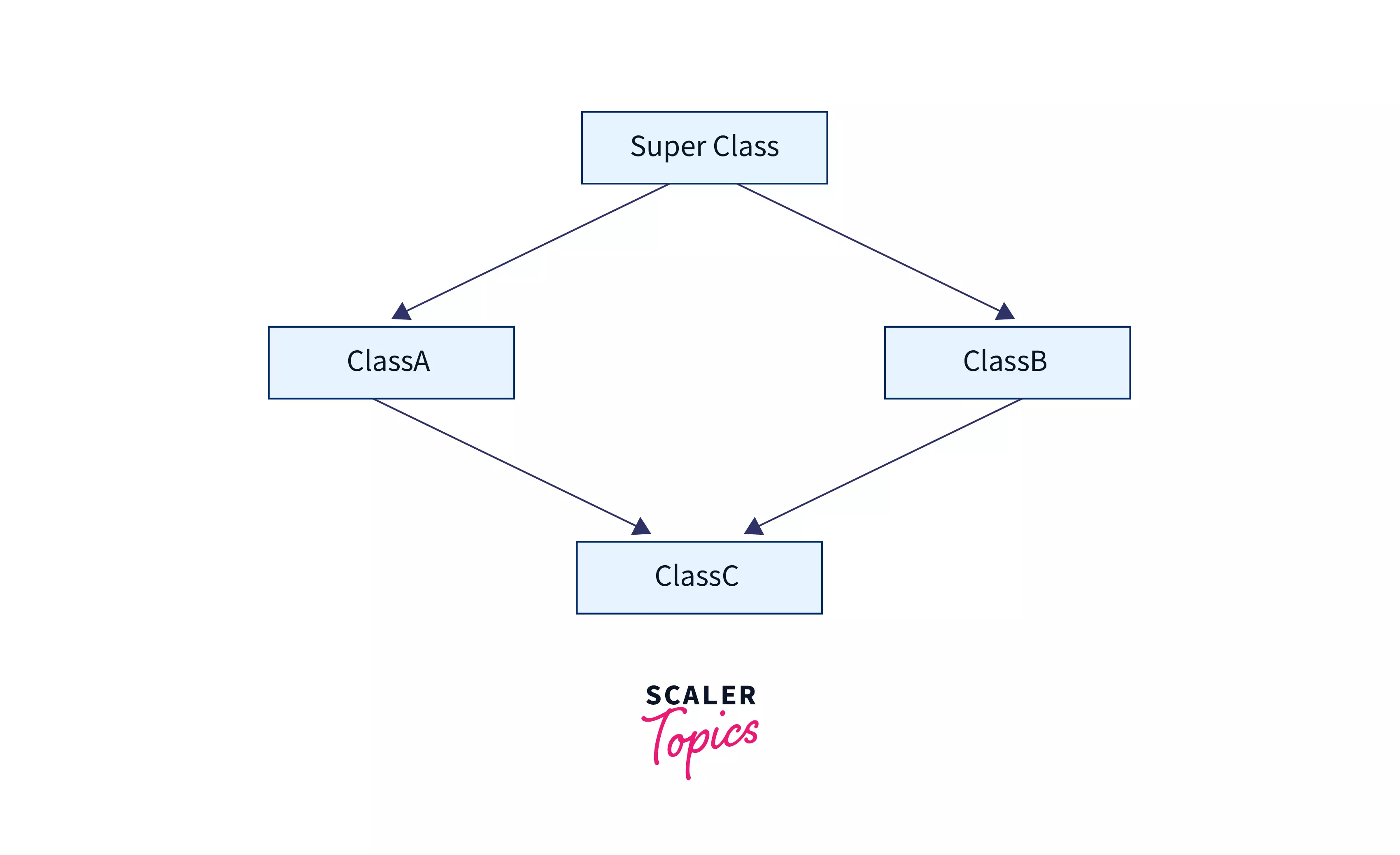
class A
{
public:
    void show()
    {
        std::cout << "Class A" << std::endl;
    }
};

class B : public A
{
public:
    void show()
    {
        std::cout << "Class B" << std::endl;
    }
};

class C : public A
{
public:
    void show()
    {
        std::cout << "Class C" << std::endl;
    }
};

class D : public B, public C
{
public:
    void display()
    {
        // This line creates ambiguity due to multiple inheritance of 'A'
        show();  // Which show() should be called? B's or C's?
    }
};

int main()
{
    D d;
    d.display();  // Ambiguity arises here!
    return 0;
}
Code adapted from ChatGPT
Due to the ambiguity, the code would not run correctly and would instead throw the following error:
error: request for member ‘show’ is ambiguous
Typically there are 3 main ways to solve the diamond problem:
- Avoid inheriting in the pattern that causes it
- Use the scope resolution operator
::preceded by the class name and followed by the function name to eliminate ambiguity - Use virtual inheritance by preceding the inheritance access modifier with the virtual keyword.
The virtual keyword in class B and class C ensures that both classes share the same instance of class A. This prevents D from having two copies of A.
#include <iostream>

// Base class A
class A
{
public:
    void show()
    {
        std::cout << "Class A" << std::endl;
    }
};

// Class B inherits A virtually
class B : virtual public A
{
public:
    void show()
    {
        std::cout << "Class B" << std::endl;
    }
};

// Class C inherits A virtually
class C : virtual public A
{
public:
    void show()
    {
        std::cout << "Class C" << std::endl;
    }
};

// Class D inherits from both B and C
class D : public B, public C
{
public:
    void display()
    {
        // Now the ambiguity is resolved, as A is shared between B and C
        show();  // Which show() should be called? Now it calls C's show()
    }
};

int main()
{
    D d;
    d.display();  // No ambiguity, calls C's show()
    return 0;
}
Code adapted from ChatGPT
When D calls show(), the compiler can determine that there is only one A class instance, which is shared by B and C. In the example above, C's version of show() is called. If you want B's version, you can specifically call B::show().
Class C
- The diamond problem is centered around inheritance ambiguity using poor structure of inheritance
- Avoid the diamond problem whenever possible, but it is easy to solve by using virtual inheritance