Gathering Pertinent Information[FINAL] - N-Division-2018-19-even/Repo-15 GitHub Wiki
Gathering Pertinent Information
Before you can go further in the design process, you need to collect all the information available that relates to the problem. Novice designers (Beginners) will quickly skip over this step and proceed to the generation of solutions. You will find, however, that effort spent searching for information about your project will pay big dividends later in the design process. Gathering pertinent information can reveal facts about the problem that result in a redefinition of the problem. You may discover mistakes and false starts made by other designers. Information gathering for most design problems begins with asking the following questions. If the problem addresses a need that is new, then there are no existing solutions to the problems, so obviously some of the questions would not be asked.
- What kind of information sources are to be searched? Search through internet, YouTube videos, journals, patents, books, local shops and online sites and collect information about existing products.
- What are the existing solutions to the problem?
- Gesture based Robotics
- Mobile Robotics
- Bluetooth Robotics
- Voice controlled Robotics Project
- Sensor Guided Robotics Project
- WiFi controlled Robotics Project
- Swarm Robotics Project
- Maze Solver Robot
- Have you gone through any DIY projects? − Refer to below portals/websites or any other such portals. Find at least 15 webpages related to your project. instructables.com mechatronics.com engineersgarage.com forums.adafruit.com forum.arduino.cc YouTube
https://www.youtube.com/watch?v=rejZmqRrKMc
https://www.youtube.com/watch?v=9evF9PnZ3dw
https://www.youtube.com/watch?v=SA9J7VhiUuI
https://www.youtube.com/watch?v=dGzfg46fG6k(using Raspberry Pi3)
https://www.youtube.com/watch?v=KIu-eQT7Jtk(using Raspberry Pi3)
Sites for gesture controlled robots using Raspberry Pi
http://www.circuitstoday.com/gesture-controlled-robot-raspberry-pi
https://www.hackster.io/jithinsanal1610/advanced-gesture-controlled-robot-using-raspberry-pi-40e0f4
https://www.instructables.com/id/Gesture-Based-Raspberry-Pi-Robot-With-Arduino/(using both raspberry pi and arduino)
https://electronicsforu.com/electronics-projects/hardware-diy/wireless-gesture-controlled-robot
− After referring above mentioned portals fill the table 1.1 10. What all components & sub-components do you feel are needed for your project? List out each component with details you have found out (details can include working principle, constructions, interaction aspects).
1.INTERGATED CIRCUITS:
An integrated circuit (IC), sometimes called a chip or microchip, is a semiconductor wafer on which thousands or millions of tiny resistors, capacitors, and transistors are fabricated. An IC can function as an amplifier, oscillator, timer, counter, computer memory, or microprocessor.

Digital Integrated Circuits
- Logic ICs
- Memory Chips,
- Interface ICs (level shifters, serializer/de-serializer, etc.)
- Power Management ICs
- Programmable Devices
Analog Integrated Circuits
- Linear ICs
- RF ICs
Mixed Signal
- Data Acquisition ICs (including A/D converters, D/A converter, digital potentiometers)
- Clock/timing ICs
2.Electric motors (DC/AC):

An electric motor is an device that coverts electrical energy into mechanical energy . Most of the motors work on motor's magnetic field and winding currents to generate force in the form of rotation.Electrical motors can be classified as brushed or brushless, may be of various phase (see single-phase, two-phase, or three-phase), and may be either air-cooled or liquid-cooled. General-purpose motors with standard dimensions and characteristics provide convenient mechanical power.
Potentiometer
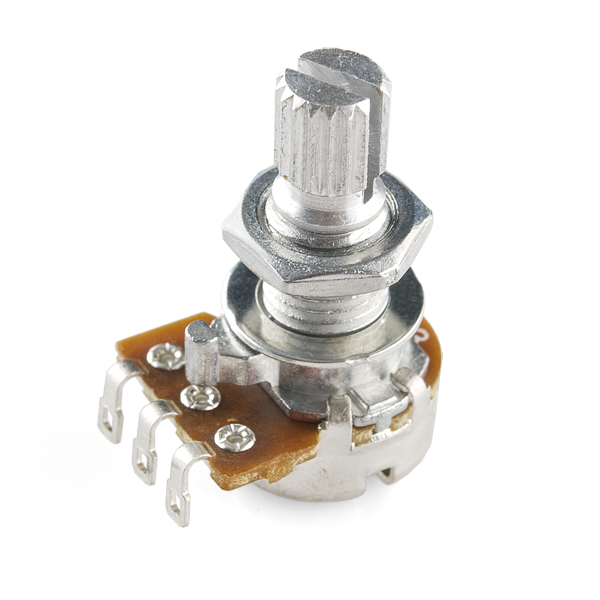
A potentiometer is a three-terminal resistor with a sliding or rotating contact that forms an adjustable voltage divider. If only two terminals are used, one end and the wiper, it acts as a variable resistor or rheostat.
Breadboard
A breadboard is a solderless device for temporary prototype with electronics and test circuit designs. Most electronic components in electronic circuits can be interconnected by inserting their leads or terminals into the holes and then making connections through wires where appropriate.

11.Make sure that the information you collect are recent enough.
| Sl. No. | Components or Parts used | Mechanism/working Principle Identified | Links |
|---|---|---|---|
| 1 | Wheels and shafts | force F applied at the radius R on the large gear to turn the shaft is sufficient to overcome the larger force W at the radius r on the small gear. The force amplification, or mechanical advantage, is equal to the ratio of the two forces (W:F) and also equal to the ratio of the radii of the two gears | https://www.britannica.com/technology/wheel-and-axlehttp://www.robotpark.com/Wheels-Shafts |
| 2 | CNC parts | CNC (Computer Numerical Control) machining is a subtractive manufacturing technology: parts are created by removing material from a solid block (called the blank or the workpiece) using a variety of cutting tools. | https://www.quora.com/What-is-a-CNC-machine-and-what-is-its-working-principlehttp://home.iitk.ac.in/~nsinha/CNC.pdfhttps://www.thomasnet.com/about/cnc-milling-51276103.html |
| 3 | Integrated circuits | vacuum tubes in electronic circuits obsolete, replacing them with germanium- and silicon-based semiconductors to make the circuits smaller and more durable. The rest of the circuits including capacitors, resistors, and wiring remained largely unchanged , researchers naturally focused on making the circuits even smaller.Certain improvements were achieved as a result, including the replacement of the aluminum breadboard with the printed circuit board and the introduction of smaller parts. | https://www.tel.com/museum/exhibition/principle/ic.htmlhttps://www.elprocus.com/different-types-of-integrated-circuits/ |
| 4 | IR sensors | The principle of an IR sensor working as an Object Detection Sensor can be explained using the following figure. An IR sensor consists of an IR LED and an IR Photodiode; together they are called as Photo – Coupler or Opto – Coupler.When the IR transmitter emits radiation, it reaches the object and some of the radiation reflects back to the IR receiver. Based on the intensity of the reception by the IR receiver, the output of the sensor is defined. | https://www.electronicshub.org/ir-sensor/https://www.elprocus.com/infrared-ir-sensor-circuit-and-working/https://www.azosensors.com/article.aspx?ArticleID=339 |
What direct solutions are available for the need statements given for you? List all those solutions with images and brief description with proper citation.
1. Gesture based Robotics:
Gesture based robotics deals with robots that involve human-machine interaction – where the robot can be controlled through our hand movements. An accelerometer sensor can be used to control the robot’s movement which can detect the movement of our hand along 3 axes. By doing this project we will learn the concepts behind the accelerometer sensor, working of micro-controllers and their programming.
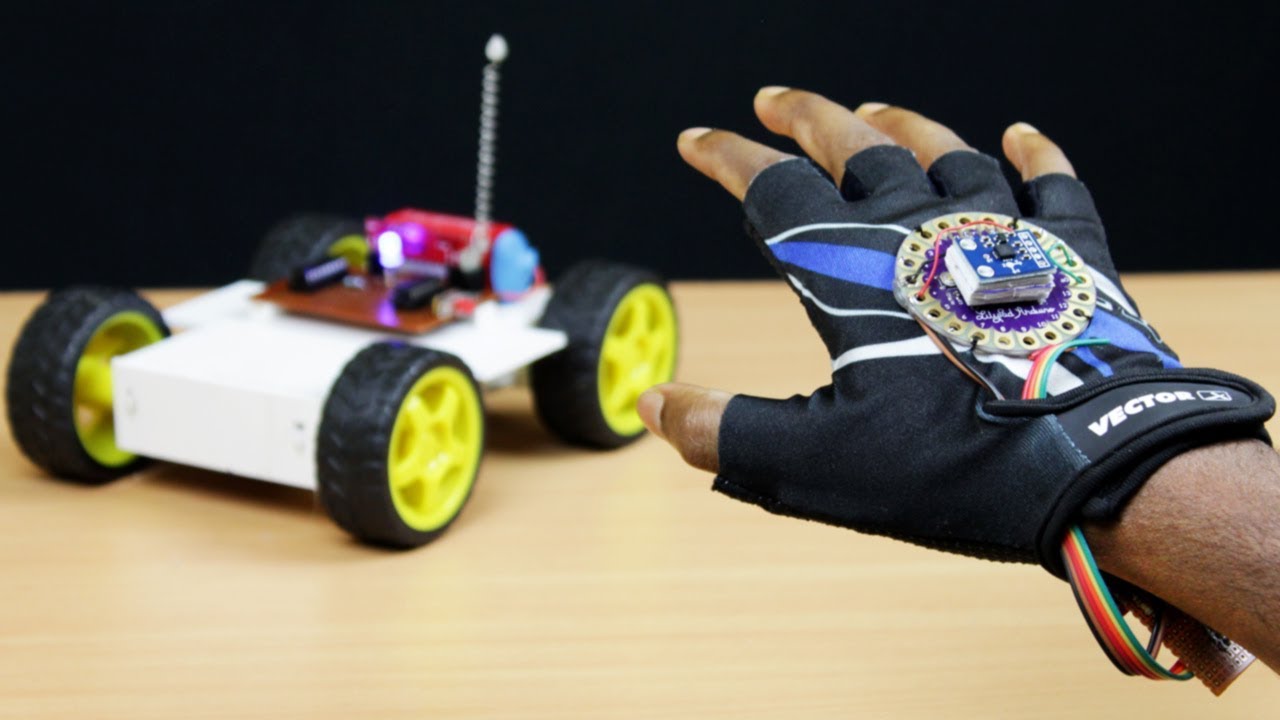
To build a Gesture based Robotics Project you need 3 major components,
- Micro-controller – It acts as the brain of the robot and controls the voltage given to the motors
- ADXL 335 – It is the accelerometer sensor that can be used to detect the hand movement
- DC Motors – It will be used to operate the robotic vehicle based on the output from the micro-controller
2. Aerial vehicle:
Sphere drone(aerial vehicle) has possible applications in search & rescue, film making, military and many more such domains. Developing the sphere drone on your own will help you gain practical insights on flight theory and other drone technologies https://youtu.be/NWABG4oN5j4
3.RC Aircraft:
RC Aircrafts are one of the fast growing toy in toy industry. Building an own RC aircraft will help in studying and gaining new aerodynamic theories and practical flight theories. https://youtu.be/y-1vMKdC2jM
7.Observe in local market, online market, and various labs of the college and in and around your locality to find out relevant hints and ideas which can be helpful for your project. List out at least 5 such observations, for each observation give a brief description with images.
Virtual Telepresence Robot Using Raspberry Pi
This robot with a camera is placed in a remote location to capture the environment in visual form using Raspberry Pi (RPi). The captured visuals are displayed on the user’s virtual reality (VR) headset.An added feature allows the camera to move in the direction of the user’s head movements.
Fire Extinguishing Robot
Many major accidents are averted by extinguishing fire at an early stage. The aim in this next project is to build a robot that can detect and extinguish fire. This fire extinguishing robot is a prototype of the actual one. Sensors used here are simple infrared (IR) photodiodes that detect IR rays coming out of the fire
Wireless Gesture-Controlled Robot
In this project, we are going to control a robot wirelessly using hand gestures. An accelerometer detects the tilting position. A microcontroller gets different analogue values and generates command signals to control the robot. Robotic arms used for welding or handling hazardous materials are other implementations of this concept.
8.Calculate cost estimation for the existing solution. Even though reports are to address the questions listed above, the report should still be written as a well composed, cohesive document, not merely a sloppy collection of responses to the given questions. Keep your audience in mind; common technical jargon may be used, but word or phrases limited to a specialized field should be clearly defined. It should also have a bibliography for citing references. You can also include pictures and tables related to your project work. Please note that even these tables and pictures are also to be cited. Citing a source means that you show, within the body of your text, that you took words, ideas, figures, images, etc. from another place, example is given below.
Citations are a short way to uniquely identify a published work (e.g. book, article, chapter, web site). They are found in bibliographies and reference lists and are also collected in article and book databases. Citations consist of standard elements, and contain all the information necessary to identify and track down publications, including: 1.Author name(s) 2.Titles of books, articles, and journals 3.Date of publication 4.Page numbers 5.Volume and issue numbers (for articles) Citations may look different, depending on what is being cited and which style was used to create them. Choose an appropriate style guide for your needs. Here is an example of an articlecitation using four different citation styles. Notice the common elements as mentioned below and the table contains the different styles for citing you have to refer the IEEE Style: 1.Author - R. Langer 2.Article Title - New Methods of Drug Delivery 3.Source Title - Science 4.Volume and issue - Vol 249, issue 4976 5.Publication Date - 1990 6.Page numbers - 1527-1533
| Sl.No | Styling Guide | Example |
|---|---|---|
| 1 | American Chemical Society (ACS) style | Langer, R. New Methods of Drug Delivery. Science 1990, 249, 1527-1533. |
| 2 | IEEE Style | R. Langer, "New Methods of Drug Delivery," Science, vol. 249, pp. 1527-1533, SEP 28, 1990. |
| 3 | American Psychological Association (APA) style | Langer, R. (1990). New methods of drug delivery. Science, 249(4976), 1527-1533. |
| 4 | Modern Language Association (MLA) style | Langer, R. "New Methods of Drug Delivery." Science 249.4976(1990): 1527-33 |
Captions are to be put below every image, graph or picture. The caption should include “Fig. X” before the caption, where X is the figure number. The caption put can be observed below the two images shown in this document. Similarlly the captions are to be put above the tables, like shown below. At the end of the report include the reference section. Examples on how various references can be included are shown below.
References:
Example 1 - Journal: Author Name, Year of publishing, Title of the project, Title of the Journal, Edition, Page numbers.
[1]Kleiner, B. M. (1998). Macroergonomic analysis of formalization in a dynamic work system. Applied Ergonomics 29(4), 255-259.
Example 2 - Conference Proceedings: Author Name, Year of the publication, Title of the Project, Title of the conference, Place of conference, Date of conference, Page numbers as according to conference proceedings.
[2]Hahn, H. A. &deVries, J. A. (1991). Identification of human errors of commission using Sneak Analysis.Proceedings of the Human Factors Society 35th Annual Meeting.San Francisco, 2-6 September, 1080-1084.
Example 3 - Book: Author Name, Year of Publication, Title of the book, Edition, Publisher.
[3]Embrey, D. E., Kontogiannis, T., Green, M. (1994). Preventing Human Error in Process Safety. Centre for Chemical Process Safety CCP. New York, NY: American Institute of Chemical Engineers.
Example 4 - Web Page: Author of web page (if available). (Date of publication). Title of web page. Retrieved from URL (web address).
[4]Knaresboro, T. (August 31, 2010). How to Make the Perfect French Fry. Retrieved from http://www.popularmechanics.com/science/how-to-make-the-perfect-french-fry. [5]2016 dictonary.com, http://www.dictionary.com/browse/bibliography [6]https://c1.staticflickr.com/1/563/32126678760_67fd7b1cec_o.jpg [7]https://lh3.googleusercontent.com/OYdK9Pv1pdk/UvTeE_XO5DI/AAAAAAAAA4Q/IK0BeTZZJM4/w530-h398-n/dvorniki.gif Please note that the below mentioned citations are wrong and should not be included in bibliography, since they are search engines. The references should include the web address of the page from which you have retrieved the information. [8]www.google.com (This is wrong way of citation) [9]www.wikipedia.com (This is wrong way of citation)