Soul Storm Sculpt Study - Herbertofury/Advent-of-Ascension GitHub Wiki
New authoring reconstruction · visual acceptance open · not a native TaCZ gunpack.
Weapon identity and source behavior · Current editable scene · Motion preview
Current revision: v31. Art acceptance and native gameplay acceptance remain open. Start with the current renders and scoped checks below; earlier revisions are preserved in the expandable history.
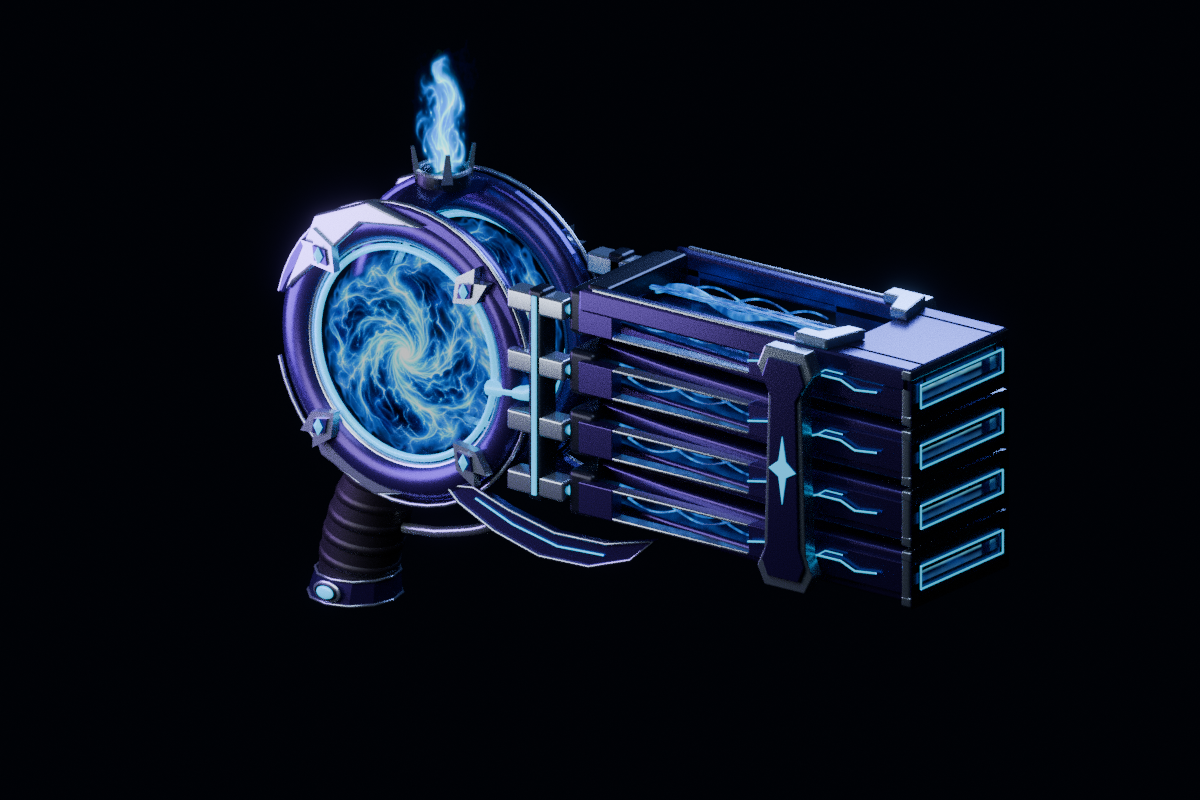
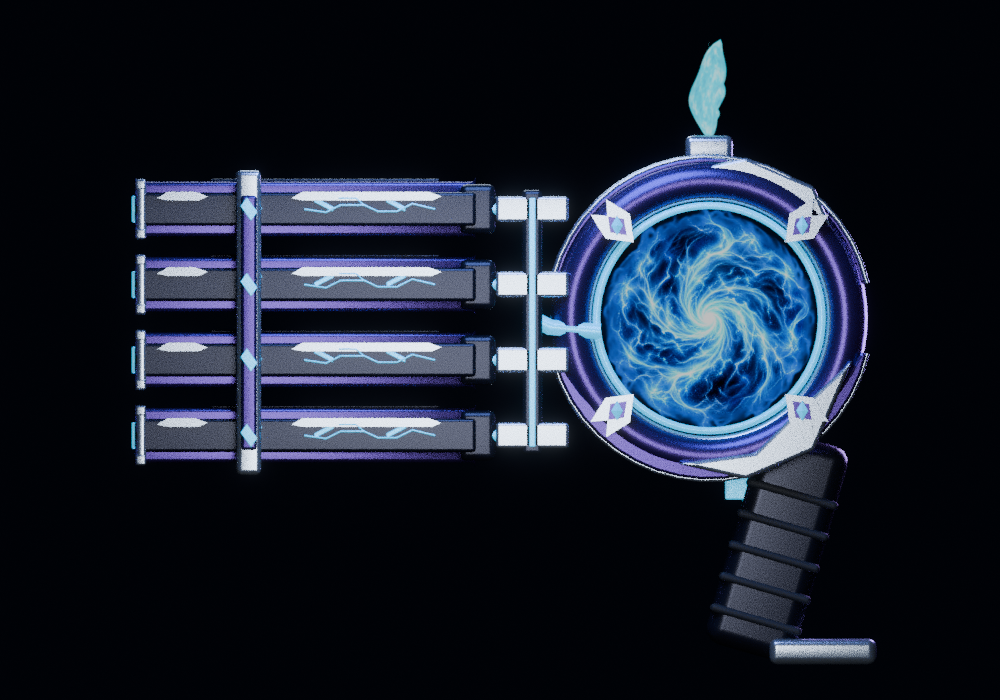
This combined authoring revision retains the baked grip and adds a broader side saddle, a more visible rooted flame, four tapered focused sight prongs with an open center, wider actual disc channels and symmetric oval heel settings. Grip, trigger and guard dimensions were not shrunk to make decoration fit. Prior concepts and studies remain preserved.
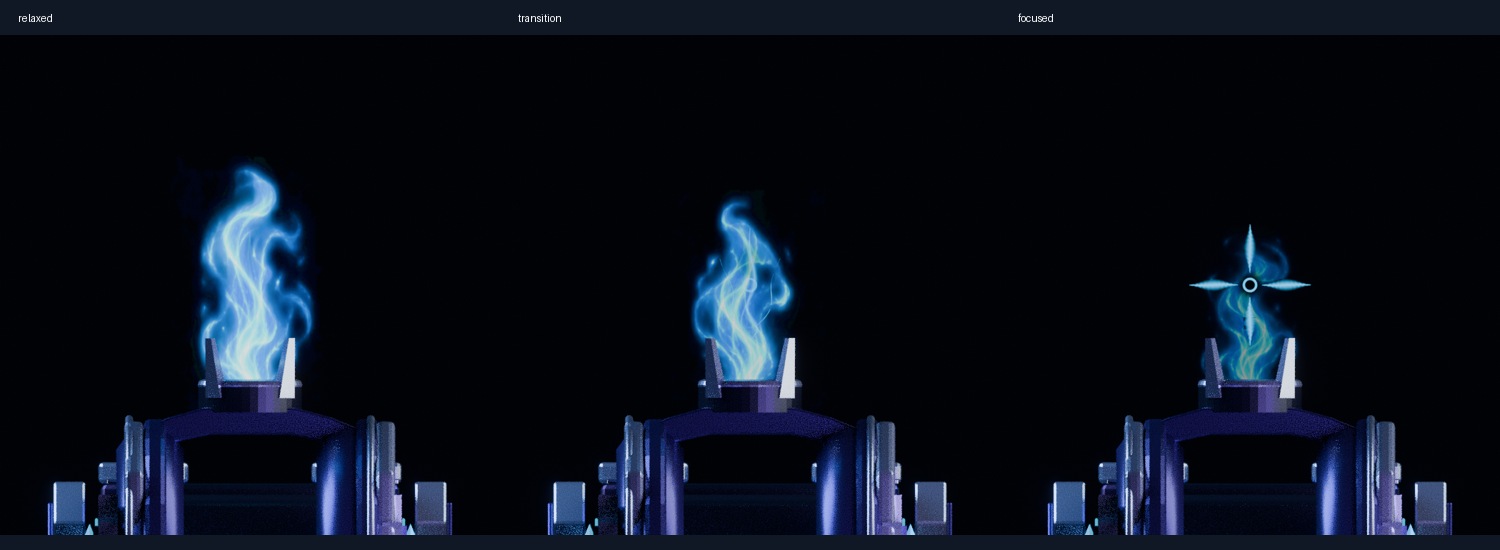
The aperture field is an authoring-only transparent/emissive surface, not a physical wall. Its native material support, aim alignment and effect cost are unproven. The sight remains an authoring effect; these renders do not certify a working in-game crosshair.
- 101 sampled frames, 5,258,960 active triangle samples; declared inactive zero-scale projectiles are recorded separately.
- 132,660 scoped saddle/mechanical surface pairs with no reported intersections. This excludes plasma parts and does not prove containment or continuous-time clearance.
- Frame-zero mesh winding check found no negative-volume closed meshes. All five file-backed images are packed.
- The v25 leather maps and grip GLB were separately regenerated byte-for-byte from their published source archive; this does not certify the full v31 native material pipeline.
The emitter stack remains too boxy, the underside/rear too plain and the grip still reads rubber-like in some lighting. The circular core dominates the silhouette. These are open art defects, not waived QA gates. Actual arm fit, native animation/export, source projectile captures, multiplayer and measured performance remain unaccepted.
Editable scene and scoped check scripts · Evidence and limitations
Watch the 3.05-second slowed authoring clip. It shows the four top-to-bottom cosmetic lanes, recoil recovery and authored disc presentation. This is Blender footage, not a native game test or a claim about released firing cadence.
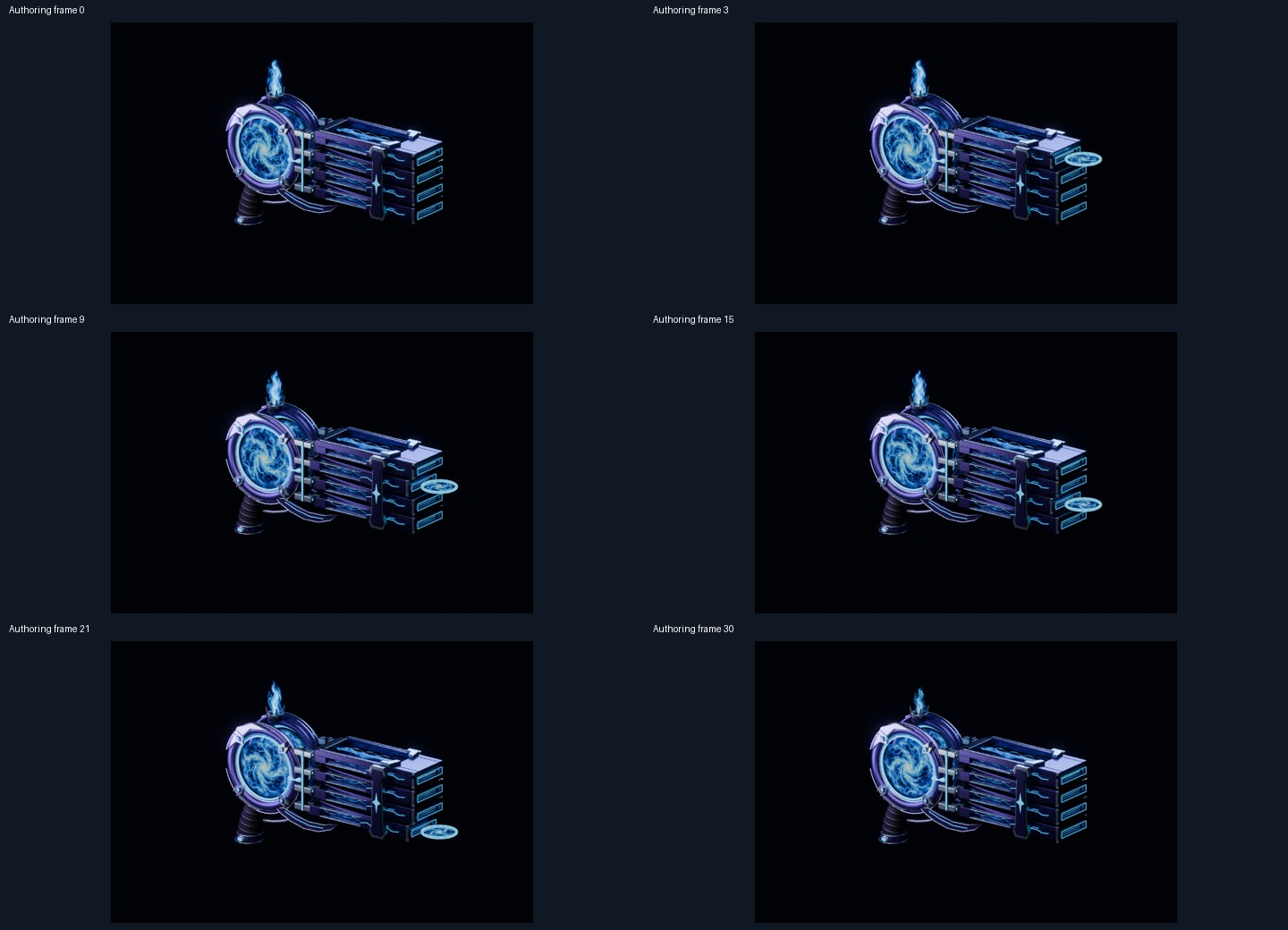
Video scope and render receipt. The clip is linked rather than automatically playing on the wiki.
Four position-only recoil clips now have synchronized solid and illuminated tracks. The paired tracks address a real integration risk: moving a solid emitter while its glowing geometry remains on a sibling track. The final native geometry must still provide the declared aliases or a verified owner-parent hierarchy.
The released TaCZ 1.1.8-hotfix2 animation parser accepted all four clips / eight tracks / 328 keys on Java 17 and 21 with documented helper stand-ins. Sampled linear approximation error stayed below 0.005 model units. Eight contract tests check malformed or inconsistent track data.
The R3 presenter consumes the existing confirmed-shot core instead of maintaining a second lane counter. A regression check caught the earlier R1/R2 defect: ordinals 1 and 5 should both select the top emitter, but counting arrivals selected the second lane. Those earlier adapters are superseded and retained only as history.
The original Lua presenter reuses four tracks and has no per-frame polling callback. Its 10,000-presentation mock-context fixture passes 20,029 assertions. Invalid or duplicate native track IDs are rejected; cleanup attempts all tracks and can retry only failed stops. These are bounded-state design checks, not a Minecraft FPS result.
The unchanged Java core and the Lua presenter now run together in an isolated bridge fixture: 29 assertions on Java17 and Java21 cover ordinal gaps, duplicate/stale events, wrong weapon/session, rejected attempts and unsupported variants. The core retains replay/configuration authority; Lua consumes only its resolved zero-based emitter index. Five/six-emitter configurations need matching native assets and presenter support, with safe fallback meanwhile.
The presenter does not consume ammo, spawn projectiles or schedule gameplay. Prediction reconciliation, actual native event/bone binding, arms, materials and multiplayer remain open. Soul Storm uses the separate BaseBlaster energy/charge path, so a BaseGun-only or recoil-packet hook would miss its native firing. The all-228-item source audit and packet identity limitations are documented in the linked core page.
Current R3 presenter, clips and tests · R3 evidence and regression
Earlier authoring studies and preserved evidence (through v25)
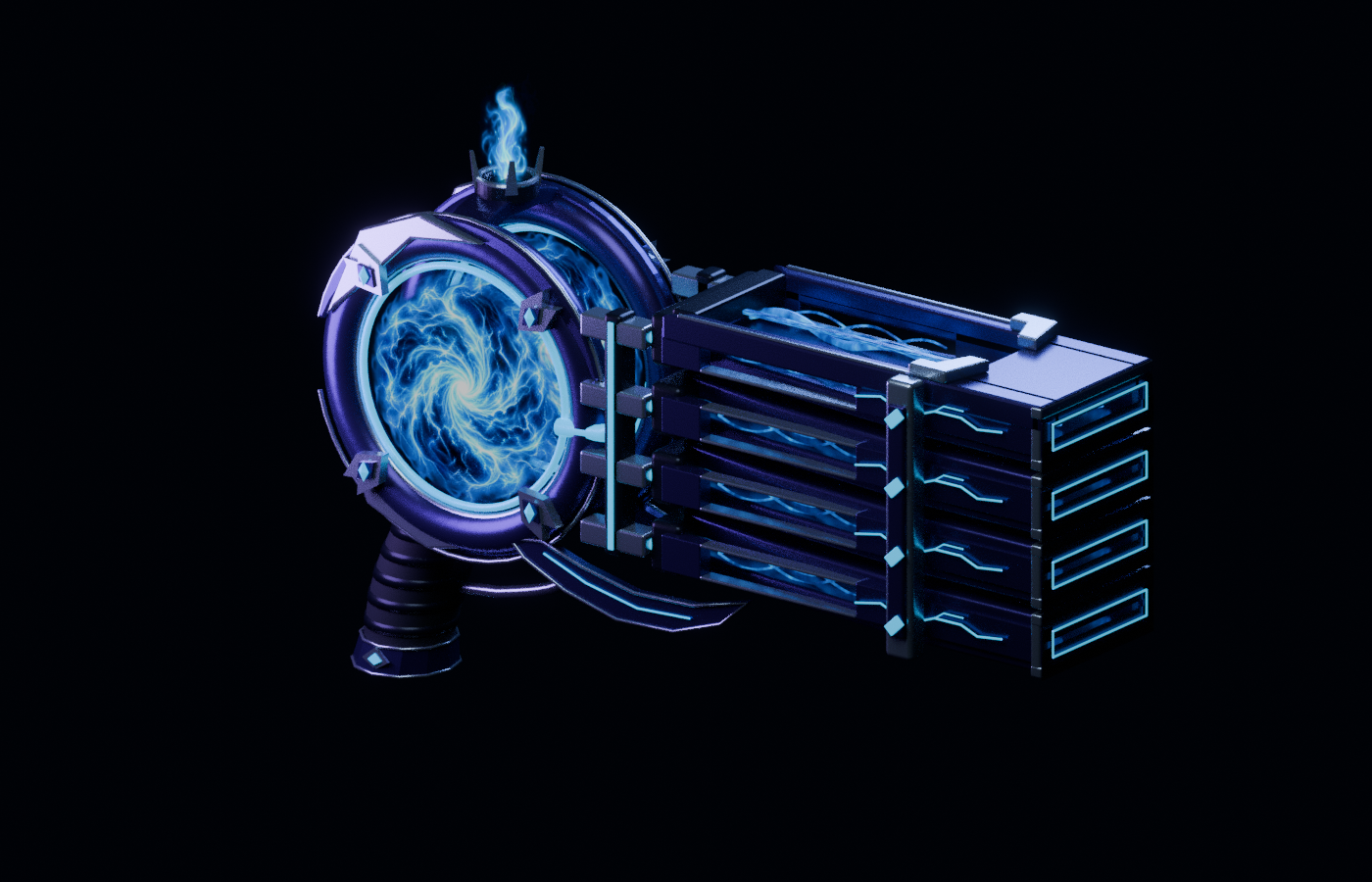
The solid top slab is replaced by tapered armor around an exposed conduit. The contained energy has blue/cyan variation instead of flat white tubes. Front/rear inspection caught a remaining gap below the flame holder: rooting the flame image had not physically attached its base. A new saddle now joins the holder to both armor hoops. All seven review views are retained.
The source remains unaccepted: the stack is still boxy, energy too tube-like, underside/rear detailing sparse, and native texture/shader/hand/gameplay work unfinished. The 101-frame check covers 5,097,360 active triangle samples without collapse; neutral winding and duplicate-surface checks pass within their stated scope. These checks do not prove continuous collision, native rendering or fun.
Editable v22 source and evidence. The separate v19 hardware-only export does not include these later changes. Earlier sources and concepts remain preserved below.
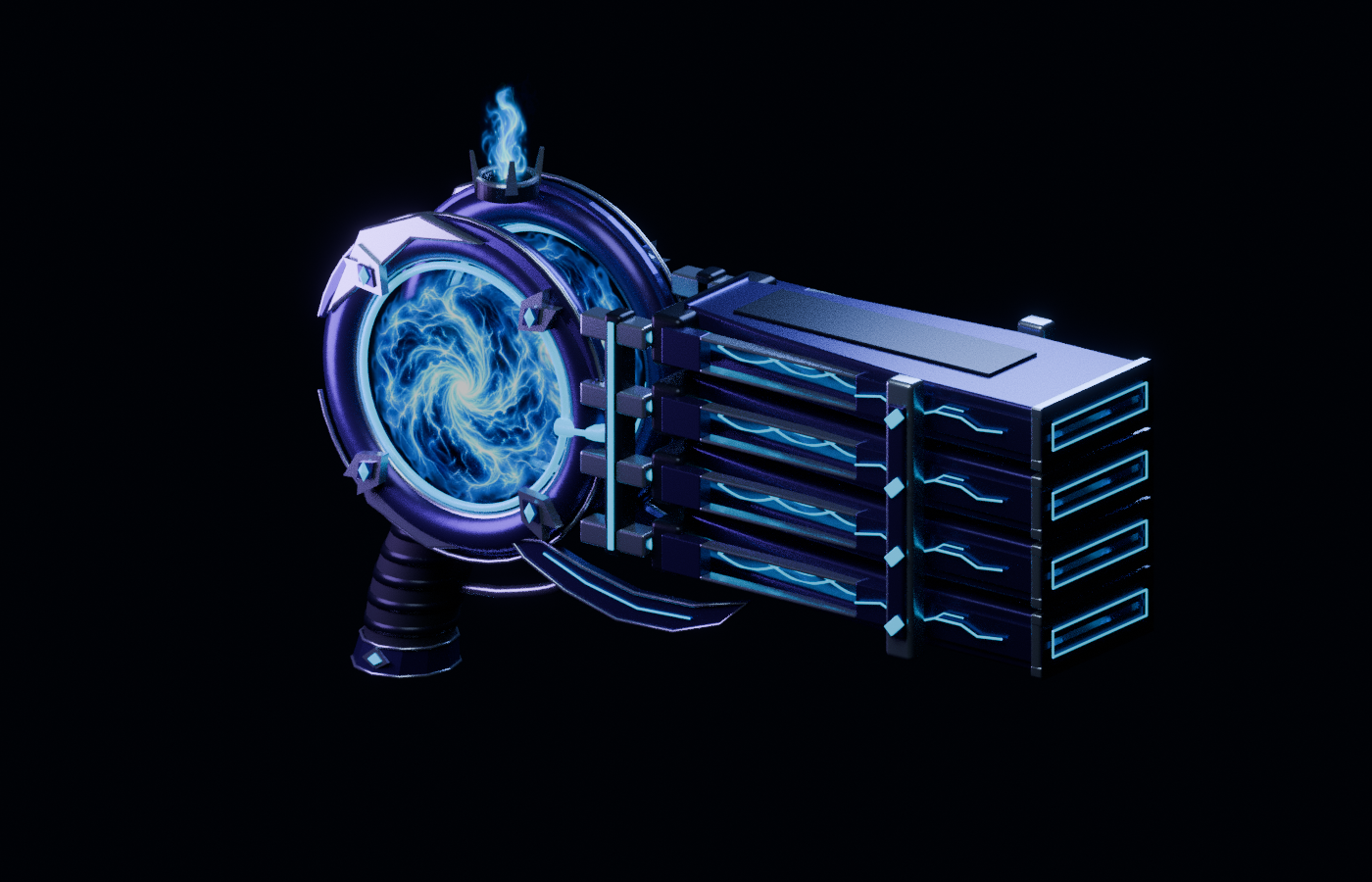
The v19 source adds a fitted faceted heel, a swept lower receiver/guard and real side-wall openings exposing the contained energy. Runes move onto the front armor rather than floating across the new windows. It still lacks the concept’s full surface treatment and living-plasma richness; artistic acceptance remains open.
A deeper audit found 36 inward-facing closed parts in the prior source. v19 corrects their winding while preserving unoriented faces, UVs, material assignments and transforms. The current closed-volume audit has no negative closed volumes. The 101-frame active-geometry check covers 5,000,400 triangle samples with no degeneracy. Open surfaces, native culling, hand fit and continuous collision remain separate gates. Earlier exports need rebuilding from corrected sources before release.
The actual scene runs at 60 authoring fps and holds each atlas cell for four frames: 15 cells/second, not the earlier assumed six. The presentation-core timing correction is tested against the inspected timing receipt; this is not native game-clock integration.
Earlier v19 editable source and correction tools · Surface QA findings and limits
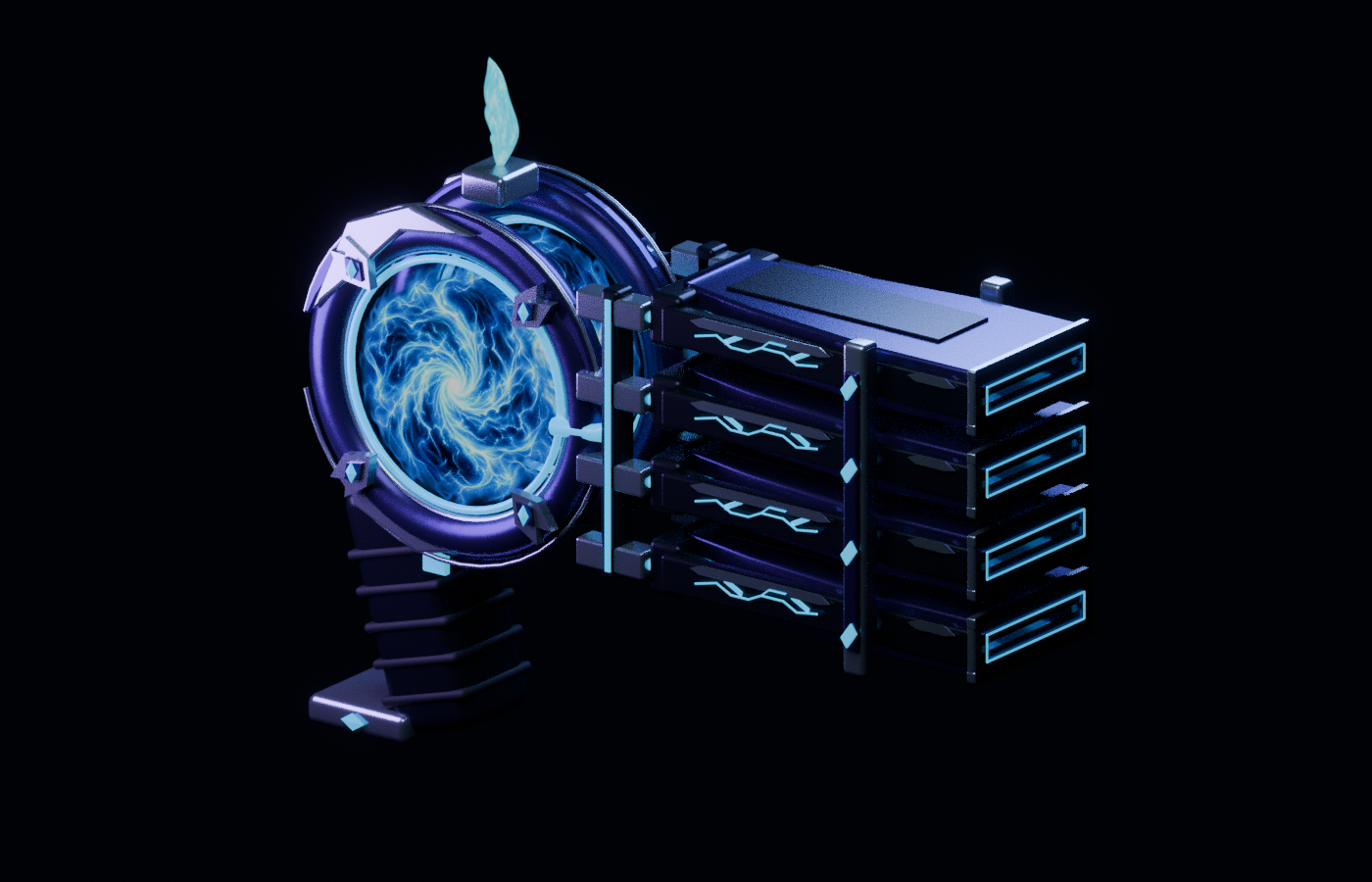
Earlier v9 sampled motion (historical) · Download editable sources, Blender files and retained v5–v9 iterations
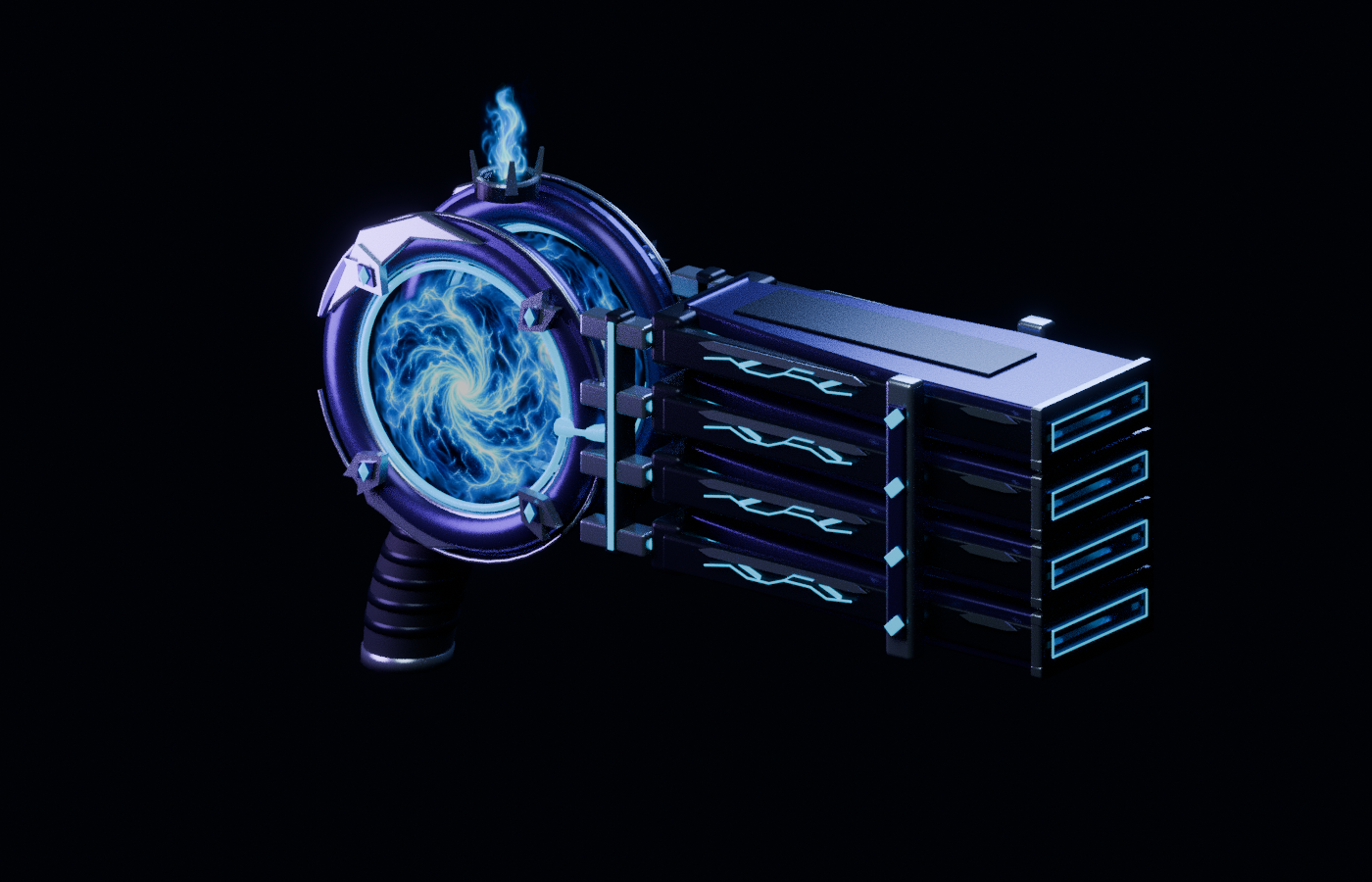
The grip is now continuous and curved; emitter proportions are rebalanced. A rooted sixteen-frame flame replaces the weak leaf-like plane. Four geometric filaments morph toward a focused reticle. A softly cleared center is an authoring experiment, not verified native aim alignment.
QA caught and corrected integer-valued focus snapping and a collapsing intermediate ribbon. Final focus sampling covers 101 frames and 21 distinct values, with a 0.5 midpoint. The whole active scene check covers 4,552,768 triangle samples without active degeneracy. It separately records 776 object/frame instances of explicitly zero-scale inactive authoring projectiles; those are not treated as valid native visibility.
Still rejected for complete visual/native acceptance: planar launcher surfaces, insufficient grip/material detail, missing finished UV textures and untested native effects/play feel. The sixteen-frame atlas needs an explicit adapter rather than the older fifteen-frame helper. Blender shader and shape-key behavior is not proof of native support.
Editable v16 scene, scripts, atlas and scoped QA · Actual reference-pack texture study · Complete weapon standard
The four-emitter candidate gains sculpted silver/indigo core clasps, branching cyan inscriptions, layered metal inlays, an open glowing muzzle border and a heel crest. The Soul Flame remains the default sight. This is an actual modeled/rendered revision toward the retained concept, not a generated concept passed off as finished geometry. It is still short of final artistic/native acceptance.
The first muzzle glow placement was buried in the housing, so it was moved onto the visible border without filling the disc aperture. Final scoped QA checks 73 added objects / 1,704 triangles, 69,696 sampled moving-decoration vs stationary-saddle AABB pairs, and 16 glow-border aperture checks with no recorded violations. New triangles pass the neutral-pose transformed-space degeneracy check. Seated decorative contact, full hand fit and continuous whole-weapon collision are separate open gates.
Reproducible v15 refinement and QA scripts · Exact scoped receipt
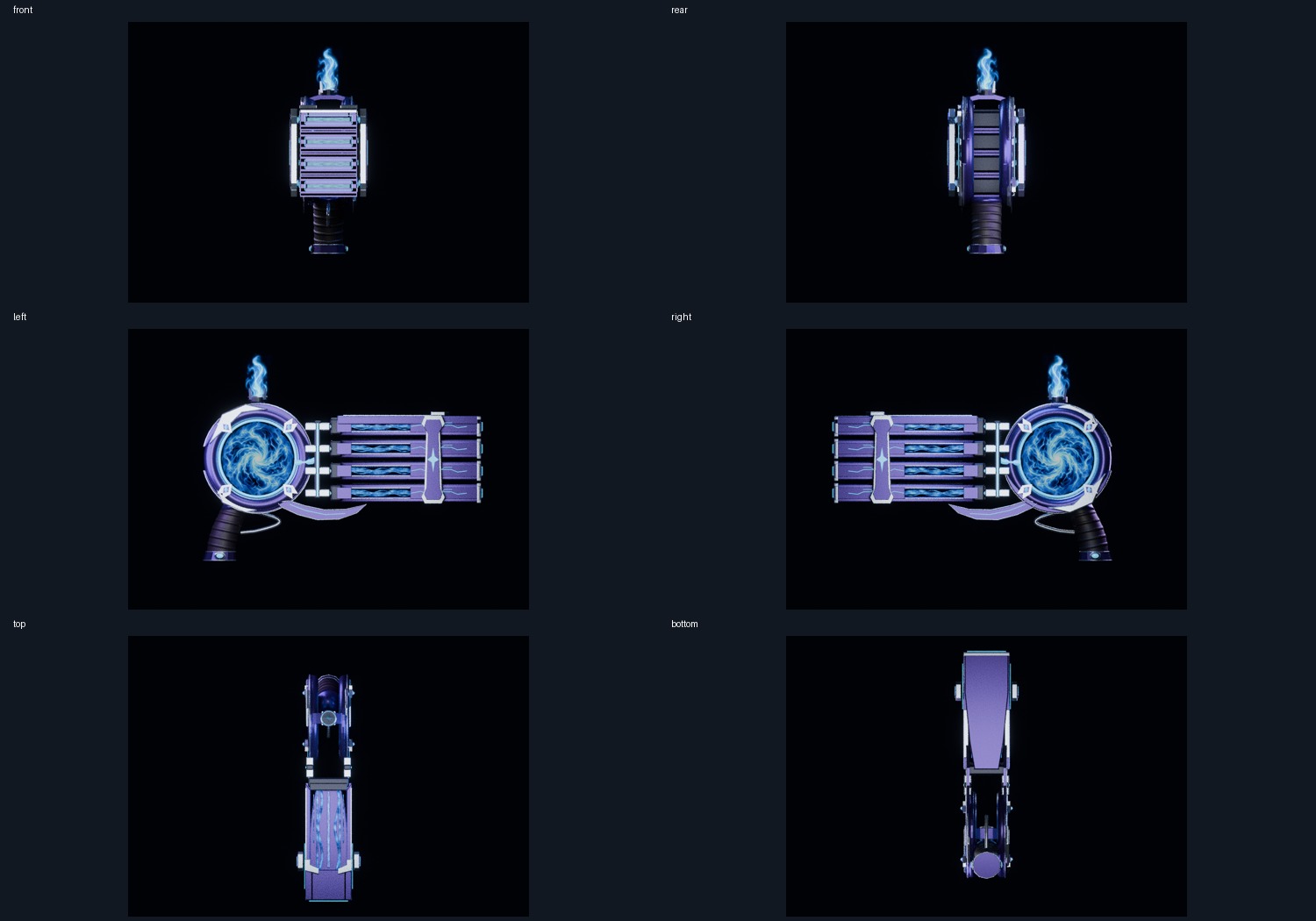
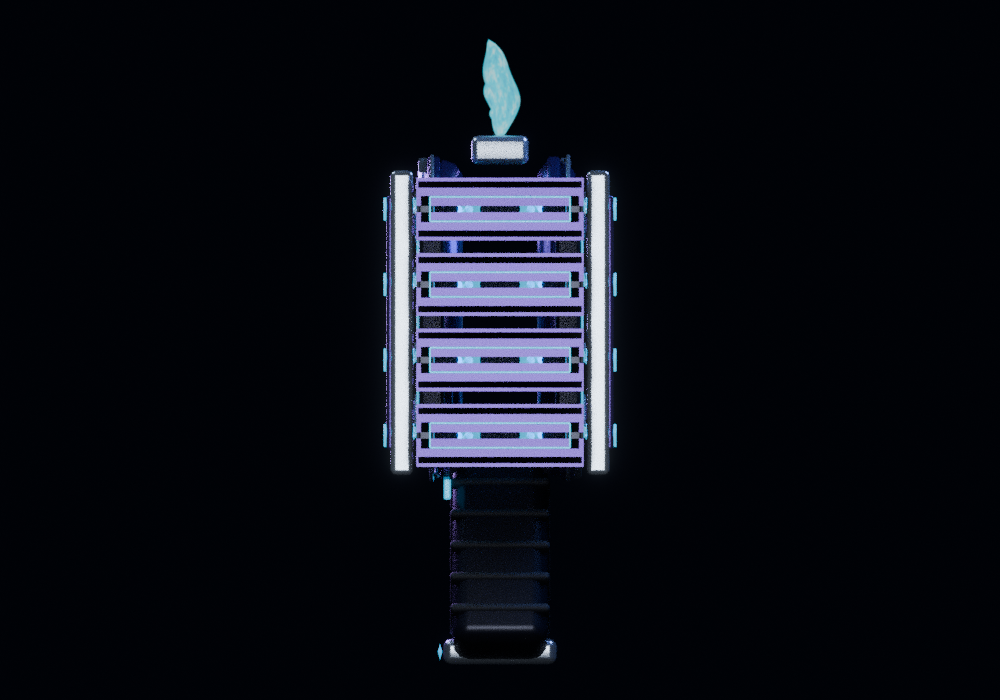
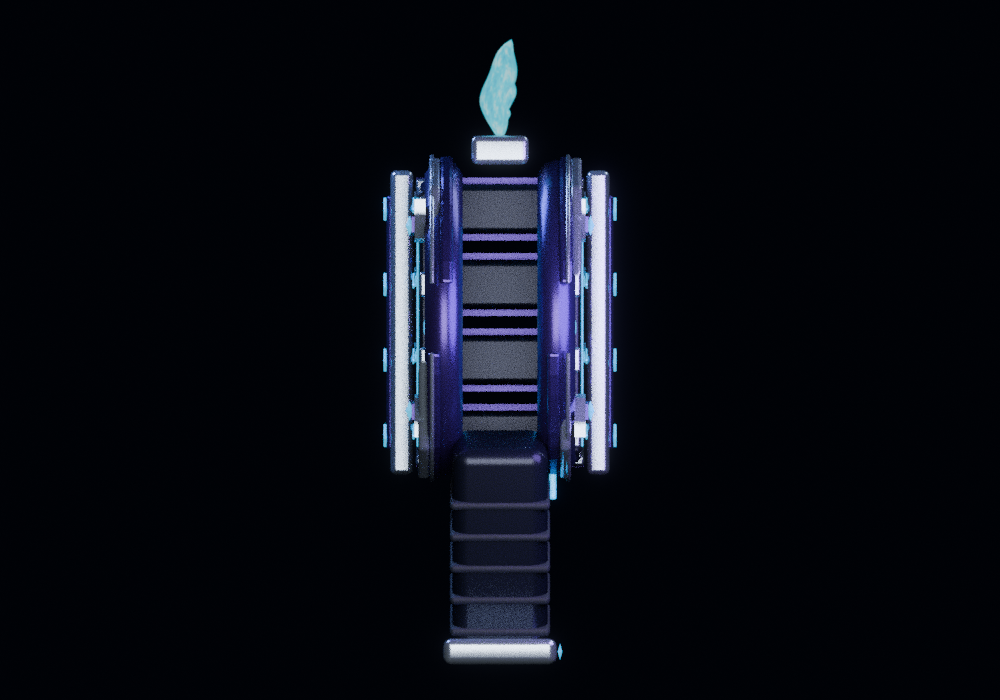
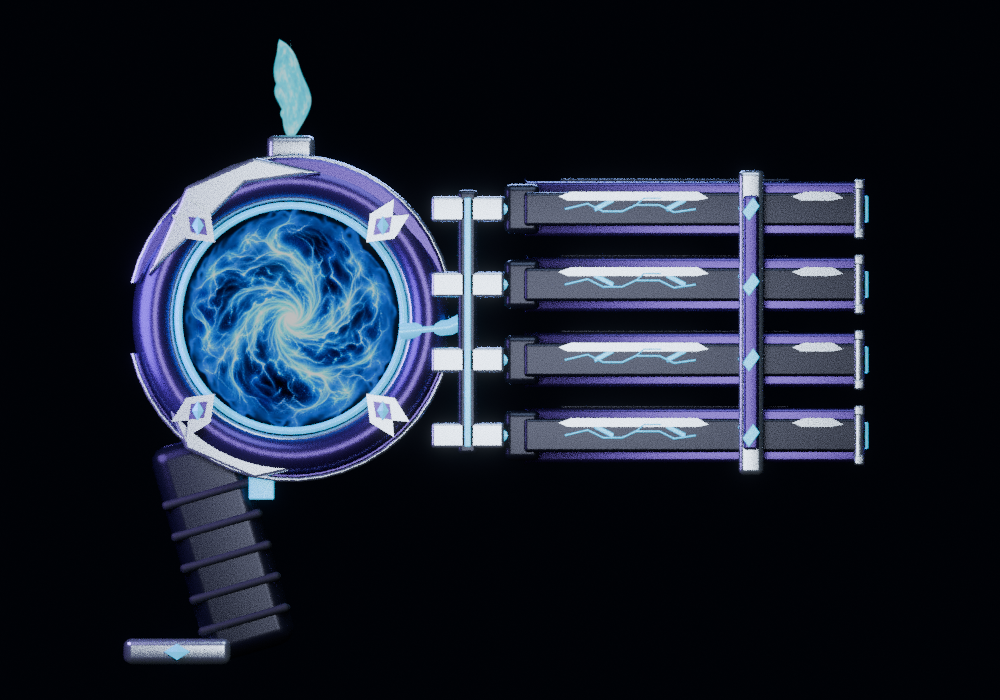
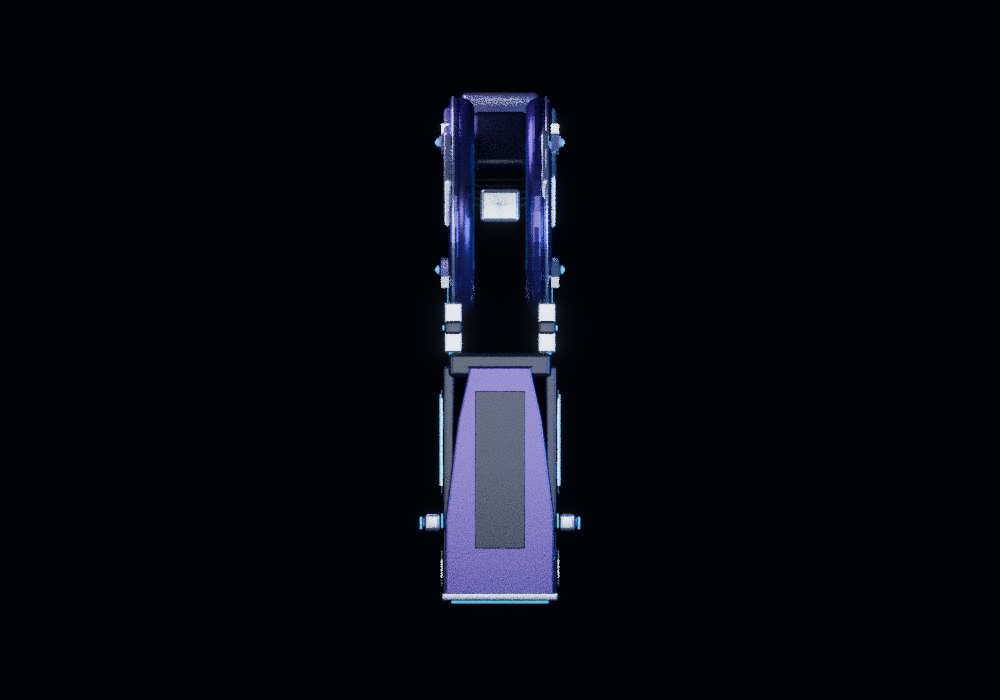
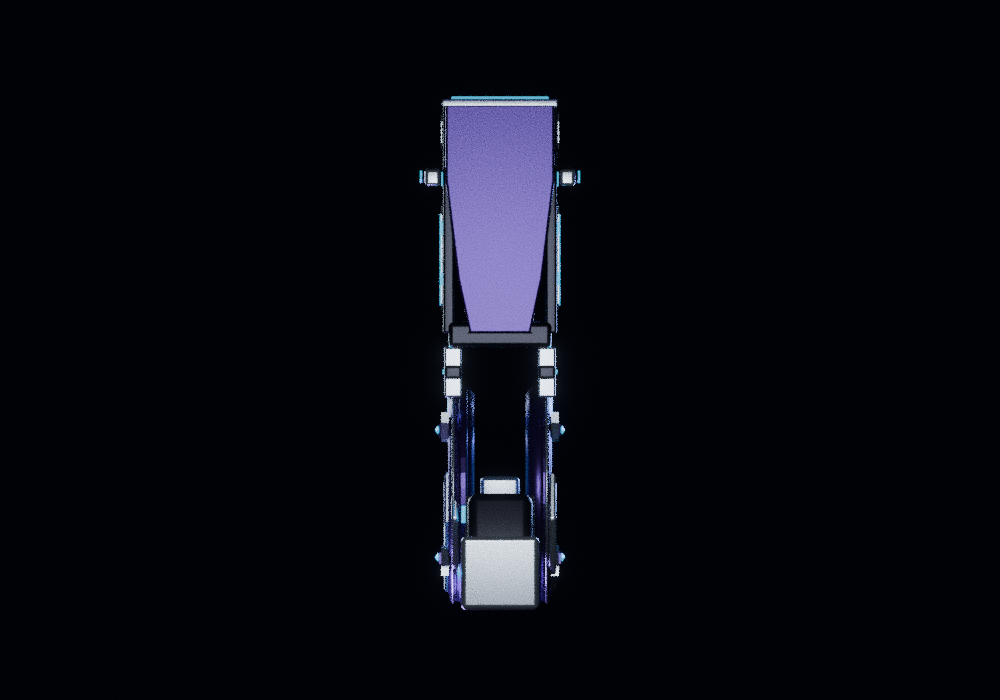
These inspection renders add camera-facing light; they do not represent native shading. Top/bottom framing was corrected after the first camera cropped the body. The angle-dependent flame card remains an open native-presentation issue.
| Front | Rear |
|---|---|
 |
 |
| Left | Right |
 |
 |
| Top | Bottom |
 |
 |
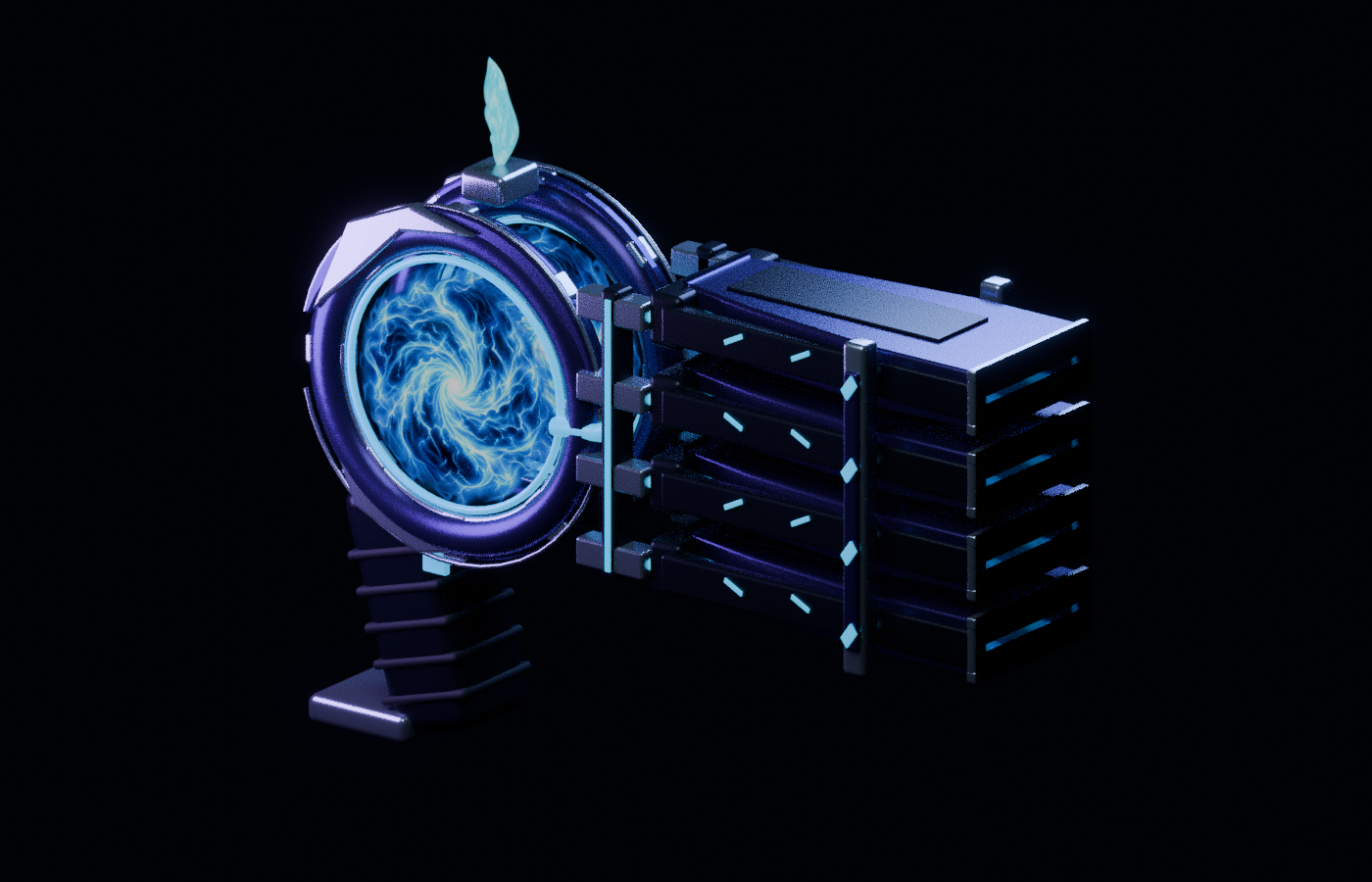
The original four/five/six-emitter source variants now have a separate targeted correction for the objects that failed world-space triangle QA. It does not reduce bevel segmentation or decimate the full-detail geometry. The unchanged original files remain available.
| Emitters | Corrected objects | Collapsed triangles before → after | Evaluated triangles retained |
|---|---|---|---|
| Four | 9 | 264 → 0 | 53,952 |
| Five | 11 | 328 → 0 | 61,304 |
| Six | 13 | 408 → 0 | 68,656 |
All three variants pass 17 sampled scene frames, with animation and core-UV digests unchanged. Intentionally zero-scaled projectile cues are counted separately. This is a sampled geometry fix, not continuous collision, hand, native visual or gameplay acceptance. The reviewed previews preserve the broad source design; further artistic polish remains open.
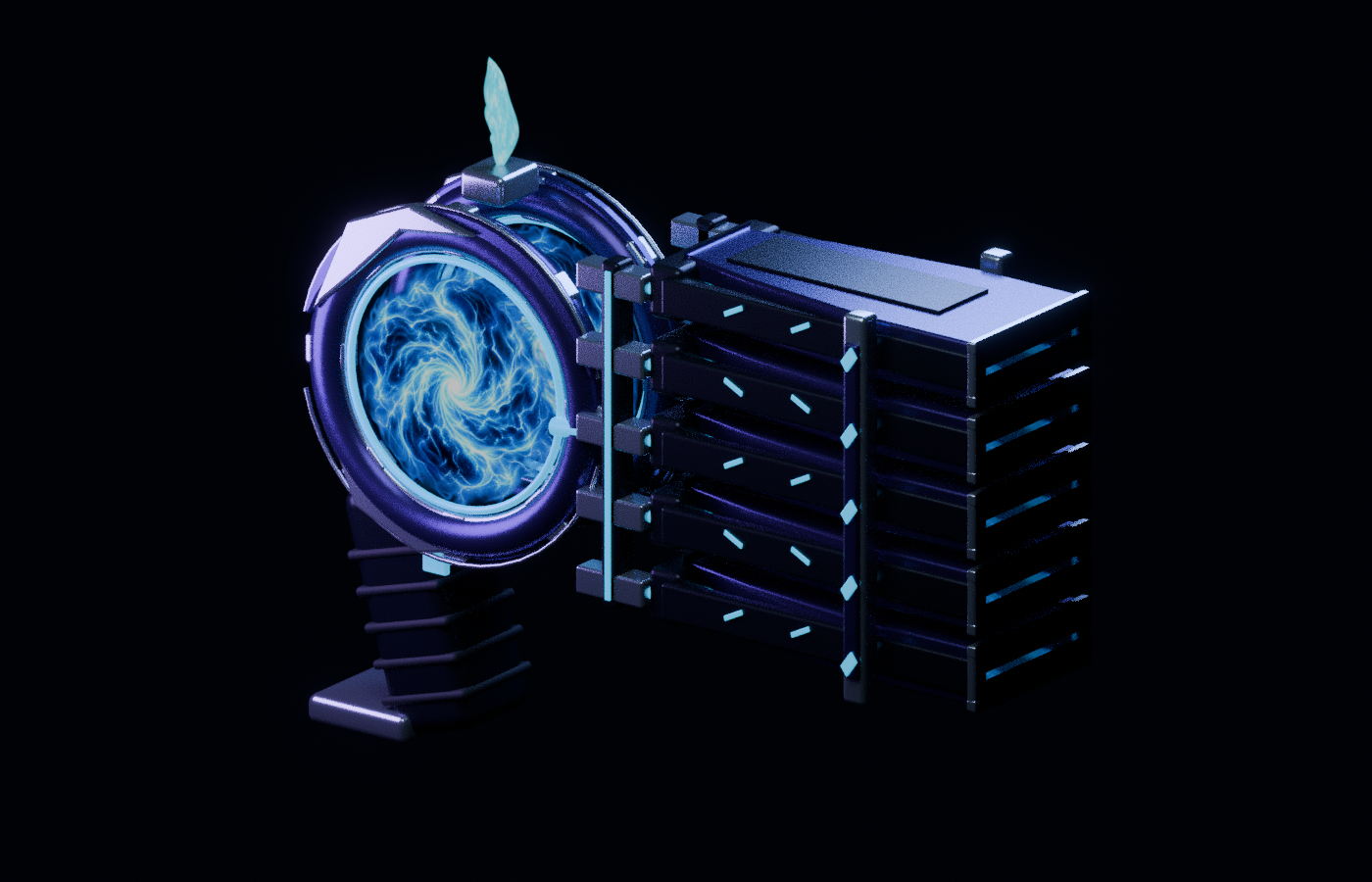
| Four emitters | Five emitters | Six emitters |
|---|---|---|
 |
 |
 |
Small reproducible targeted correction · Complete scoped receipts. This reuses v14 rather than distributing another set of packed-scene backups.
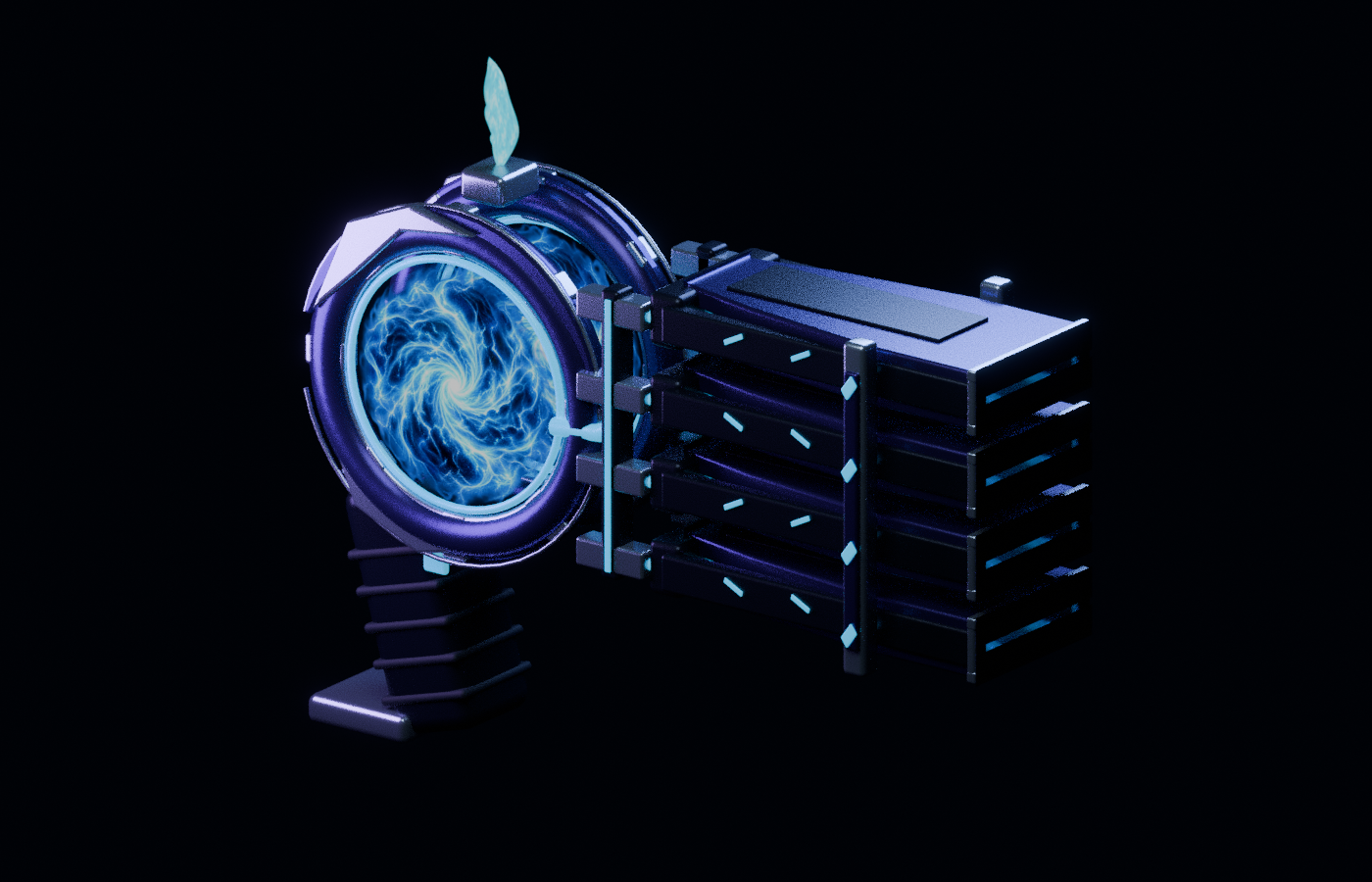
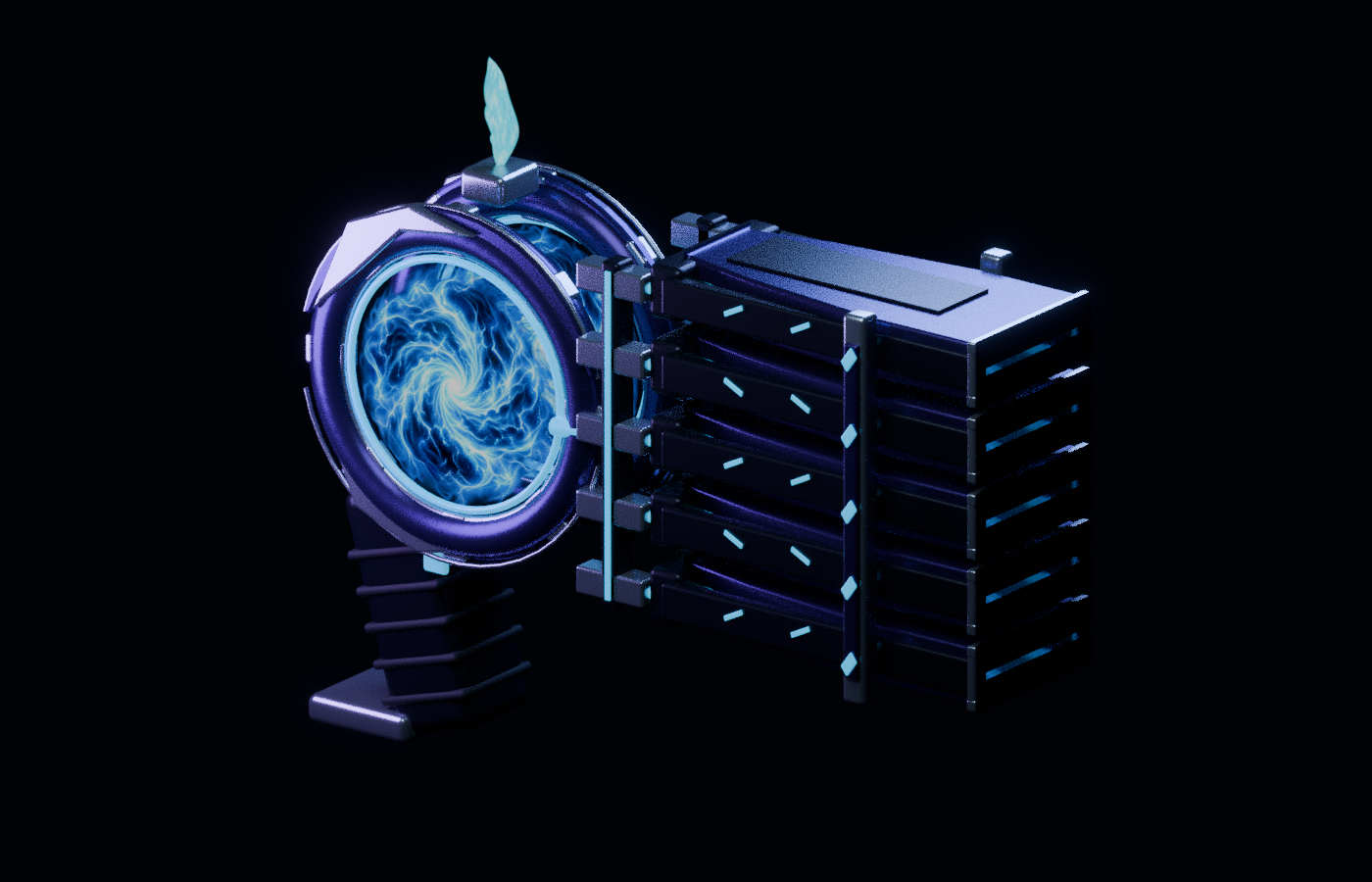
The requested emitter-count upgrade now has three editable authoring variants. The compact emitter bodies retain horizontal plasma-disc apertures, top-to-bottom recoil and the default animated Soul Flame sight. A shared Spirit distribution bus feeds telescoping energy couplers so the moving assemblies have a visible connection to the reservoir. Rod/sleeve overlap is intentional at that joint.
| Four emitters | Five emitters | Six emitters |
|---|---|---|
 |
 |
 |
What is checked: 121 / 125 / 149 recoil samples respectively; selected emitter-envelope spacing; horizontal disc aperture clearances; 968 / 1,250 / 1,788 sampled energy-connection checks; all 15 flame-atlas cells; finite poses; local-space zero-area mesh faces; and packed textures. See the later world-space correction below. The six-emitter scene also passes from a clean extraction of the published source archive. The strict runner makes Blender Python failures return a failing exit code rather than accepting stale receipts.
What remains open: actual hands and aim, continuous whole-weapon collisions, richer ornament/materials, atmospheric trails, alpha cleanup, native mesh/export/shader performance, and in-game gameplay. The preview's cadence is a display fixture. Extra emitters do not yet implement a damage multiplier: the authoritative gameplay adapter must define volley, resource cost and cadence together and show those effective values to the player.
Editable v14 source and packed six-emitter Blender scene · Per-variant scoped QA
Archive SHA-256: 65a996ac906c51c79cd81044d219bd92553fae731b035a3a99e43531ed816b0e. Four/five scenes regenerate from the shared builder. Earlier concept art and v5–v13 source archives remain preserved. This is an authoring milestone, not a native TaCZ acceptance claim.
The earlier projectile cue used a near-vertical ring/flattened sphere. V13 places an actual circular UV-mapped plasma face in the horizontal XY plane, travelling along +X through the thin horizontal emitter slot. Its original VFX texture rotates, and the edge uses an emissive procedural material rather than a lit solid rim. All four emitter cues retain top-to-bottom order. These are proposed upgraded visuals, not original AoA game footage.
The static cross-section check measures both the face and rim against the slot: minimum side clearance is approximately 0.025 authoring units, and vertical clearance approximately 0.0277 units for the sampled rim vertices. The face has more clearance. These numbers validate only this bounded authoring envelope; they are not real-world measurements, a full continuous collision proof or native game acceptance.
Editable v13 Blender/source package · Exact scoped QA · Idle render

The body/ornament, atmospheric trails, actual hands and native shader/export work remain open. Earlier versions are preserved below. Archive SHA-256: ae288978ec15895cb4cd0675aba51f7fe0095e17e9a2f8e1929d09ff9ba7369f.
Editable v10–v12 source archive · v10 procedural-core render · v11 volumetric experiment
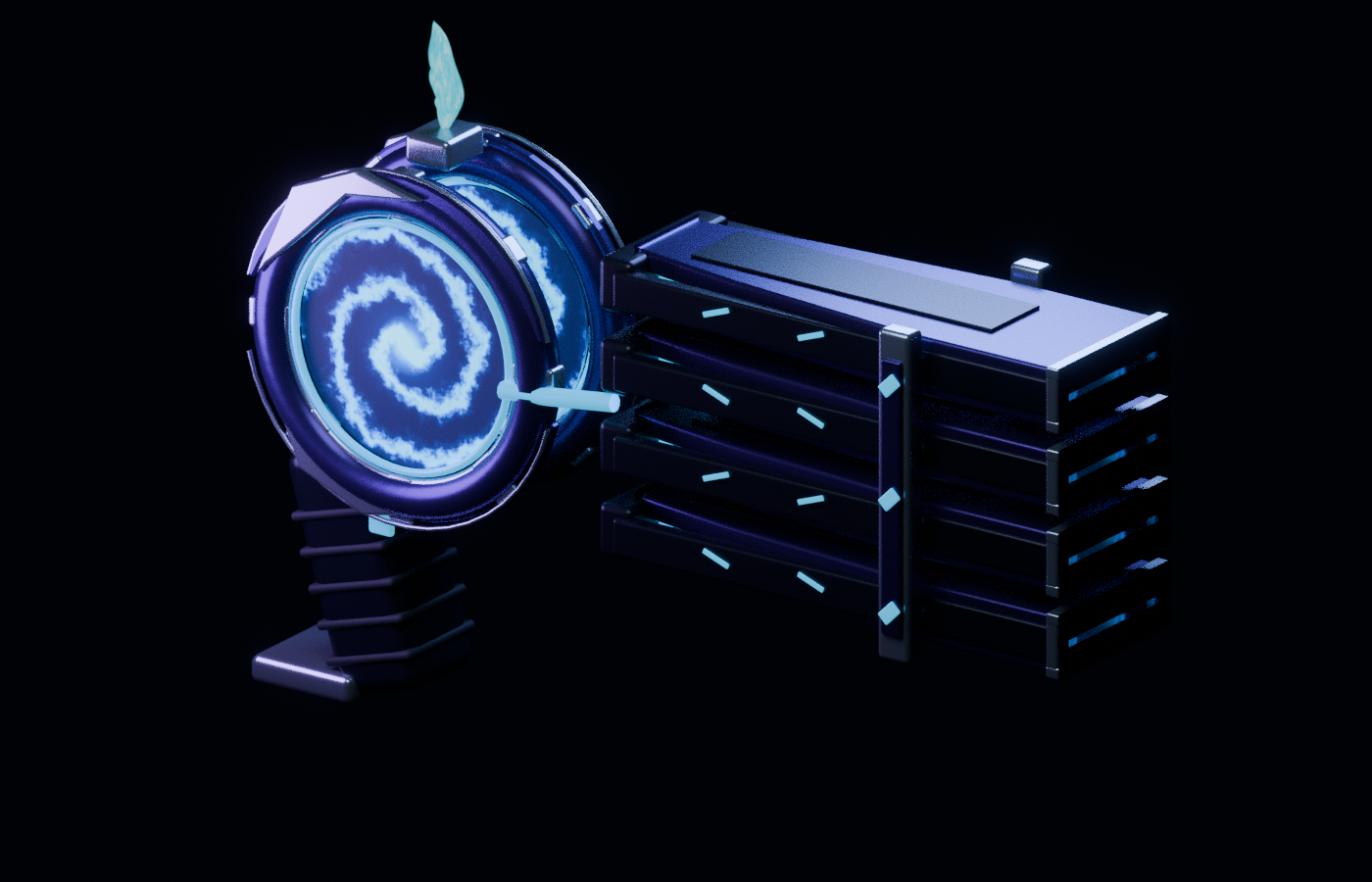
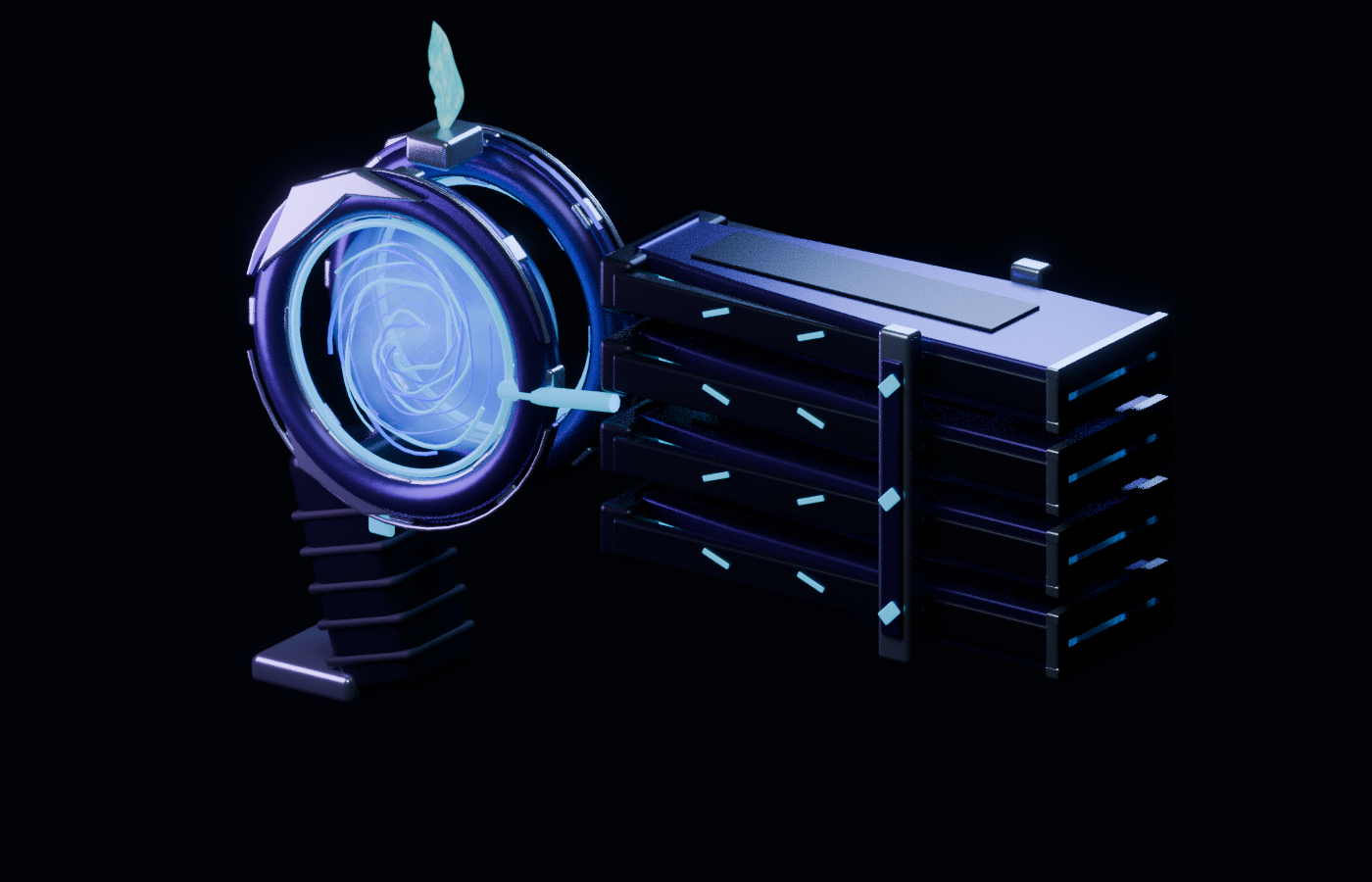
- v10 replaces the solid-looking sight with the existing 15-frame Soul Flame alpha atlas and tries a broader turbulent procedural core.
- v11 tries volume scattering and layered filaments. It remains visually weak and is retained as an experiment, not promoted as the preferred version.
- v12 maps a newly generated original soul-vortex VFX texture onto shallow curved, animated reservoir surfaces. This is an actual Blender mesh/material render using an editable texture, not a generated whole-weapon image presented as geometry. The default visible sight remains the Soul Flame atlas; the older solid-flame meshes are hidden history.
The original VFX texture and exact generation prompt are preserved. Its source alpha has low nonzero values at parts of the border, so final cleanup/masking is still required; it has not passed final texture/export QA. The texture improves the reservoir detail, but the body, emitter ornament and overall material quality still need substantial refinement to reach the concept.
The new motion contains thirty sampled frames over two seconds. It shows one authored four-emitter burst, a reservoir rotation and the sight cycle. It is not a native cadence, projectile or performance demonstration.
New scoped QA receipt: 121 sampled recoil positions stayed bounded and non-overlapping, visible meshes had no zero-area polygons or duplicate-position vertices, and 121 atlas samples reached exactly frames 0–14 without selecting unused cell 15. This does not certify all collisions, hands, shader passes or native rendering. Texture files are packed into the new Blender files for portability.
The new mesh has the circular spirit reservoir, indigo/silver/cyan palette, four hollow emitter slots, separately animated top-to-bottom recoil, flying soul-disc authoring cues and a Soul Flame sight. The main flame has a fixed-root shape-key animation. These are actual modeled/rendered objects, not a generated image presented as a working gun.
The earlier five iterations are retained in their original archive. The wire-like core, broad cloud disk and pinwheel-like spiral were visually weak; later iterations add thinner core filaments, tapered armor, wrapped grip ribs and side flame tongues. These files are newly authored after the workspace reset, not recovered copies of the unavailable older sculpt drafts.
Open the selected .blend, or regenerate with Blender 4.3.2:
blender -b -t 4 --python build.py
blender -b -t 4 --python check.py
blender -b -t 4 --python render_motion.py
The check and motion scripts are provided for v9. The web animation samples fifteen Blender frames across half a second; it is an authoring preview, not gameplay footage or an approved rate-of-fire change.
The bounded QA sampled 121 times with no nonfinite emitter transforms, recoil-range violations or simultaneous recoil events. It found no zero-area polygons or duplicate-position vertices in the visible current mesh, and verified that the main flame's shape-key root stays fixed. The duplicated flame pole vertices found during the earlier iteration were welded before these checks. Scoped geometry receipt.
- More sculpted ornamental detail and purposeful texture painting to approach the approved concept.
- Greater apparent depth and richness in the spirit reservoir, final alpha cleanup and native VFX material validation.
- Real hands, grip clearance, aim alignment, inspection choreography and cancellation.
- All barrel/sight/skin variants and their motion clearances.
- A verified native export/bake/rendering path. Standard TaCZ cube JSON does not automatically consume this Blender mesh, material graph or shape keys.
- Actual projectile behavior, resources, damage, multiplayer, save migration, shader/Vulkan compatibility and measured frame times.
Passing the bounded authoring checks does not close these gates. Original AoA identity and credits remain with Tslat and contributors.
Original behavior and upgrade direction · Default Soul Flame and optional sights
Earlier v5–v9 source archive SHA-256: c5e119c64ca689aee32835e24679f8e4015b257e83e51db91fc0326c81c9a2a2.
New v10–v12 source archive SHA-256: 612a0555cb840c40ce3ff4568b82ec4b17f94be776df65ae582b0548661c757d.
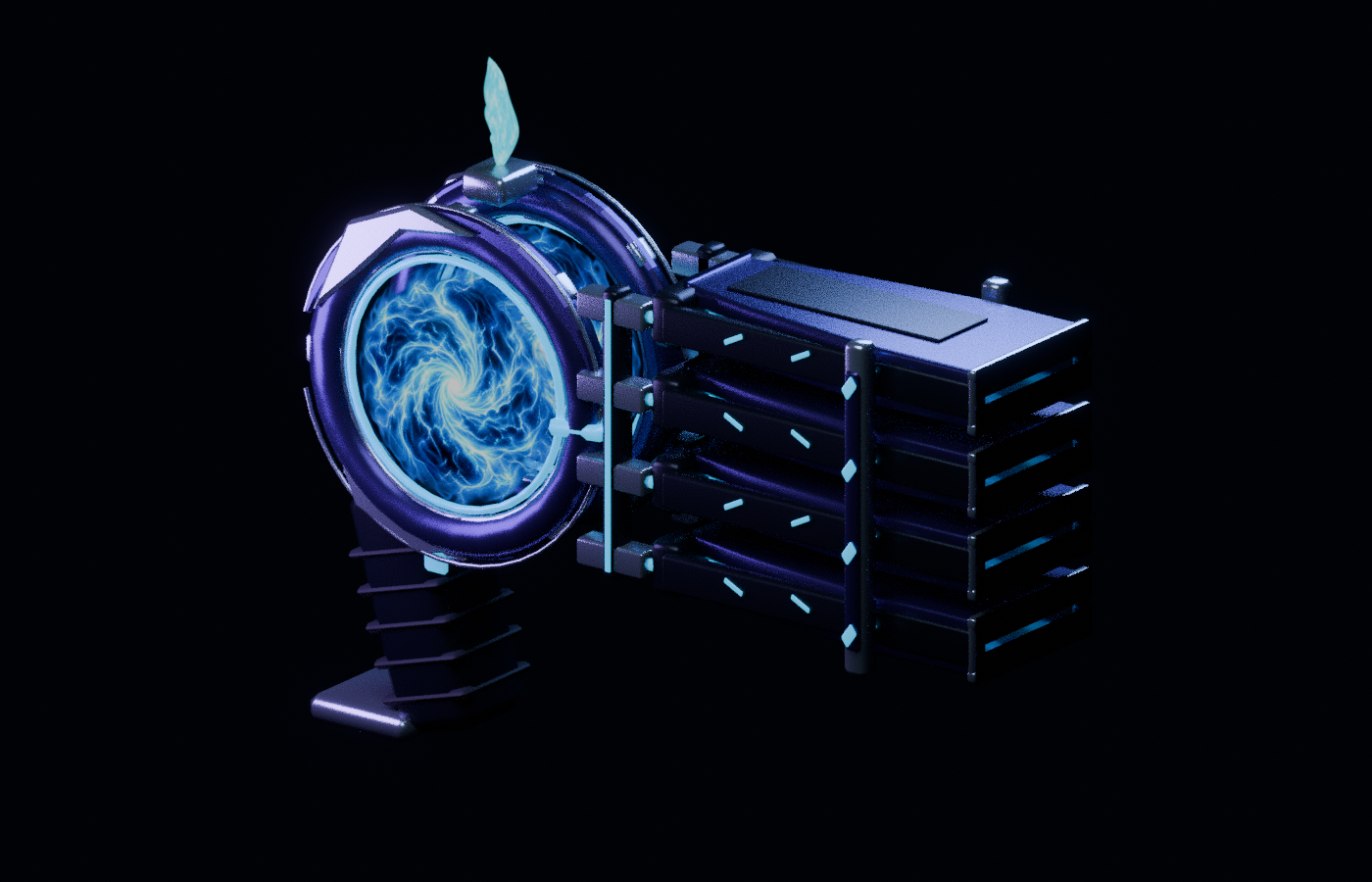
A separate four-emitter candidate reduces evaluated triangles from 53,952 to 25,664 (52.4%). The inventory includes 185 mesh-convertible objects, including curves and hidden-by-scale VFX meshes; these are not native draw calls or an FPS benchmark. The original v1 check covered local evaluated areas only; the stronger world-space correction below supersedes that geometry gate.
The script lowers bevel segmentation, curve bevel resolution and selected ring topology. It leaves the original high-detail source available and preserves core-surface UV topology and animation data. The reviewed image keeps the broad silhouette and layout recognizable, while grip ribs and edge highlights visibly change. Native materials, actual distance transitions, all views/motion and frame-time behavior remain acceptance gates. This candidate does not replace the first-person default or establish visual equivalence.
Small reproducible LOD script · Exact per-object budget comparison. It reuses the preserved v14 archive instead of adding another duplicate packed Blender backup.
For native export, prioritize the existing TML integration route and actual Meshy schema study. Keep independently animated or customizable attachment domains separate, and consider merging purely rigid pieces at export to control submission cost; native batching/performance has not yet been measured.
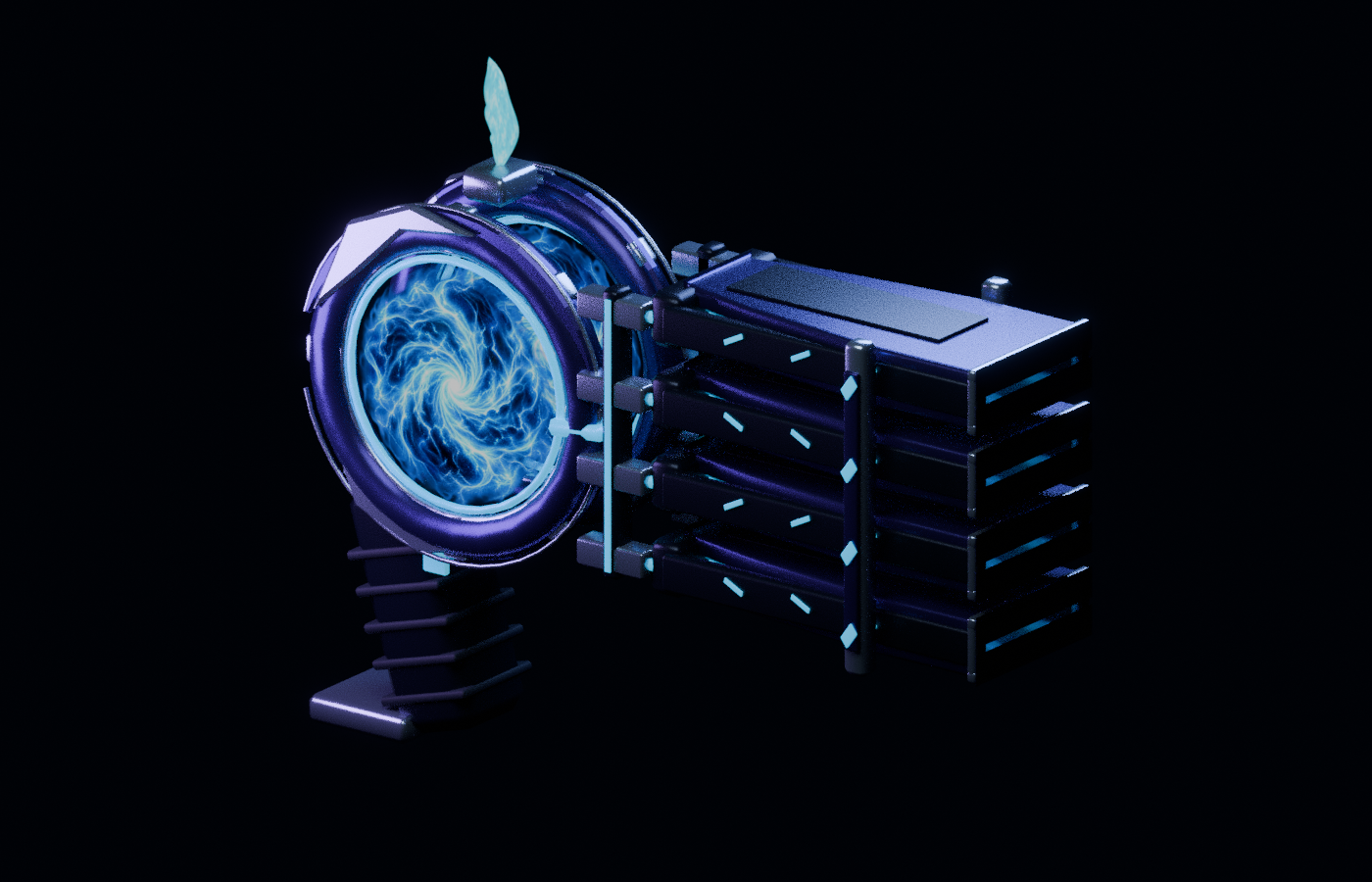
Export validation caught 264 collapsed world-space triangles in the original v14 body and 144 in the v1 reduced candidate, despite their local-space area checks. The collapsed triangles were concentrated on eight thin cyan rune pieces and the touch inset. The LOD v2 script applies a conservative width cap to 71 bevel modifiers overall while retaining raw piece dimensions; the exact changes are listed in its report. The corrected v2 candidate has zero collapsed body triangles at the checked neutral pose. Its 5,376 intentionally zero-scaled projectile-cue triangles are tracked separately, not passed as valid body surfaces. This is not all-pose collision acceptance.
The 53,952 → 25,664 inventory reduction, animation digest and core UV digest remain unchanged. The reviewed v2 render retains the broad layout; native rendering, first-person visual acceptance, actual hands and performance remain open. Earlier v1 files are preserved as history and superseded for export.
Reproducible v2 correction · Per-object v2 evidence
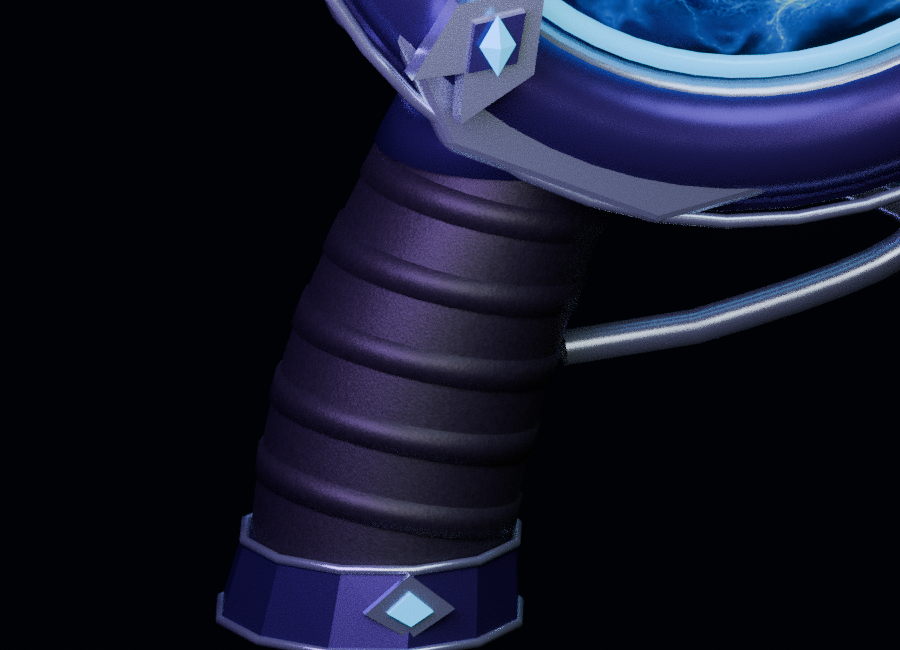
The grip now has a separate UV-mapped opaque material study: dark indigo base color, tangent normal detail and five gently diagonal wraps. Six static grip pieces are combined into one material domain; the original v22 whole-weapon source remains preserved. The exported grip contains 1,176 triangles, one material and two embedded 1024px PNG maps.
The exported GLB was actually imported back into Blender. Its world-space triangle multiset agrees at the recorded 0.0001-unit rounding; the supported-subset preflight reports no degenerate or collapsed-UV triangles. A same-camera render comparison records mean absolute RGB difference of approximately 0.000008871 against the pre-export baked-material view. That full-frame measurement includes non-grip pixels and sampling noise; it is neither an artistic score nor native renderer proof.
Visual review remains open: the grip still reads smoother and more rubber-like than the concept's richer hand wrapping. Heel detailing, surrounding ornament, actual player hands, native normal-map conventions and performance remain unfinished. This opaque-grip test does not validate the transparent Soul Flame or the complete weapon's materials.
Editable GLB, bake scripts and scoped evidence · Machine-readable review. Regeneration reuses the existing v22 source archive rather than duplicating another complete packed weapon scene. The GLB alone is not an installable TaCZ pack.
Mesh normal fidelity and optional source candidate documents a released-loader flat-shading limitation, measured authored-normal differences and a default-preserving opt-in patch tested offline. This does not approve the texture bake or establish native rendering compatibility.
This checkpoint bakes the three metal materials into shared base-color and roughness maps while retaining the v31 geometry and moving-part ownership. It is an editable authoring study, not a complete gunpack or final artistic/native acceptance.
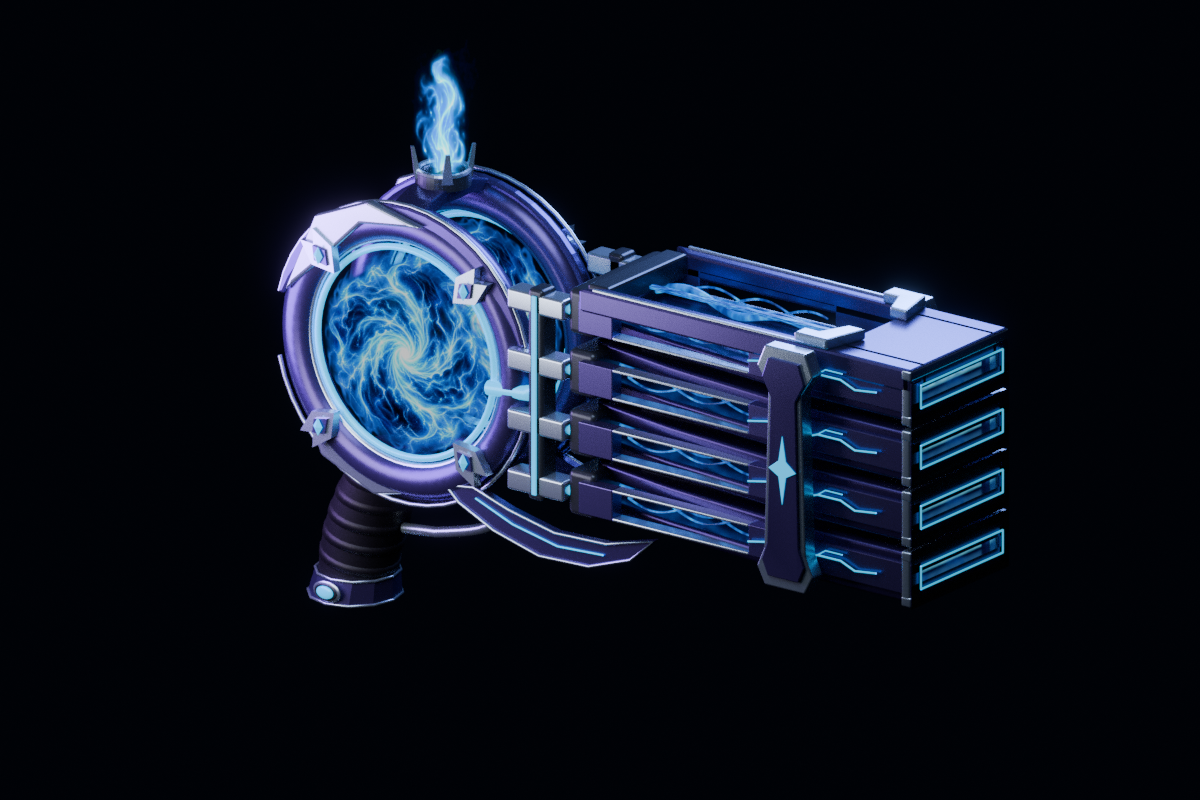
The initial UV projection had sampled self-overlap. Repairing exact evaluated triangles removed the overlap without moving vertices; the corner-normal change stayed below 0.039 degrees. Direct 2K bakes still broke narrow bright borders. Extra padding alone did not solve that, so a 4K authoring master was tested and then scaled to 2K in Blender.
The final 2K derivative keeps the largest connected >32-RGB comparison region at six pixels, compared with 64 for the rejected padded direct-2K bake. Its foreground mean absolute RGB8 error is 1.265968 and p95 is 6 in matched 40-sample authoring renders. Small sampling/specular differences remain. This is bounded texture-transfer evidence, not a claim of perfect native appearance.
Ten sampled animation times cover 140,600 evaluated metal vertices with zero measured position error; parent ownership is retained. The two matched comparison images can be regenerated from the packed scene and its retained procedural nodes, and reproduced pixel-for-pixel. The 4K masters and previous authoring sources remain intact.
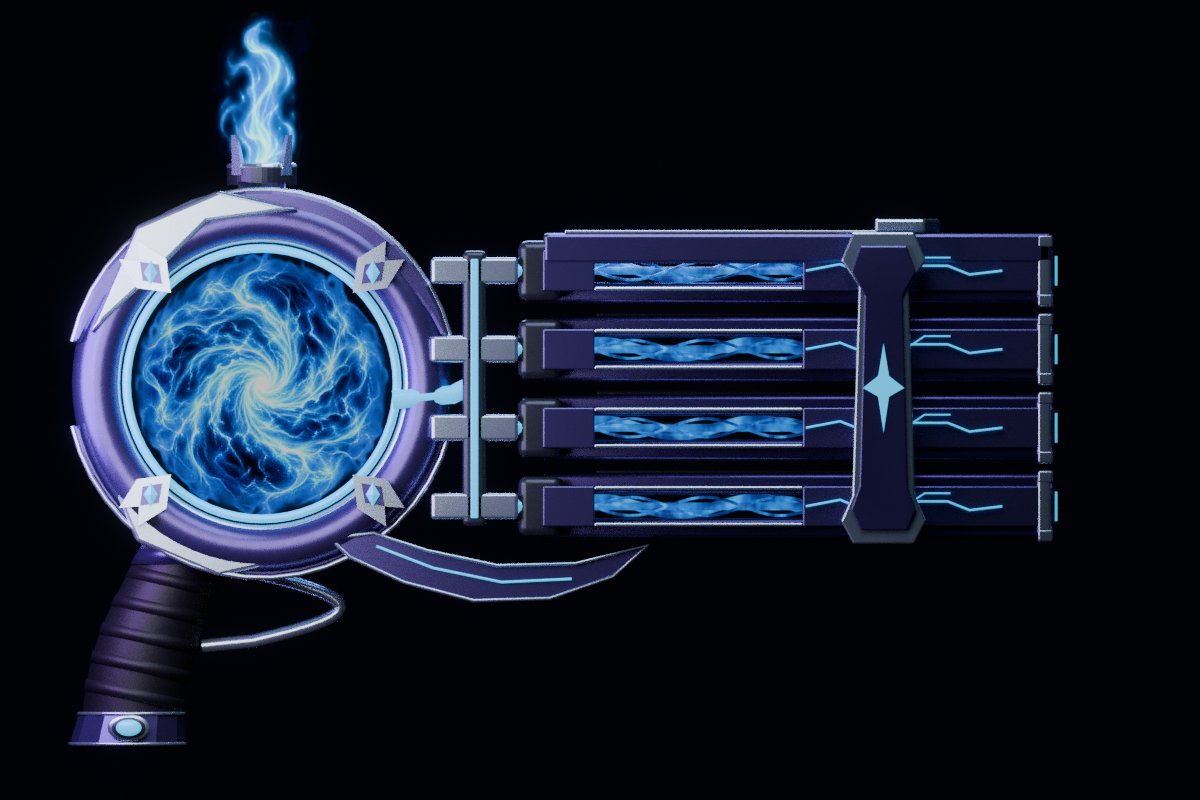
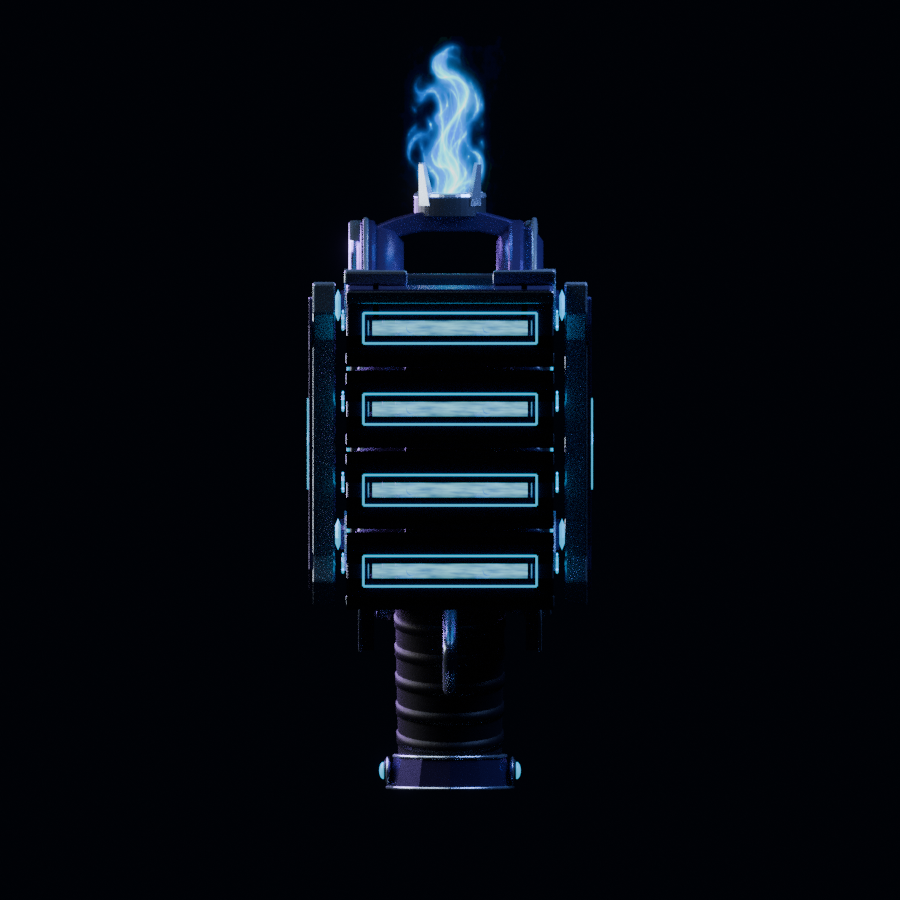
The delivered maps are 2048×2048. Assuming two separate RGBA8 textures, that is 32 MiB at base level, approximately 42.7 MiB with full mip chains; the same 4K assumption is four times larger. Actual native formats, compression and residency are unmeasured. Do not treat this estimate as an FPS benchmark or native texture budget approval.
The metal-only export is byte-identical to the geometry fixture in the normal-fidelity study. Native smooth normals, roughness/PBR binding, flame/effect materials, distant mips, hands, gameplay and equivalent-work performance remain open. Broad proportions, surface storytelling and final artistic polish still need improvement.
Editable packed Blender scene, maps and reproduction scripts · Detailed texture-transfer evidence
The v34 aiming-readability study corrects the authoring flame mask during intermediate focus. It preserves idle and full-focus pixels, exact geometry and 101 sampled motion frames. The small reproducible patch uses the existing v33-R6 scene. Native aiming, hand fit and performance gates remain open.