Discharge Exterior Refinement - Herbertofury/Advent-of-Ascension GitHub Wiki
Automatic 3D trial review: why the six-port generated mesh was rejected. The separately authored model below remains the working source.
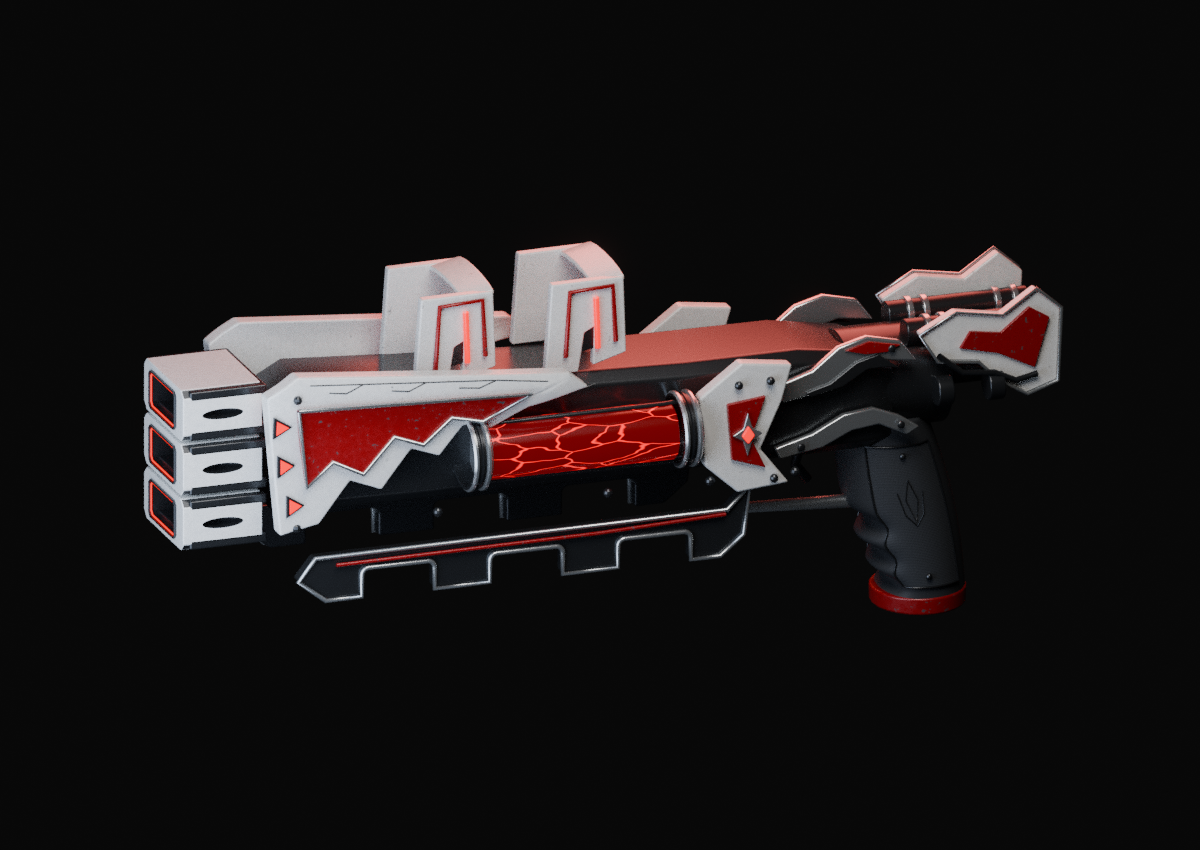
Editable Blender authoring study. Not a finished TaCZ pack, native game capture or accepted weapon.
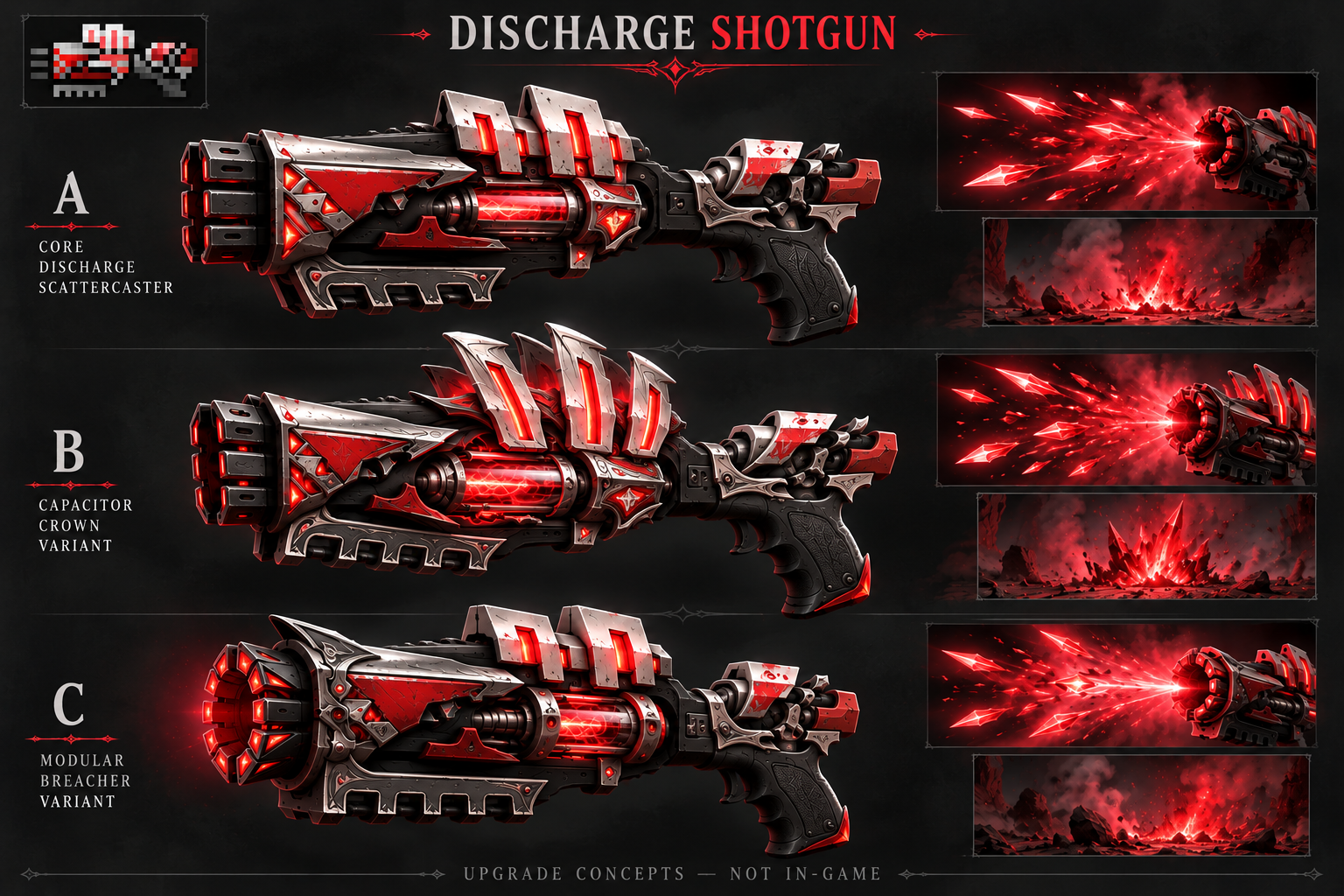
The owner's canonical concept A remains the visual target. The source weapon profile defines the gameplay baseline. Three visible muzzle channels in this artwork do not change the original four-projectile firing behavior.
One consolidated source pipeline · Verified published starting archive · Scoped evidence.
Use the pipeline with output/discharge-grip-study.blend from the starting archive. It rebuilds collars, the lower rail, paint materials and the crest automatically in one output folder. The required starting bytes were checked inside the published ZIP. This replaces the need to locate intermediate checkpoints manually; prefer it over the earlier v42 standalone generated-scene hash workflow, whose whole-file hash can be too strict after rebuilding in another location.
The prior crest was covered by later armor at the declared test landmarks. An initial move made it oversized and misaligned; the revised star and red gem are smaller, centered and seated on the visible plate. Eight declared rays across both side views now hit the crest instead of covering armor. Corner normals were correctly transformed after nonuniform scaling. This is a bounded visibility/normal check, not an all-view or native lighting guarantee.
The guarded clean build matched the reviewed scene's geometry, normals, UVs, transforms, visibility, material-node inputs/links/ramps and action keys. It preserves 325 stored geometry objects, 17 materials and seven stored actions, including retained authoring alternatives. These are not GPU draw-call counts or seven completed animation states. Wrong input bytes, altered stage scripts, an unsupported Blender version and nonempty output directories are rejected. Four focused guard tests pass.
The pipeline was executed on cloud Linux with Blender 4.3.2. Other platforms still need their execution check. It does not supply a fresh atlas, TaCZ export or in-game validation. The broader concept-fidelity gap, full effects, hand/assembly clearance, LODs and measured frame time remain open.
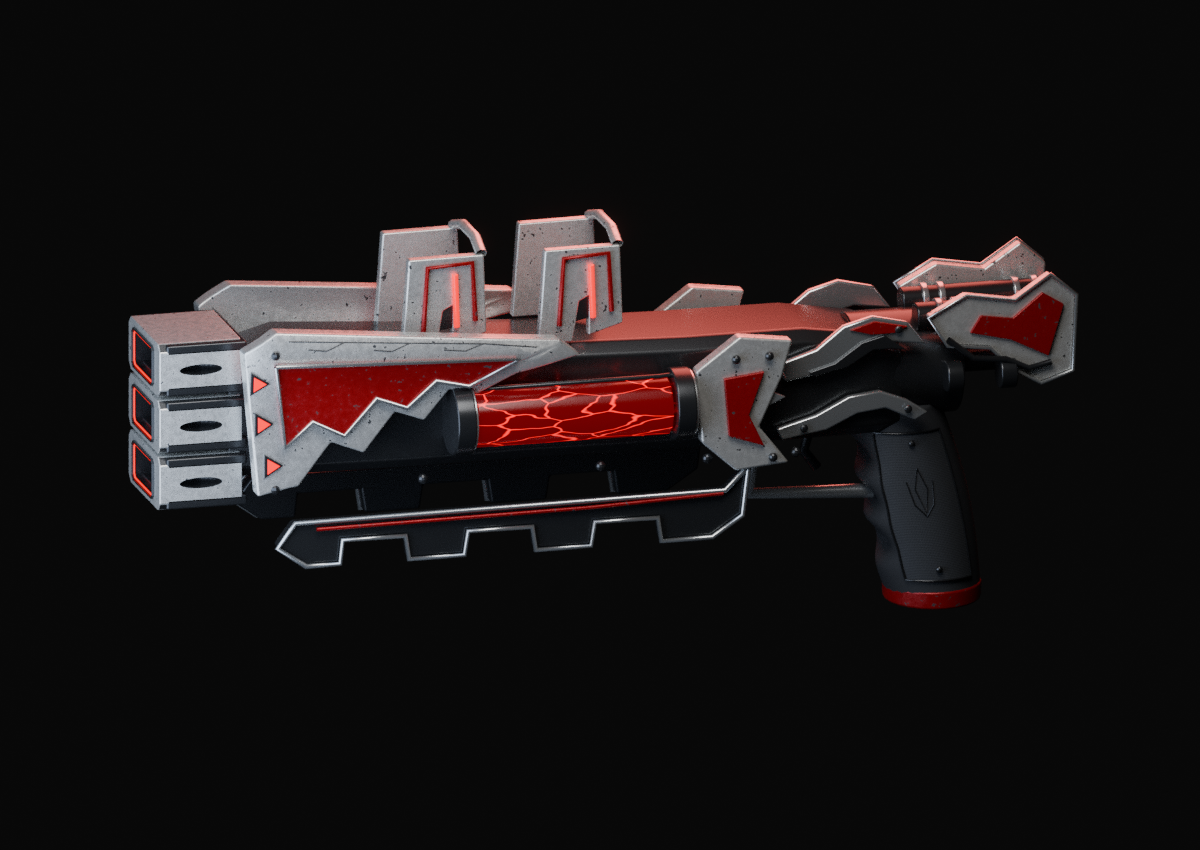
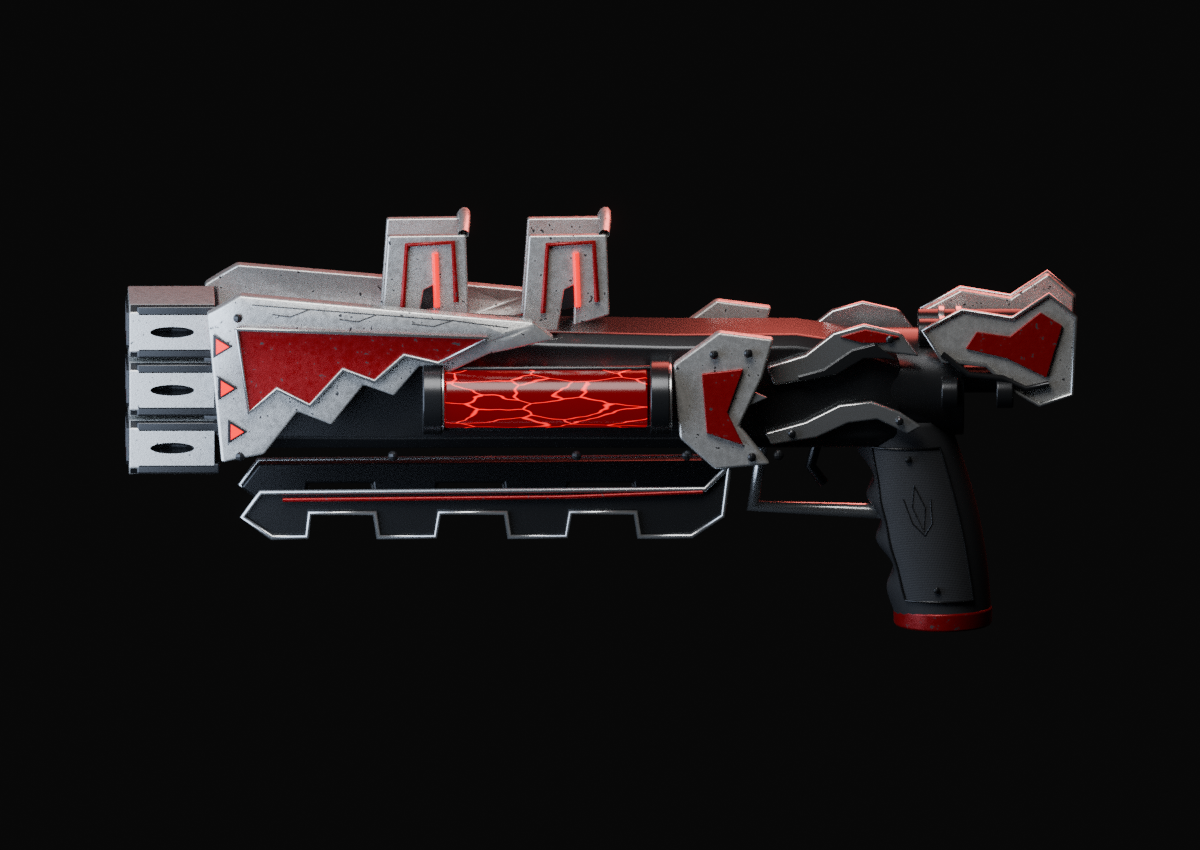
The plain rear surface now has paired swept silver braces, layered upper plates, dark insets and restrained red accents. These are decorative exterior parts; they do not establish a new mechanism. The overall receiver, grip and top construction still need substantially more refinement toward concept A. This is not final art acceptance.
Compare the preceding v31 scene from the same review camera
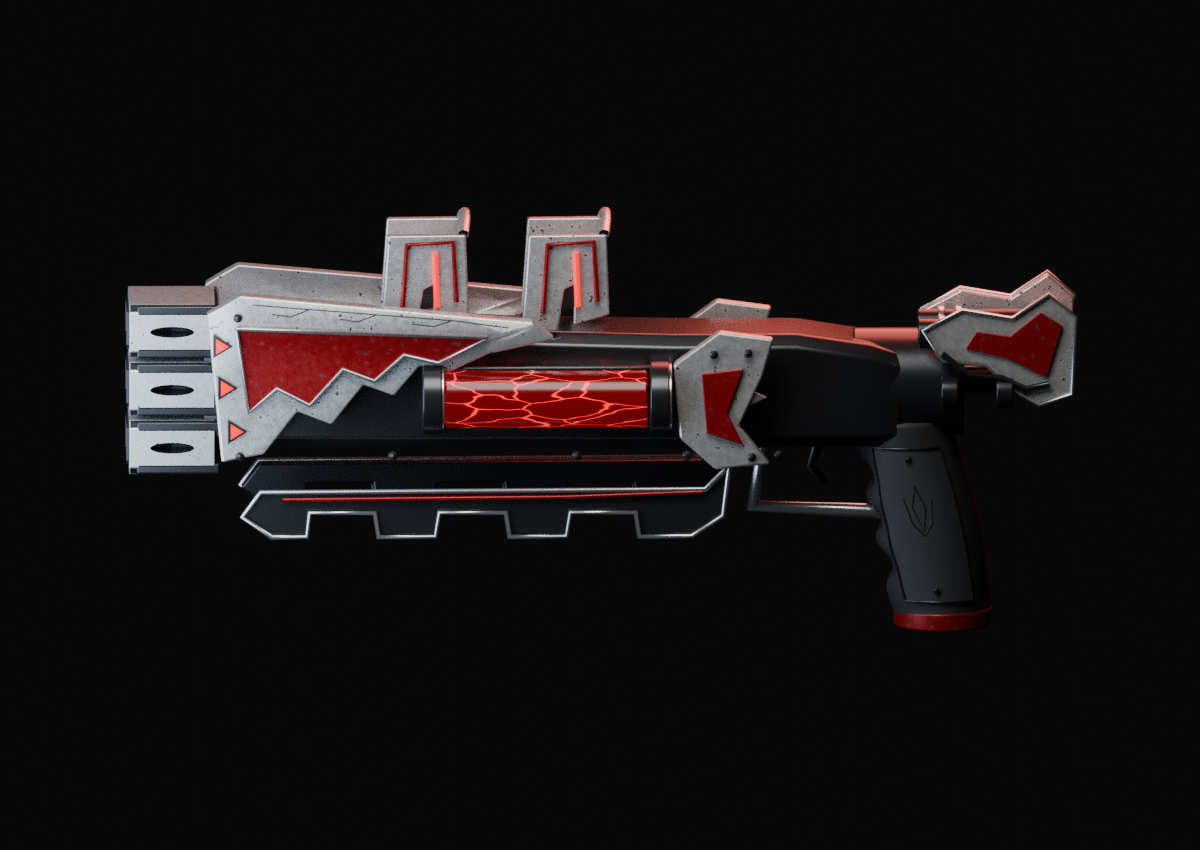
The scoped test preserves 164 existing mesh definitions/transforms/material-slot names and checks fourteen new closed solids for positive volume and nondegenerate evaluated triangles. It does not cover every intersection, hands, curves, driver state or native animation. The earlier trigger and guard were not resized to conceal clearance problems. All native, hand-fit, material-export and performance gates remain open.
Small reproducible v32 patch · Scoped geometry results. Apply to the exact v31 scene linked below. The patch generates a separate scene and rejects an unexpected source hash. The corrected r3 patch explicitly parents every new part to Discharge_Root; 21 root-transform samples check 10,752 vertex positions (maximum error approximately 7.18e-7 scene units). This prevents detached cosmetic parts during whole-weapon transforms; native animation and hand-fit remain untested.
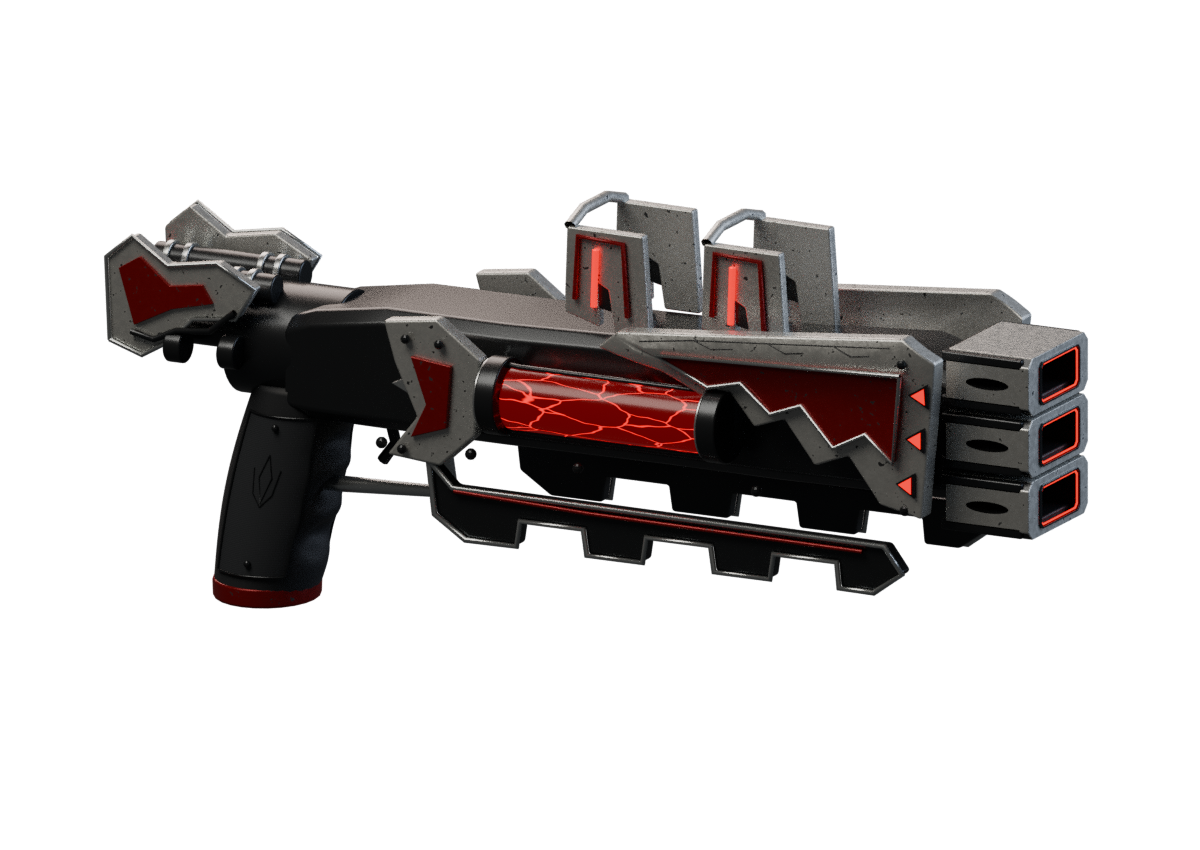
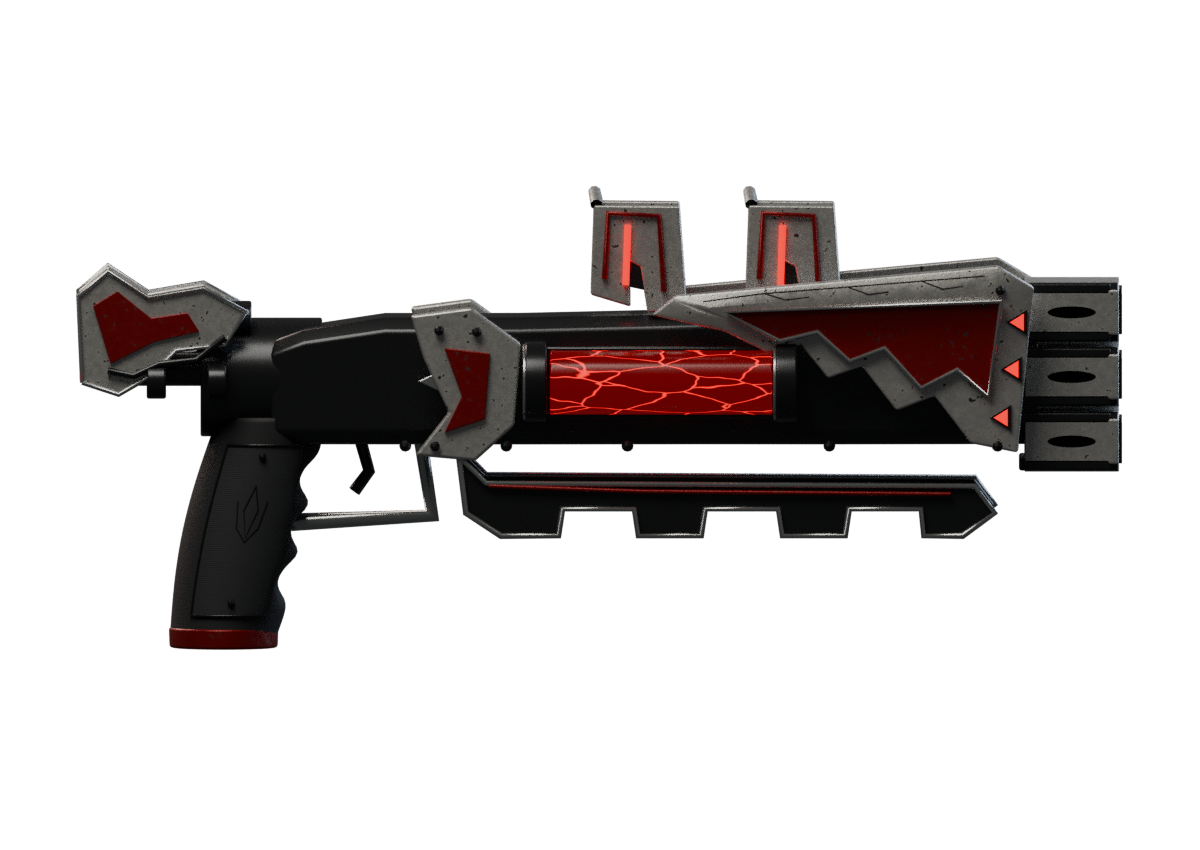
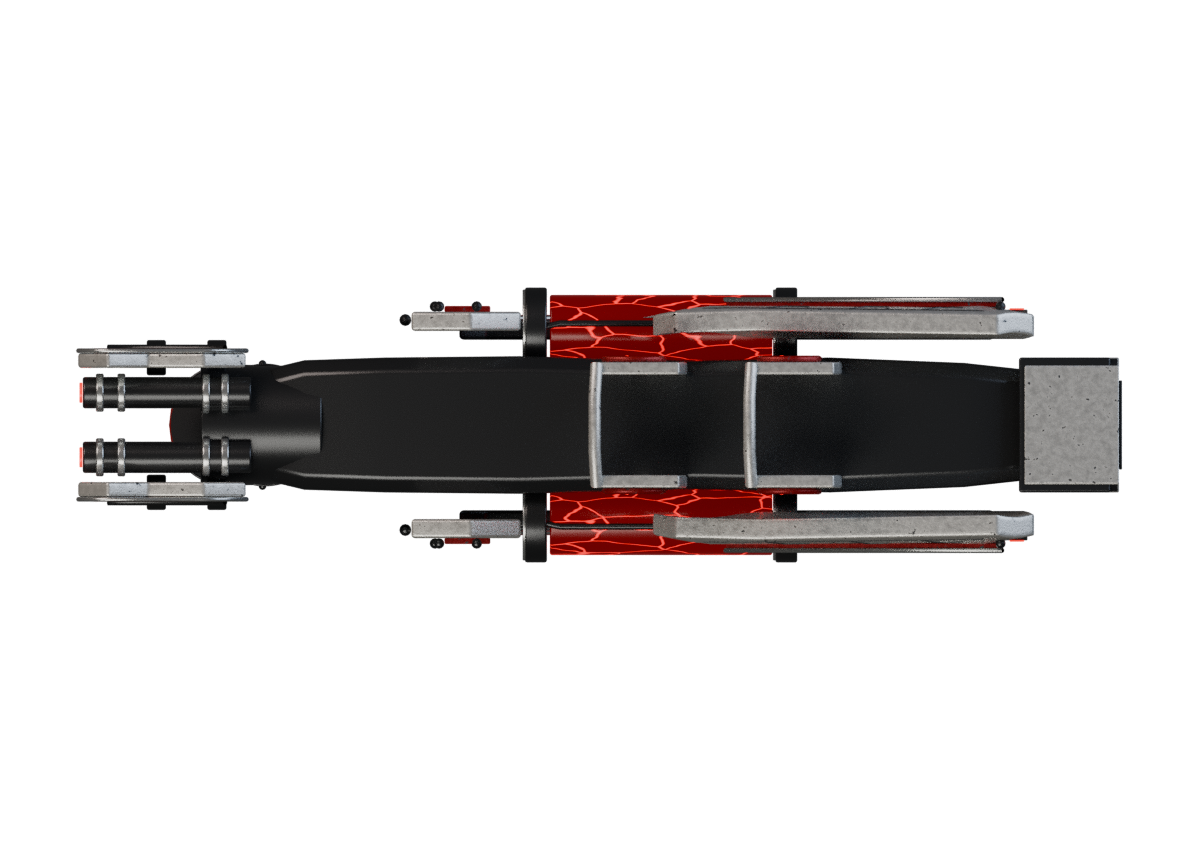
These views expose the actual modeled surfaces, including the unfinished rear housing and simplified top construction. They are inspection renders, not evidence of gameplay quality.
- Rebuilt the three stacked muzzle housings with more deliberate aperture proportions and recessed red borders.
- Restored six shallow decorative side recesses using the official Manifold3D geometry library after two Blender Boolean trials failed topology checks. The failed trials remain rejected.
- Gave outer muzzle surfaces the existing light armor finish while keeping recesses and inner channels dark.
- Added stronger finger scallops and a gentle palm swell without shrinking the trigger or guard to hide clearance problems.
- Adjusted both capacitor assemblies together, including their paired shell, light, border and bridging parts, to reduce excessive height and improve their forward lean.
| Check | Result | Boundary |
|---|---|---|
| Three new recessed housing meshes | 1,348 triangles each; zero nonmanifold edges and zero near-zero triangles in the tested meshes | Does not certify the entire weapon's topology |
| Recess volume | About 97.03% retained per housing | Cosmetic shape-conservation check only |
| Full visible evaluated scene | 172 objects, 71,756 triangles, no degenerate triangles under the recorded world-area threshold | Not a complete intersection, normal, UV or LOD audit |
| Packaged scene reopened | Same visible object/triangle count and area-test result | Blender authoring portability only |
| External image dependencies | None required by the packaged scene | Procedural materials still need a native-compatible bake/export |
| Native game / hands / animation | Not tested | No acceptance or performance claim |
The decorative recesses are shallow modeled features; they do not establish functional ventilation or a real mechanism. Sampled aperture checks from earlier stages are not complete projectile collision proof. The concept and authoring scene deliberately remain below the release gate.
- Replace the broad plain rear receiver surfaces with the layered, contoured construction visible in concept A.
- Refine the grip ornament, silhouette and actual player-hand fit across aim, fire, inspect and interruption poses.
- Improve the capacitor plate shapes and seating. The current top view still exposes simplified construction.
- Produce deliberate, exportable textures for both the Minecraft-fitting and concept-fidelity modes.
- Implement and test the complete animations, effects, attachment combinations, native TaCZ/TML integration, multiplayer and measured performance.
Download the compact authoring-study archive. It contains the editable Blender scene, the scoped geometry-check script, recorded results and limits. Open with Blender 4.3.2 or a separately validated compatible version. This archive is not installable as a Minecraft mod.
Machine-readable review · Original concept · Weapon completeness requirements
The current exterior now has a separate unaccepted recoil authoring study. A deeper surface-sweep check caught problems that the earlier transform and parser tests could not detect: v2 had 101 sampled new intersections, including a moving throat entering the receiver and muzzle liners crossing horizontal trim.
The correction assigns the two associated horizontal trim pieces to each moving channel and recesses the receiver nose to make space for the stroke. It does not shrink the player's hands, trigger or guard. The resulting six-piece channel ownership keeps the housing, liner, light outline, throat and trim together. Three cosmetic channels do not change the original four-projectile gameplay burst.
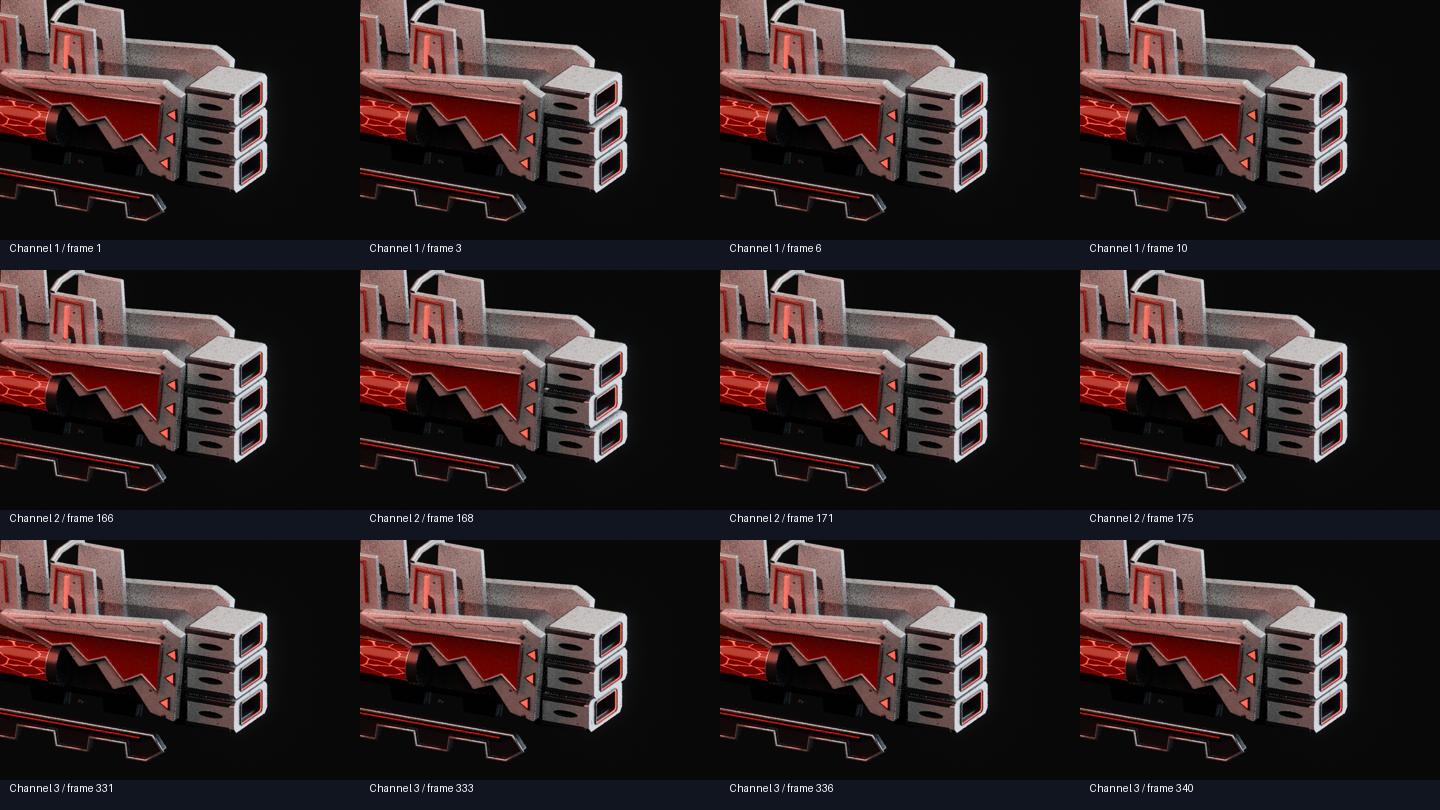
| Scoped check | Recorded outcome | Still not established |
|---|---|---|
| Owner transforms | 340 frames, 6,120 part samples; no owner-follow error or inactive-channel drift | Native interpolation and bone binding |
| Surface sweep | 110,556 pair samples at quarter-frame intervals; zero baseline or newly detected triangle intersections against other visible parts | Full solid containment, every possible pose, hands, attachments or minimum clearance tolerance |
| Static area | 172 visible objects, 71,756 triangles; no degenerate triangle under the test threshold | Complete topology, UV, material or LOD acceptance |
| Released TaCZ parser | Three position clips, 111 keys parse using released classes on both tested Java runtimes | Actual game integration, glow playback, sounds or gameplay |
Same-owner part pairs are excluded from the surface sweep. The checks deliberately expose their limits; a passing row is not a native release approval. Material-glow keys are not included in the exported position clips. Full-body/camera recoil, reload/inspect states, networking and performance remain separate work.
Download editable recoil study and reproducible Blender checks · Scoped results. Earlier exterior and concept studies remain preserved above.
A later rendered combined scene exposed oversized cosmetic fasteners in r2. Parenting had captured a stale world matrix immediately after scale assignment. R3 updates the dependency graph first and adds six explicit dimension checks. All 512 added vertices match the pre-parenting v1 positions with zero observed drift, and the corrected side scene was rendered again. Use the r3 patch above; r2 is superseded. This is why positive-volume and transform-following tests alone do not constitute visual QA.
The v33 combined exterior/recoil study uses the corrected root-owned rear parts with the three-channel cosmetic animation, clean rebuild checks and sampled moving-surface comparisons. It remains below native and final-art acceptance.
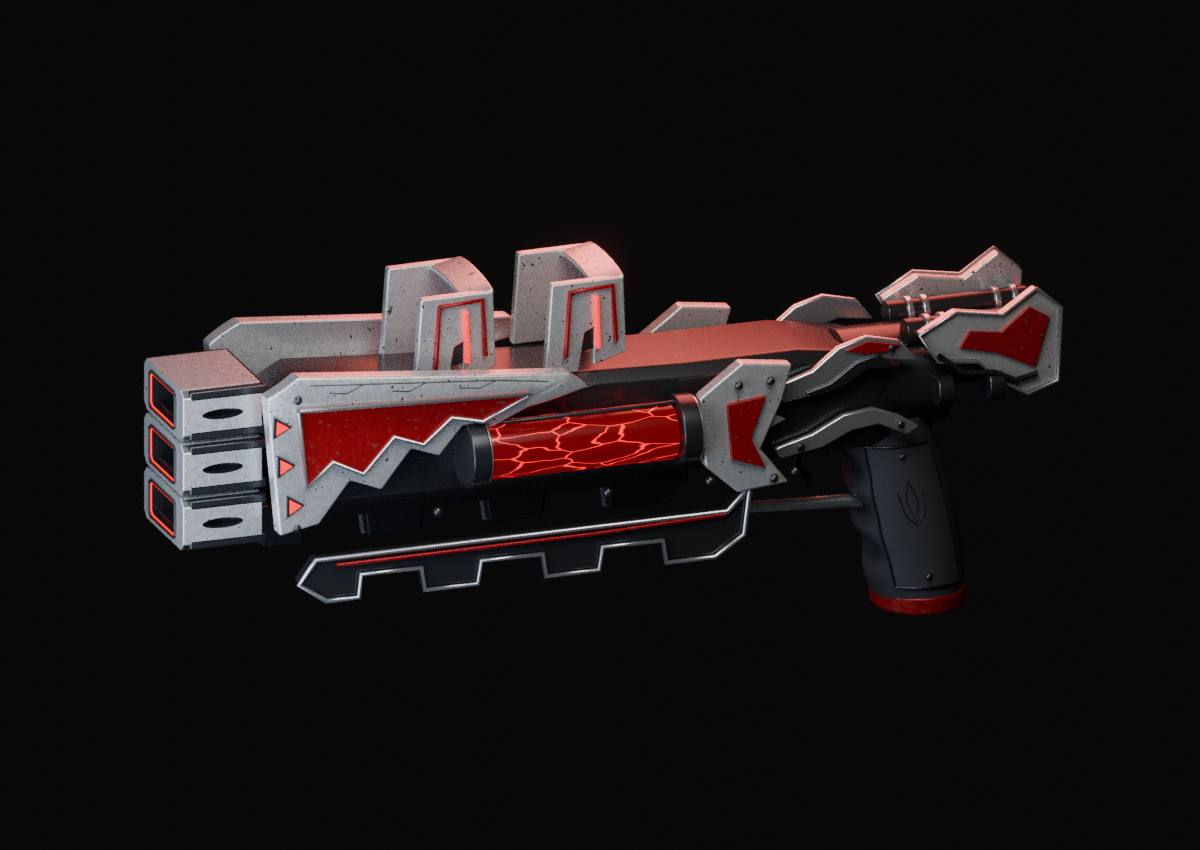
Two small curved armor sheets replace the visible thin cross-ribs, giving the paired capacitor structures a more coherent folded-shell silhouette. The original ribs are retained hidden. This is an incremental shape study; the complete weapon still needs substantially stronger concept fidelity and final texture work.
The two added closed solids have 348 evaluated triangles each. The inherited recoil sweep reports 119,880 moving-versus-other surface comparisons without baseline/new intersections in this scene. Those checks do not establish hands, containment, continuous collision or native rendering.
Reproducible v34 canopy patch · Scoped evidence. Apply to the generated v33 scene with its manifest. Native and final-art acceptance remain open.
The current grip and surface study places the finger contours below the retained guard return, adds finer patterned inlays and includes a reproducible source archive. Its static seating and preservation checks are separate from the v35 texture/export evidence. Native hand fit, swept clearances and full concept fidelity remain open.
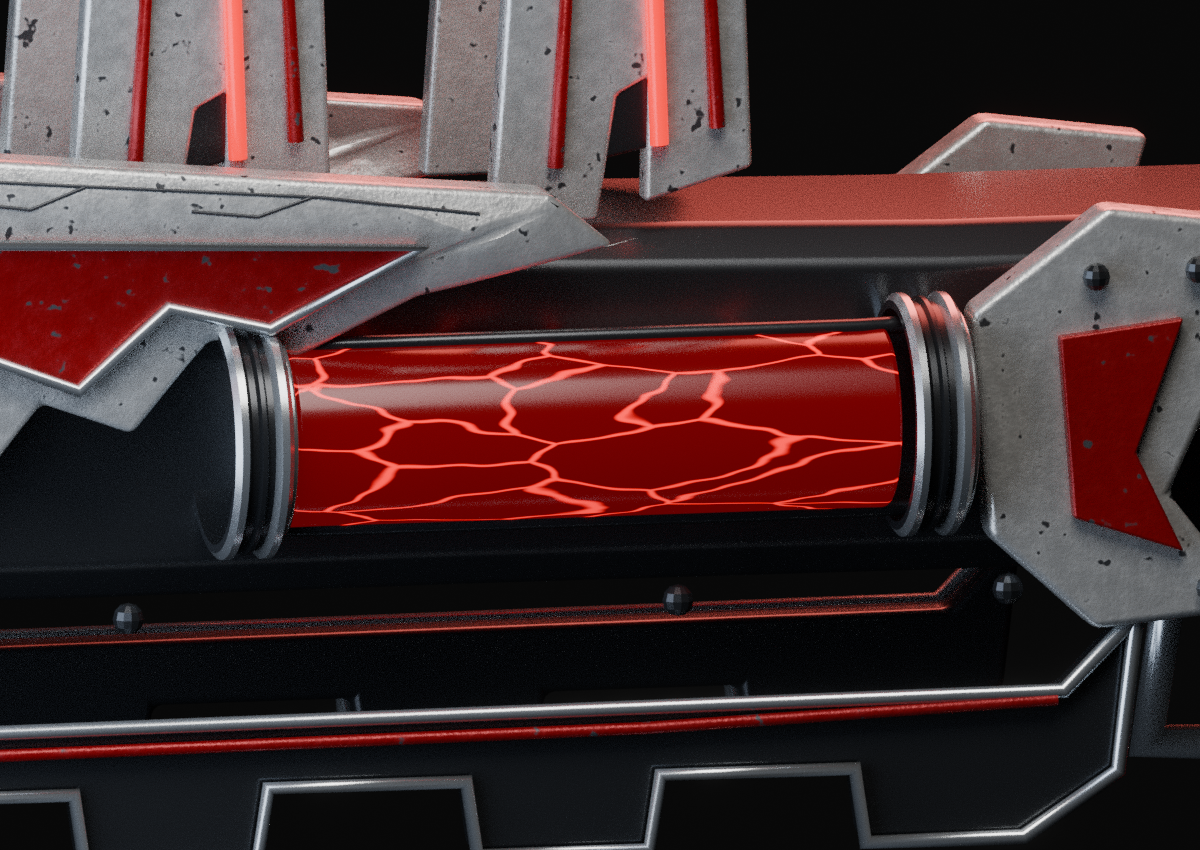
Four small layered cosmetic shells replace the visible simple dark collars around the two side chambers. The prior objects are retained hidden. Radial smoothing with sharp profile transitions corrects the first pass’s faceted ring shading. This adds local material/shape definition; it does not make the full model match the selected concept yet.
Whole-weapon render · Small reproducible patch · Scoped static QA.
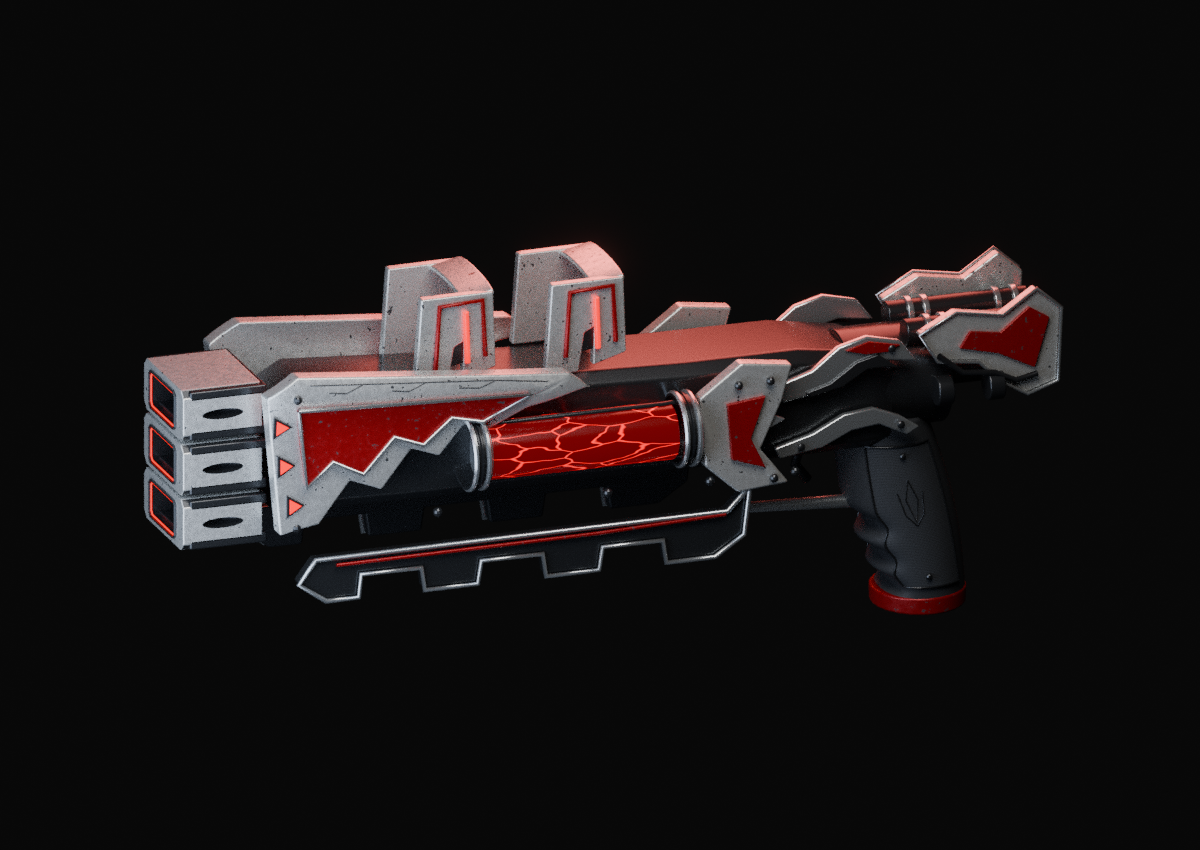
Apply the patch to the exact generated scene in the v36 grip package. The source hash is checked before applying it; the archive avoids another full source-scene copy. A clean rebuild reproduced the static results: 313 earlier geometry objects retain their geometry/transforms; each of the four new 1,344-triangle shells is closed, positive-volume and free of degenerate triangles.
These checks do not prove full collision, swept animation, hand fit, native rendering or performance. V38 is a separate procedural source study; the v37 texture bake targets the earlier v36 geometry, so its atlas/exports do not automatically cover these new collars.
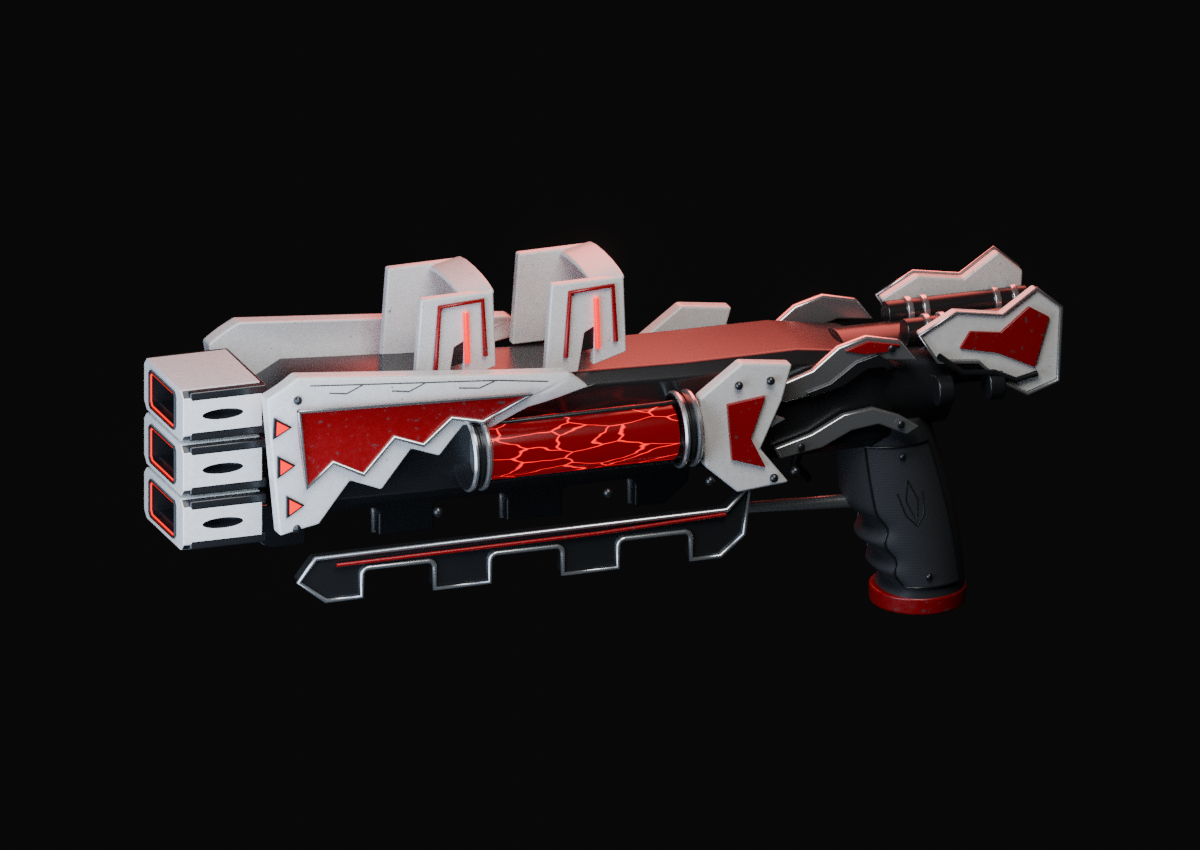
The concept's lower rail has three prominent openings. The older authoring model used five staircase cuts. This candidate replaces those with three rounded rectangular openings, retains the red seam, and preserves the prior geometry as hidden alternatives. A first semicircular version was revised because it drifted from the concept's shape language.
The white armor previously behaved mostly like exposed metal. The new material separates low-metallic paint from sparse exposed-metal patches, reduces the noisy bump response and adds a restrained clear coat. The crimson enamel also receives a lower metallic value. This is an authoring material proposal; the native renderer does not automatically inherit these Blender nodes.
Small combined rail-and-paint patch · Scoped checks.
The patch requires the exact v38 chamber-study source named in its README and refuses another starting hash. Its two stages were rebuilt in a clean output directory. Four new rail/trim parts have no nonmanifold edges or degenerate triangles in the evaluated checks. The material stage preserves all 321 geometry objects and their transforms. Neither check proves complete assembly clearance, hand fit or native rendering.
The v40 fine-line ornament experiment was left out because it did not meaningfully close the concept-fidelity gap. More sculpted receiver details, ornament, crown shape and effects remain work. This candidate is separate from the v39 mapped export: it needs a new bake/export and shader review before that evidence can apply. It is not a finished weapon or an FPS result.