General analysis of Final Fantasy Tactics Advance - GoldenRhinoStudio/CursedHeaven GitHub Wiki
In this section, because we are doing a game looking like the Final Fantasy Tactics Advance, we will expose the Original game story, mechanics, elements and characters, and compare it with all the games similar to that game by its genre and mechanics. Also, we will describe the platform in which it was released and the good receiving of the game by the players and the market.
- Tactical RPG Genre
- History of Final Fantasy Tactics Advance
- Similar Games
- Technical Profile
- Market Positioning
Tactical RPG is considered a subgenre of RPGs principally referring to games that incorporate elements from strategy video games to traditional RPGs. Like standard RPGs, the player typically controls finite party members and battles a similar number of enemies. And like other RPGs, death is usually temporary. But this genre incorporates strategic gameplay such as tactical movement and turn-based combat on an isometric grid. And, unlike other video game genres, tactical RPGs tend not to feature multiplayer play.
Also, it puts emphasis on battle strategy, having the player to upgrade the equipment and training the character for the battle. Normally there might be some type of characters like warriors, magic users and other characters depending on the game. Characters after the completion of any mission will gain experience points leveling up and making them stronger.
In Final Fantasy Tactics, the battles normally have some specific winning conditions, such as defeating all the enemies of a clan, defeat a specific enemy, free a specific zone from the enemy and other special conditions depending on the mission. After each mission, the player will receive some "Guiles" to upgrade his character, use his ability points, buy new equipment and choose the next missions in the tavern.
Cover of Final Fantasy Tactics Advance
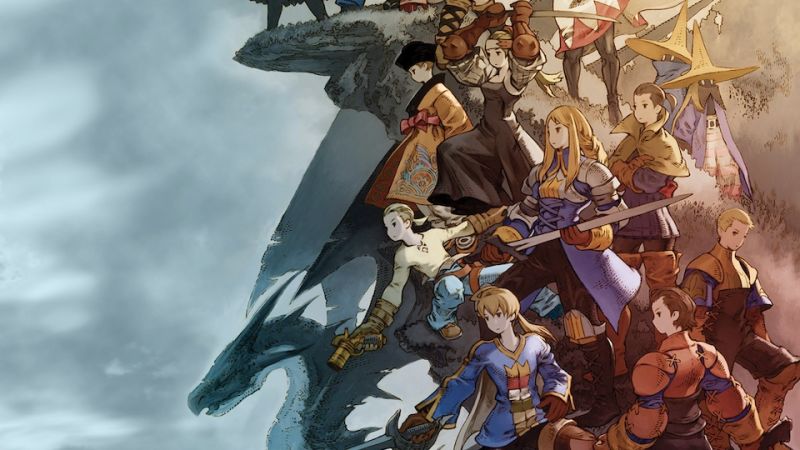
Final Fantasy Tactics Advance is a Tactical RPG game developed and distributed by Square Enix on 2003 for Nintendo Game Boy Advance. This game forms part of the series of games Final Fantasy, although there is a game named Final Fantasy Tactics and is very similar to this game, this game is not considered a direct sequel of that game. On this game the player creates a clan with some characters, being able to control their actions over a grid-like battlefield. The player is free to choose the classes, abilities and all the statistics of their characters. Years later of the release the game had a sequel for the Nintendo DS console named Final Fantasy Tactics A2: Grimoire of the Rift on 2007 and a re-release for the Nintendo Wii U Console on 2016.
| Final Fantasy Tactics Advance | |
|---|---|
| Developer | SquareSoft |
| Publishers |
|
| Director | Yuichi Murasawa |
| Producer | Yasumi Matsuno |
| Artists | Ryoma Itō Hideo Minaba Hiroshi Minagawa Akihiko Yoshida |
| Writers | Kyoko Kitahara Jun Akiyama |
| Composers | Hitoshi Sakimoto Kaori Ohkoshi Ayako Saso Nobuo Uematsu |
| Series | Final Fantasy |
| Platform | Game Boy Advance |
| Release |
|
| Genre | Tactical role-playing |
| Modes | Single-player, multiplayer |
Information about Final Fantasy Tactics Advance
 |
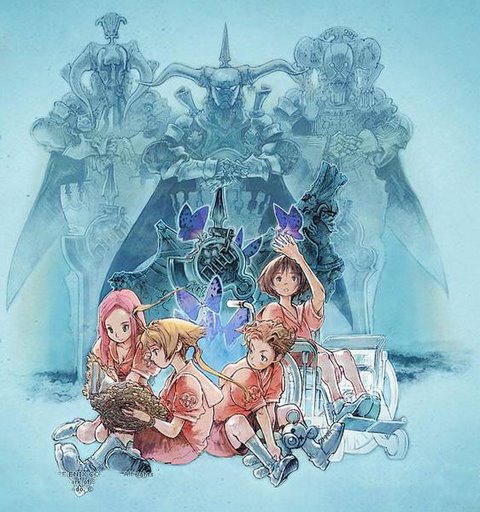
| Ivalice is a world created by four normal guys: Marche Radiuju, new student and resident of San Ivalice; Mewt Randell, a shy boy tied to the memory of his mother; Ritz Malheur, a classmate of Marche and Mewt with a strong temperament; and Doned Radiuju, Marche's younger brother, incapacitated by illness. Mewt discovers in an old book store an old tome containing a strange inscription. After reading it, Marche wakes up the next day in the magical world of Ivalice, an incarnation of the memories of the Final Fantasy video game that Mewt possessed. Marche is separated from his friends and lost in a strange world, but he does not hesitate to start a search that will take them all back home. His other friends and Mewt's father, Cid, discover little by little, after Marche's efforts, that this idyllic world is nothing more than a fantasy created to fulfill his wishes: Mewt is no longer humiliated, he has met again with his mother and is the prince of Ivalice; Ritz has lost the albino color of his hair; Doned can walk and is no longer sick; Marche is strong and athletic; Cid is the highest ranking officer in the nation and they all live in the videogame world they adore. In the end, Marche manages to return Ivalice to its original form. Thanks to the destruction of the crystals and the defeat of Li-Grim, it teaches the rest of the children that they can not live forever in a fantasy, but overcome their problems in the real world. Thanks to the experience, the group becomes stronger and they learn to live happily with their own real situation. |
 |
In addition to the main story, there is the parallel story of the judges. This addition to the story, which can only be accessed after completing the 300 main missions of the game, shows the corruption of a group of judges that jeopardizes the integrity of the entire Ivalice system. After completing this chain of missions, we can observe an alternative ending in which Marche remains in Ivalice and becomes the next heir of the sword of the Great Judge of Cid. |
|---|
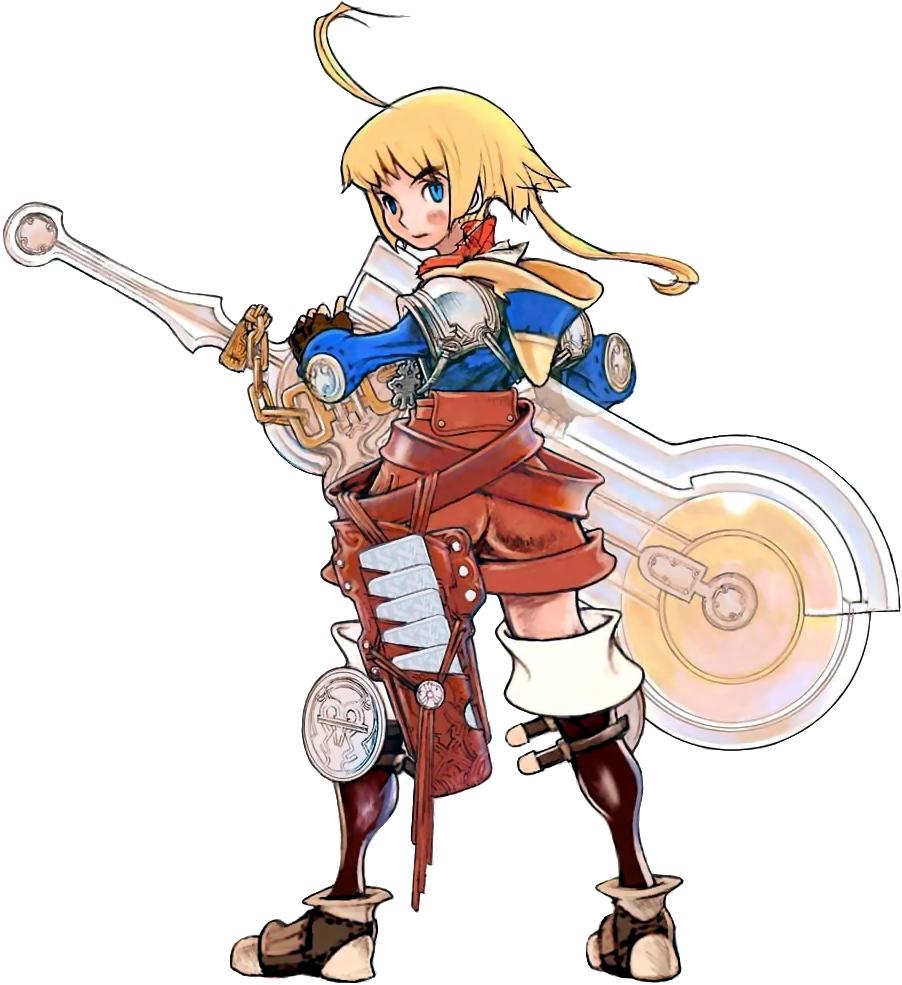 |
Marche Radiuju is the protagonist of Final Fantasy Tactics Advance. A young child who has just moved into a new town, Marche finds it hard to fit in until he makes two new friends: the shy Mewt Randell and the more outspoken Ritz Malheur. After the trio discovers an ancient book with Marche's brother Doned, they are transported to the magical world of Ivalice. Marche vows to return him and his friends back to their true reality. Gender: Male Race: Human Job: Soldier, Paladin |
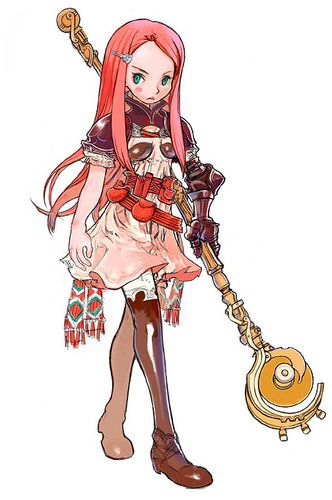 |
Ritz Malheur is the female protagonist of Final Fantasy Tactics Advance, and the leader of Clan Ritz. The headstrong class head, she appears bossy, but has a vulnerable side. Gender: Female Race: Human (Viera) Job: Class Head, Fencer, Red Mage, Elementalist |
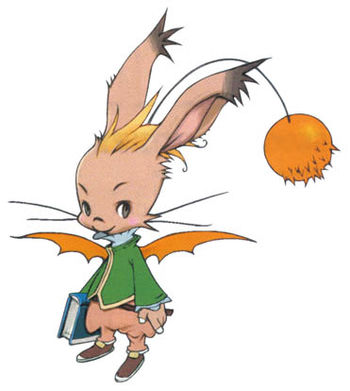 |
Montblanc is a recurring character in the Ivalice series of games. He is a hard-working moogle, and in all his appearances leads a clan. He finds Marche Radiuju after St. Ivalice transforms into the land of Ivalice, and later decides to help him revert the land to normal. Gender: Male Race: Moogle Job: Black Mage |
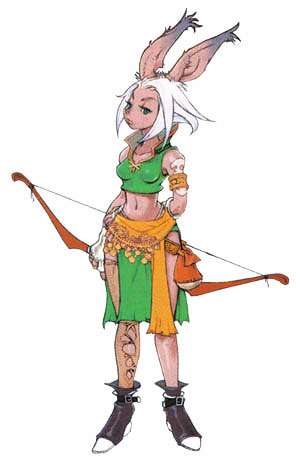 |
Shara is a viera who specializes in archery and a member of Ritz Malheur's clan who she quickly befriends. Her past is a mystery, and not much is known about her. Like Ritz, she also has white hair. Gender: Female Race: Viera Job: Archer, Sniper |
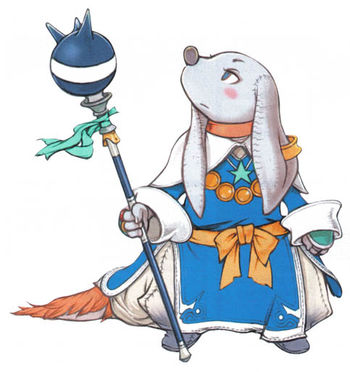 |
Babus Swain is Mewt Randell's nu mou assistant from Final Fantasy Tactics Advance. An experienced mage, he will do anything to protect Mewt. Gender: Male Race: Nu mou Job: Runeseeker |
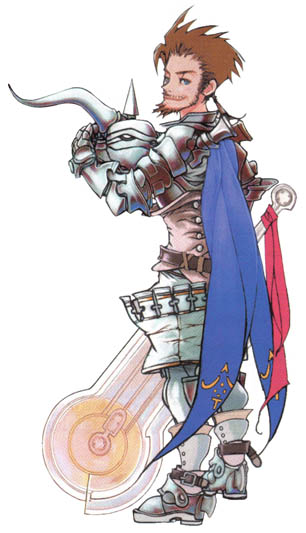 |
Judgemaster Cid is Mewt Randell's father, he is the Judgemaster, leader of the Judges that enforce Ivalice's laws. While he can perform all of the duties of a normal judge, he also has the power to issue Advanced Laws, which can result in a Red Card for a character that takes any action forbidden by the Advanced Law. Gender: Male Race: Human Job: Judgemaster |
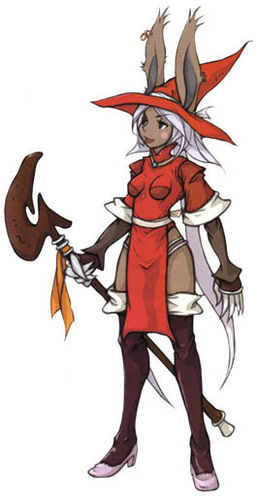 |
Eldena , a viera, is one of six special recruits in Final Fantasy Tactics Advance. Eldena was once a jail breaker in Ivalice. Gender: Female Race: Viera Job: Red Mage |
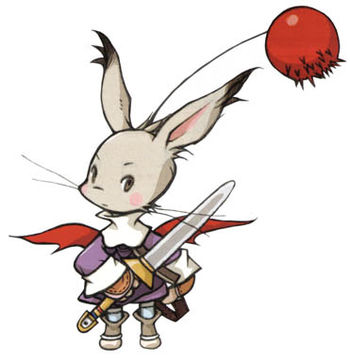 |
Lini , a moogle, is one of six special recruits. Race: Moogle Job: Mog Knight |
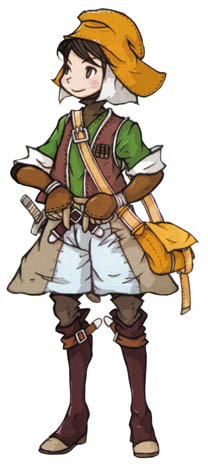 |
Cheney is one of six special recruits. Gender: Male Race: Human Job: Hunter |
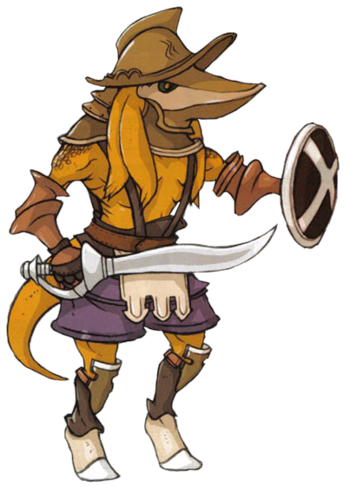 |
Pallanza, a bangaa, is one of six special recruits in. Race: Bangaa Job: Gladiator |
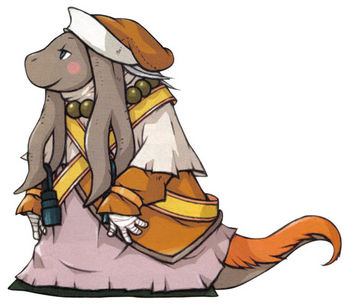 |
Quin is one of the six special recruits and the member of the search party looking for Professor Auggie who originally posted the mission at the pub and, according to the mission board, is a student of Auggie's. Gender: Female Race: Nu mou Job: Sage |
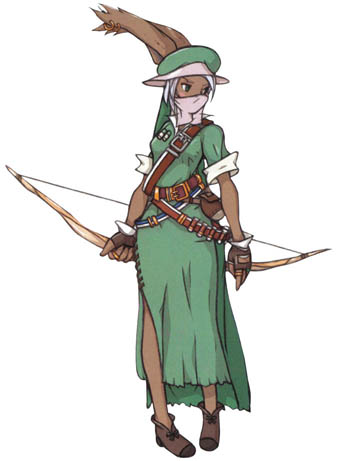 |
Littlevili, a viera, is one of six special recruits. Gender: Female Race: Viera Job: Sniper |
 |
Llednar Twem is one of the main antagonists. He appears in the story after Marche Radiuju defeats the Totema Exodus, Llednar replaces Judgemaster Cid Randell as Prince Mewt's guardian and personal attendant. His job class is Biskmatar. Gender: Male Race: Human Type: Boss |
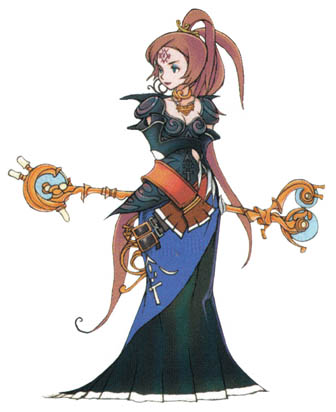 |
Queen Remedi is Prince Mewt's mother and the main antagonist. She is the Queen of Ivalice, and determines the Laws of the land with her husband Judgemaster Cid Randell. Genre: Female Race: Human Type: Boss |
 |
Lyle is a resident of St. Ivalice. Lyle attends the same school where Marche Radiuju enrolled after moving into town, where he is the PE Head—a student, usually a boy, who cleans up after a PE lesson. Gender: Male Race: Human |
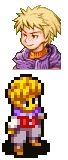 |
Colin is a character. A resident of St. Ivalice, Colin attends the same school where Marche Radiuju enrolled after moving into town, where he is the PE Head—a student, usually a boy, who cleans up the place after PE. Genre: Male Race: Human |
 |
Guinness is a resident of St. Ivalice, Guinness attends the same school where Marche Radiuju enrolled after moving into town, where he is the D.J.—a popular student who gets to use the public address system. Gender: Male Race: Human |
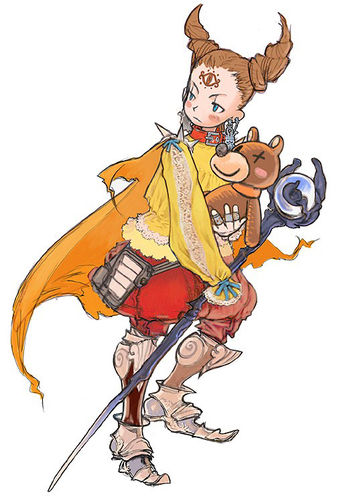 |
Mewt Randell in Ivalice Mewt is the prince, since the Gran Grimoire book used his imagination to create the fantasy world. His father Cid is the Judgemaster, enforcing Ivalice's laws, while his mother, Queen Remedi, dead in the real world, is alive in Ivalice. Gender: Male Race: Human Job: Prince |
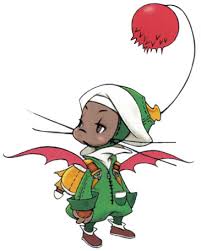 |
Nono is a recurring moogle in games set in Ivalice. He is Montblanc's younger brother, making him one of the six moogle siblings. Nono is involved with airships and his outfit resembles a green color swap of the Tinker job. Genre: Male Race: Moogle |
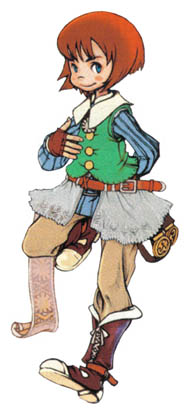 |
Doned Radiuju is Marche's brother from Final Fantasy Tactics Advance. He is first introduced as wheelchair-bound kid, and is apparently suffering from an illness. Genre: Male Race: Human |
In Final Fantasy Tactics Advance, turn-based tactical battles take place on a three-dimensional isometric field. The player takes the role of Marche, a clan leader; he must organize the clan's members and advance their status through missions that are offered in pubs.
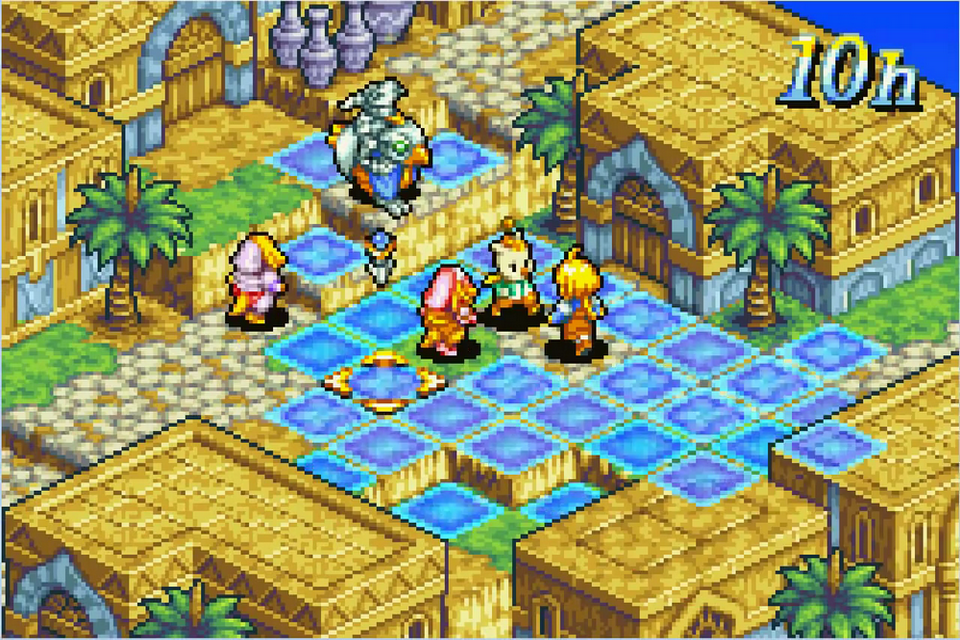
Battle Footage
There are four types of missions: regular, encounter, dispatch, and area:
- In regular missions, Marche's entire party ventures to a particular location to battle to advance into the story.
- In encounter missions, Marche's group battles a rival mercenary clan by purchasing a mission or meeting them on the map.
- In dispatch missions, which do not involve battle, Marche temporarily sends away one member from his party to complete a mission alone, and returns in time.
- Area missions are usually a dispatch mission where Marche's clan can liberate certain regions to obtain bonuses and discounts at shops.
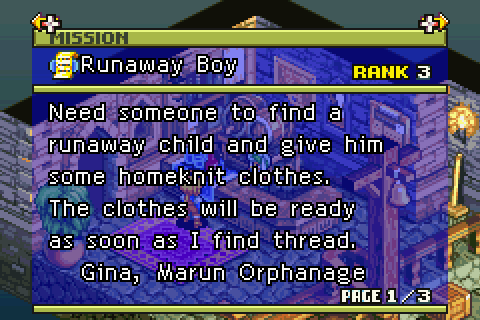
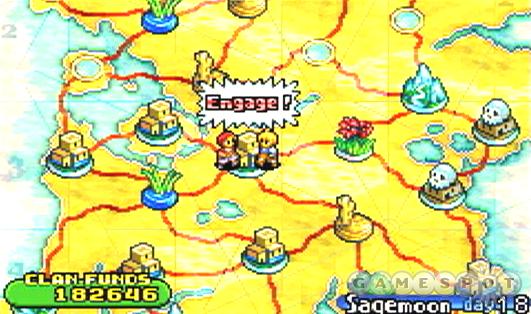
Accepting new Mission
Ivalice also introduces areas called Jagds, lawless slums that Judges avoid. Jagds are the only places in the game in which a character can die; everywhere else, they are protected from death by the Judges and are simply knocked out.
| Mission Limitations |
1. Some missions, typically dispatch missions, require a special item to be in possession in order to accept the mission, meaning that has to been completed a specific mission to get that item. 2. Other missions require a dispatch character to have a specific job class. |
|---|
Every day a certain action, element, weapon type, job skill, and/or status effect is forbidden to be used during that day during a standard engagement. If a fighter performs an action that involves the forbidden action, the Judge will issue the offender with a card. The type of card received will depend on the effect of the action. Before each battle, Judges will arrive at the start of every engagement and supervise as the opposing forces engage.
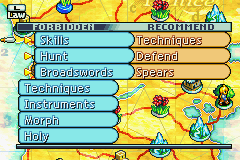
Active Laws
If a unit breaks the law, if it is the first time it will be penalized with a yellow card in the case that the attack does not end in a KO. If it does it will be an automatic red card and will be removed from the battle. A unit can get a second card in the case that breaks the law for a second time. As clan leader, if Marche gets any time a red card it will be Game Over.
There are some characters that have "Boss medals" that will prevent them from getting ever a Red Card.
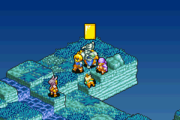
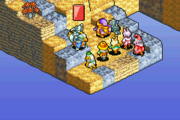
Judge showing Yellow and Red card
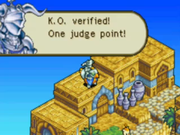
Player receiving Judge Points
Judge Points are received from Judges by either successfully and legally KOing an opponent, or performing a recommended action during battle as stated by the Law of the day.
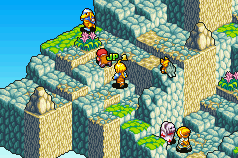
Player Judge Points
Judge Points can be used for two purposes:
- Allow a character to use his/her "Combo" ability. When a Combo is activated, all current JP is used up and any allies who are nearby will join in, however, their JP will not be used. The more JP the initiating character has, the more damage the Combo will deal.
- Summon the Totemas when they are unlocked. Every invocation of a Totemas consumes 10 JP.
The world map is initially empty except for the starting location; it is customized as the player wins location "tokens" after certain missions. These tokens represent different terrains and settlements, such as plains, mountains, deserts, forests, and towns, that can be placed in slots on the world map. Items are rewarded to the player depending on the placement of the tokens.
There are 25 Jobs in the game that set different character's stats, equipment, and abilities. Units have a primary job which determines the stat boosts they receive when they level up and the attributes associated with that class. A unit may also have a secondary job set of abilities, where it can use any abilities of the selected job, but with the stat profile of the primary job.
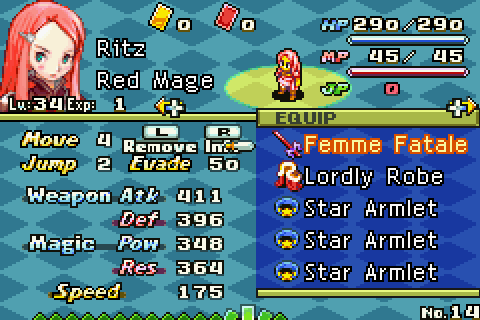
Stats & Jobs Menu
When a battle is completed, characters will receive Ability Points distributed over their currently equipped weapons or items. Once a target amount of AP has been accumulated for a given ability, the character will master that ability, allowing the character to use them at any time, regardless of items equipped and job chosen. Mastery of abilities in different jobs will eventually allow the character access to more jobs.
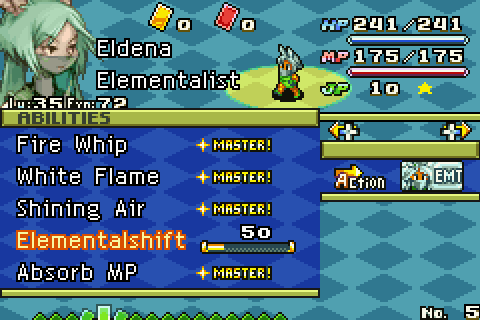
Abilities Menu
Tactics Advance also offers the multiplayer capability for two players. Players may cooperate or compete using a link-cable peripheral, and also trade items and party members. Additional missions and items are also offered when players link.
Some of the first RPGs used a tactical form of combat such as "Tunnels of Doom"(1982), The Dragon and Princess (1982) and Ultima III: Exodus(1983). Those games used the principle idea of tabletop role-playing games, such as Dungeons & Dragons evolving to the TRPG that is known today.
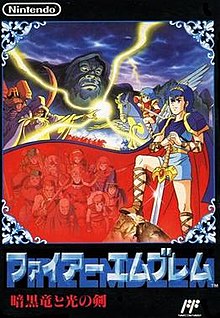
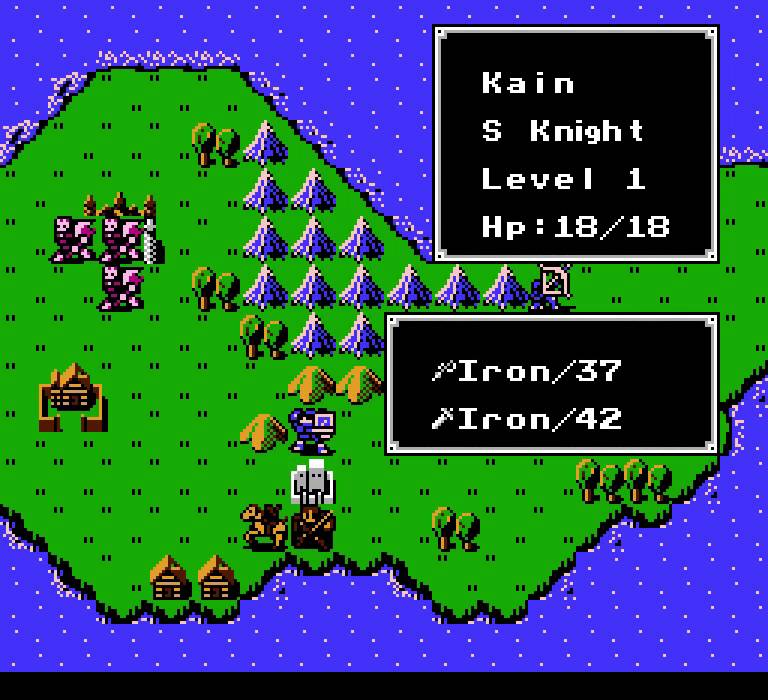
Fire Emblem cover and in-game footage
Developed by Intelligent Systems and distributed by Nintendo and released in 1990.
This game is considered among the firsts, if not the first Tactic RPG game. This game is the first of a series of 15 games, all of them let the player control a group of characters traveling through the world to complete their main mission. Also, this game contains some basic aspects of traditional RPGs to customize all characters equipment, abilities and more.
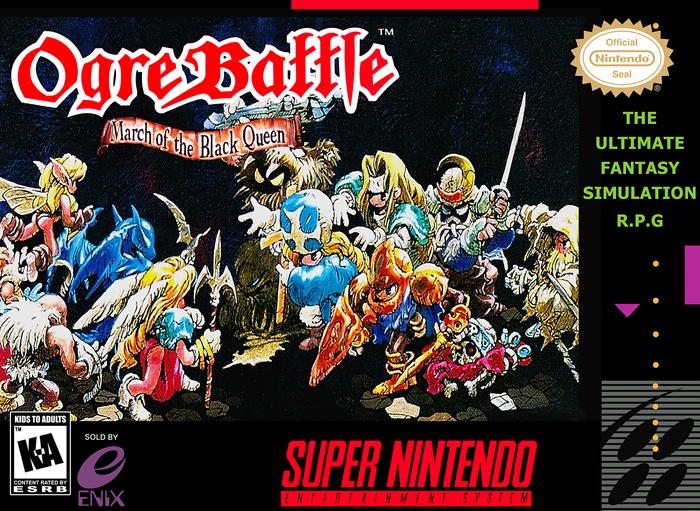
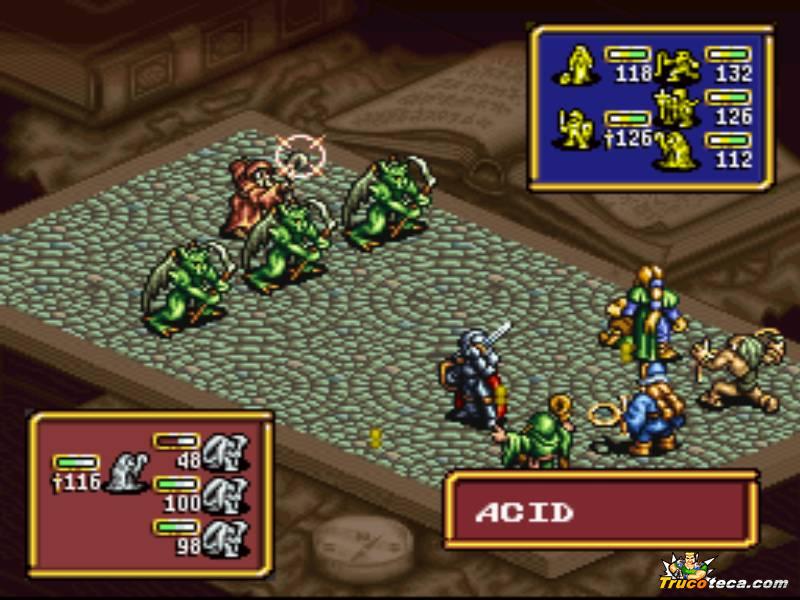
Ogre Battle: The March of the Black Queen cover and in-game footage
Developed by Quest and released in 1993.
Ogre Battle mixes movement elements of a Real-Time Tactics Game with the character development and combat of an RPG. The game consists of a series of battles in which the player deploys units to fight against enemies and liberate occupied towns and temples. A variety of character types can be recruited, ranging from common to rare, many of whom can change class with experience points. As a result, the character will either evolve or become an entirely new soldier with different abilities.
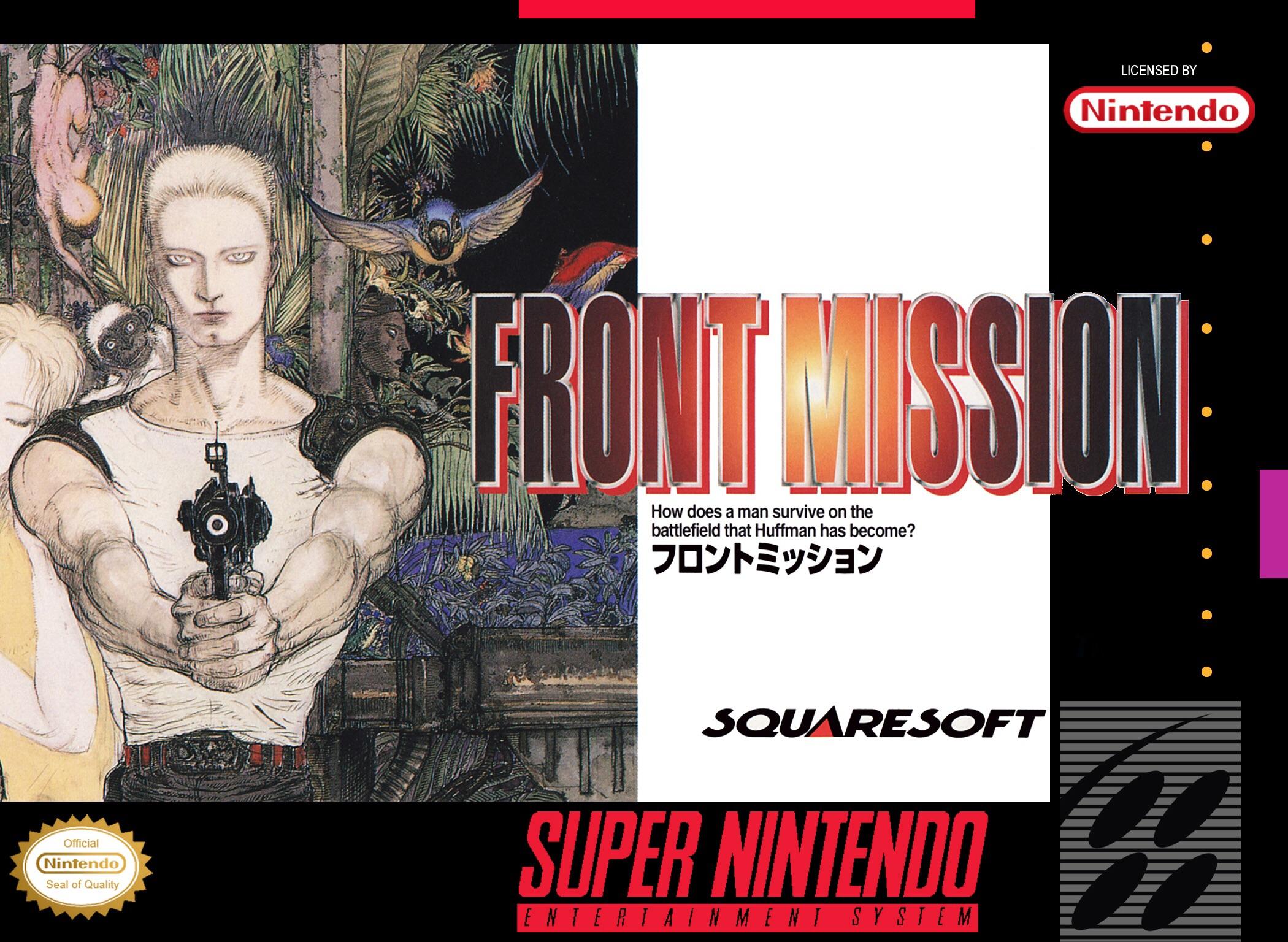
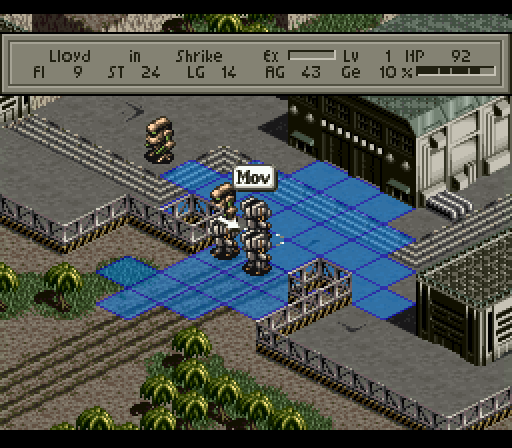
Front Mission cover and in-game footage
Developed by G-Craft and distributed by Squaresoft and released in 1995.
This was one game in a series of Front Mission games, having the genre of Tactic RPG, most important thing of this game was his storytelling. The player's main goal is to destroy other enemies units, having to control a mecha and use the different weapons without being destroyed.
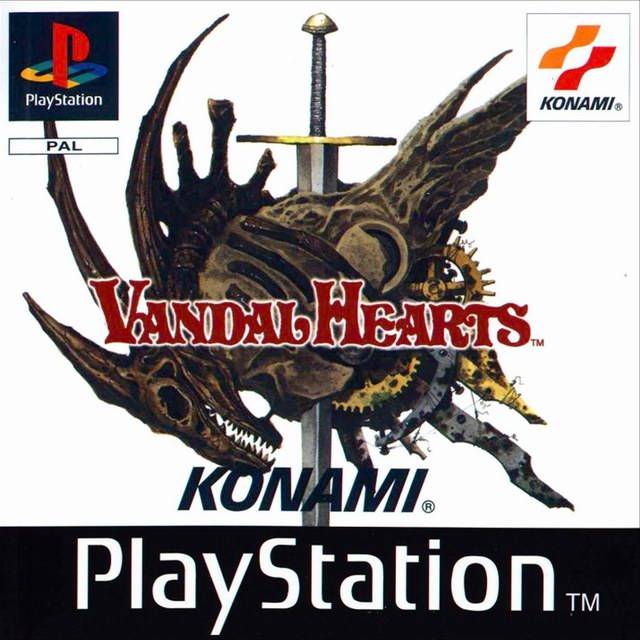

Vandal Hearts cover and in-game footage
Developed and distributed by Konami and released in 1996.
This game is a turn-based Tactical RPG using a 3D dimensional environment allowing the player to rotate it. The player will control a party and have to defeat all enemies on the field without letting the enemies kill the leader of the party. Depending on the mission the player will have to complete some goals to pass the mission.
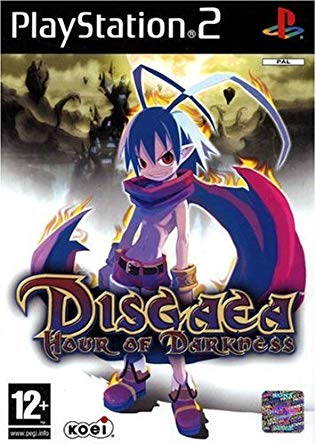
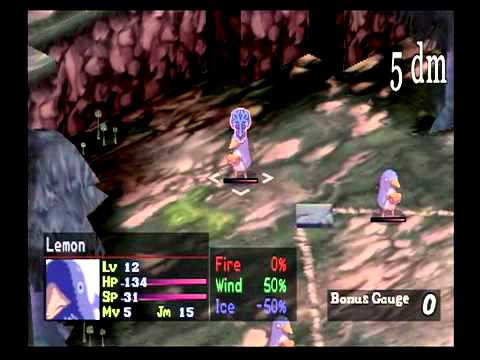
Disgaea: Hour of Darkness cover and in-game footage
Developed and distributed by Nippon Ichi Software and released in 2003.
Disgaea is a Tactical RPG. Battle gameplay takes place on a map divided into a square grid. The player controls a squad of humanoid units and monsters, and have to defeat all enemies in the map, the player will be able to damage one single unit or an area of the map. One interesting gameplay mechanic is that the player can capture some enemies and convert them as allies.
This game was originally released for Game Boy Advance, years later with the release of new Game Boy Advance SP, all the games from the original version would be compatible with the original. In this case, we will use the Original Game Boy Advance Technical Specifications:
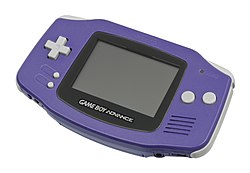
| Size: | approximately 14.45 cm (5.69 in) x 2.45 cm (0.96 in) x 8.2 cm (3.2 in) (LxWxH), 140 g (4.9 oz). |
|---|---|
| Screen: | 2.9 inches reflective thin-film transistor (TFT) color LCD. |
| Power: | 2× AA batteries |
| Battery life: | approximately 15 hours on average while playing Game Boy Advance games (also dependent on the Game Pak being played, volume setting and any external peripherals being used - e.g. a screen light) |
| CPU: | 16.8 MHz 32-bit ARM7TDMI with embedded memory. 8.4 or 4.2 MHz Sharp LR35902 (8080-derived)
coprocessor for Game Boy backward compatibility. |
| Memory: | 32 kilobyte + 96 kilobyte VRAM (internal to the CPU), 256 kilobyte DRAM (outside the CPU). |
| Resolution: | 240 × 160 pixels (3:2 aspect ratio). |
| Color support: | 15-bit BGR (5 bits depth per channel), capable of displaying 512 simultaneous colors in "character mode" and 32,768 (215) simultaneous colors in "bitmap mode". |
| Sound: | Dual 8-bit DAC for stereo sound (called Direct Sound), plus all legacy channels from Game Boy. The new DACs can be used to play back streams of wave data, or can be used to output multiple wave samples processed/mixed in software by the CPU. |
Final Fantasy Tactics sold more than 230.000 units on the first week in Japan, with a total of 450.000 on 2003. Months later Square Enix announced that the game had reached a million units sold between Europe and the United States.
The game was well received in the market, with its graphics, music and game system that made the game win an award as the best game for a portable video game console in the "7th Annual Interactive Achievement Awards". Some critics were centered on how the GameBoy Advance title lose dramatism on the story compared to the PlayStation version, and the simplification of the gameplay for the market of Nintendo portable players. On 2007, Final Fantasy appears 14th as one of the best games launched for the GameBoy Advance of all time and 67th as the best game of Nintendo.
| Aggregate scores | |
|---|---|
| Aggregator | Score |
| GameRankings | 88% |
| Metacritic | 87/100 |
| Review scores | |
| Publication | Score |
| Edge | 7/10 |
| EGM | 9/10 |
| Famitsu | 34/40 |
| Game Informer | 9.5/10 |
| GameSpot | 8.2/10 |
| IGN | 9/10 |
| Nintendo World Report | 7.5/10 |
| X-Play | 8/10 |
| RPGFan | 8.1/10 |
| GameNOW | 10/10 |
Review Scores of Final Fantasy Tactics Advance