2. GATHERING PERTINENT INFORMATION - E-division-2021-2022-odd/Repo-05 GitHub Wiki
PAPER PLANE LAUNCHING MACHINE
| Sl No | Components | Mechanism | Links |
|---|---|---|---|
| 1 | Card board,papers, | The DC motors are connected to batteries through a simple circuit,the wheels are | https://youtu.be/RVgemKXnhMw |
| 4 DC motors,DC switch | assembled to DC motors,which are kept side-by-side with only 1mm gap(for the | https://youtu.be/RUQhoYEHpkg | |
| 9 V or 12 V battery, | paper plane),When paper planes are kept between these wheels due to rolling of wheels by-the sides of the plane the plane gets launched | https://youtu.be/SfvrJgkhp7c | |
| wire, | https://www.instructables.com/Paper-Plane-Launcher/ | ||
| four wheels(which is used to launch the plane) | https://www.instructables.com/LETS-MAKE-a-PAPER-PLANE-LAUNCHER/ | ||
| LED lights or Laser | https://www.instructables.com/Super-fast-paper-plane-launcher/ |

TENNIS BALL LAUNCHING MACHINE
| SL.No | Components | Mechanism | Links |
|---|---|---|---|
| 2 | 10ft length of 2" PVC pipe | Wheel powered winners | https://youtu.be/43UVNi1CgFs |
| Heavy duty bungee cord | The tennis ball launcher machines operate using counter-rotating wheels. When the machine is turned on an electric fan draws in outside air which is then pushed into the canister. To protect the fan motor from debris the air passes through a slab of foam as well as a screen barrier | https://youtu.be/1ymscuq3jUA | |
| PVC pipe,straight couplers | An electric motor powered hopper is used to channel balls into the landing area | https://youtu.be/408YRZQnLRA | |
| Metal Pulley threaded rod | During this process the wheels squeeze the balls and put them under intense pressure, thus forcing them into a circular tube which leads to a small opening. This soft, rubbery circular area is called a detent. When the ball is lodged in the detent it creates an airtight seal at the end of the tube. Simultaneously, a plastic flap falls over the entrance which causes pressure to mount | https://youtu.be/tTuYr_e3Pzs | |
| Fully threaded bolts. (Carriage bolts will work in a pinch) | Under pressure.Eventually air pressure pushing on the ball overpowers resistance from the detent. This causes the ball to shoot down the barrel and onto the court. When the pressure has been released the entrance flap is released and another ball is able to enter the tube. The process is repeated until all balls are depleted | ||
| Hex nuts | |||
| Corner brace | |||
| Wide nylon webbing | |||
| Sewing machine thread | |||
| Thick string or thin rope | |||
| Wooden dowel,Wood screws | |||
| Masking Tape | |||
| Friction tape | |||
| 16gauge galvanized steel wire | |||
| Spray paint | |||
| Tennis ball |
HYDRAULIC ROCKET LAUNCHING MACHINE
| Sl No. | Components | Mechanism | Links |
|---|---|---|---|
| 3 | Plastic bottle, cardboard, | THIS PROJECT WORKS BASED ON NEWTON'S THIRD LAW OF MOTION- | https://youtu.be/gDN9lxgzPlo |
| Masking tape,glue gun,PVC pipe, | When the water in the rocket will be ejected out due to pressure the water goes | ||
| Bicycle pump,few bamboo sticks for | backward and in reaction the the rocket moves forward | ||
| holding the rocket | The bottle is atteched to one end of the pipe inward,the other end of pipe is attached | ||
| with a cone made up of a card board,the bottle is half filled with water and is connected to | |||
| bicycle pump.When air is pumped in the bottle due to pressure the water escapes out and the rocket gets launched |
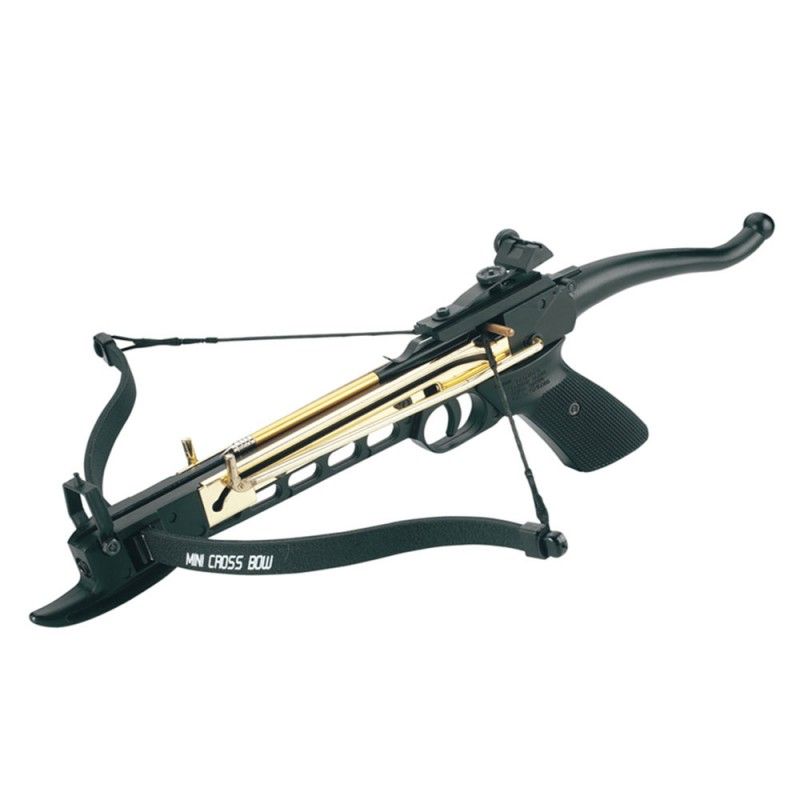
CROSSBOW (ARROW'S LAUNCHER)
| SI.NO | Components or Parts used | Mechanism/working principle identified | Link |
|---|---|---|---|
| 4 | Stock | Crossbow is essentially a bow mounted on an elongated frame(called a tiller)with a built-in mechanism that | https://youtu.be/YU2X8x60-Po |
| Foregrip | holds the drawn bow string, as well as a trigger mechanism that allows the string to be released.With the release of the | https://youtu.be/-z3RfHNq1Hc | |
| Trigger & Saftey | trigger, the potential energy of the cocked crossbow converts into kinetic energy as the arrow flies through the air. | https://youtu.be/rrx3f7XVmVg | |
| Barrel | Except for a bit of energy lost to friction, the kinetic energy of the flying arrow is equal to the potential energy that was | https://patents.google.com/patent/TW202126982A/en?q=crossbow&oq=crossbow | |
| Risers | stored in the cocked crossbow. And crossbow work on essentially the same principle as a bow i.e, energy stored in the | https://patents.google.com/patent/US9207036B2/en?q=crossbow&oq=crossbow | |
| Limbs | limbs of the crossbow is transferred to the arrow upon release of its string. Crossbows have a limited range, similar to | https://patents.google.com/patent/CA2998239C/en?q=crossbow+mechanics&oq=crossbow+mechanics | |
| Cams | that of a bow, and require careful estimation of the distance to the target to ensure a precise shot. | ||
| Cable | |||
| String | |||
| Serving | |||
| Flight Groove | |||
| Arrow Retention Spring | |||
| Latch | |||
| Sight | |||
| Sight Bridge | |||
| Cocking Stirrup | |||
| Quiver |
 |References|
(1.) "The Royal Engineers". The Royal Engineers Journal. The Institution of Royal Engineers. 39: 79. 1925.
(2.) Robert Hardy (1992). "Longbow: A Social and Military History". Lyons & Burford. ISBN 1-85260-412-3, p. 75
(3.) Stanley M. Burstein, Walter Donlan, Sarah B. Pomeroy, and Jennifer Tolbert Roberts (1999). Ancient Greece: A Political, Social, and Cultural History. Oxford University Press. ISBN 0-19-509742-4, p. 366
(4.)Eric William Marsden: Greek and Roman Artillery: Historical Development, The Clarendon Press, Oxford 1969, ISBN 978-0-19-814268-3, p. 60.
BADMINTON SHUTTLECOCK LAUNCHING MACHINE
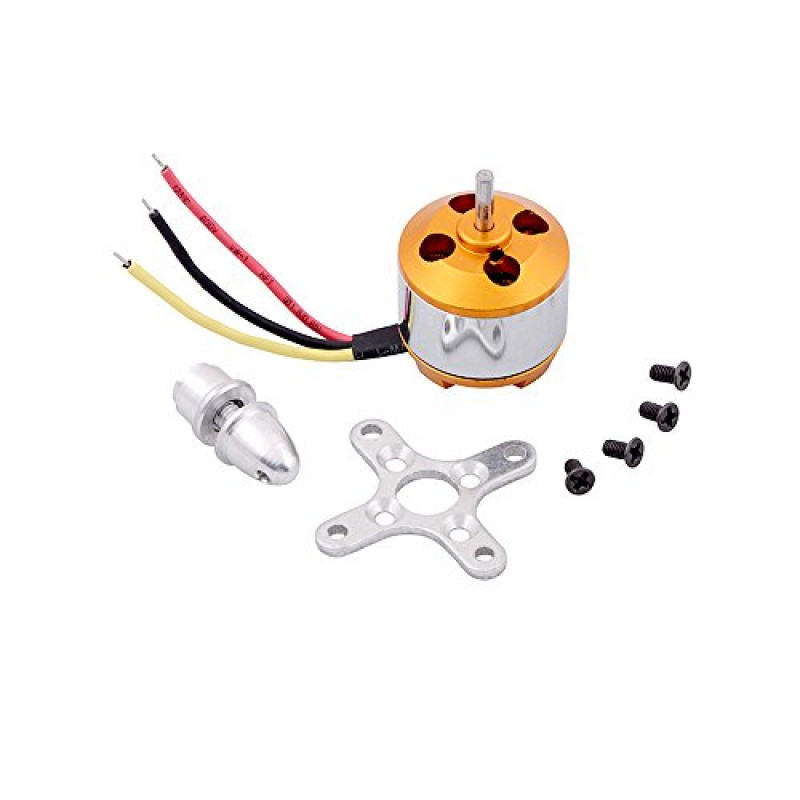
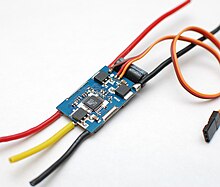


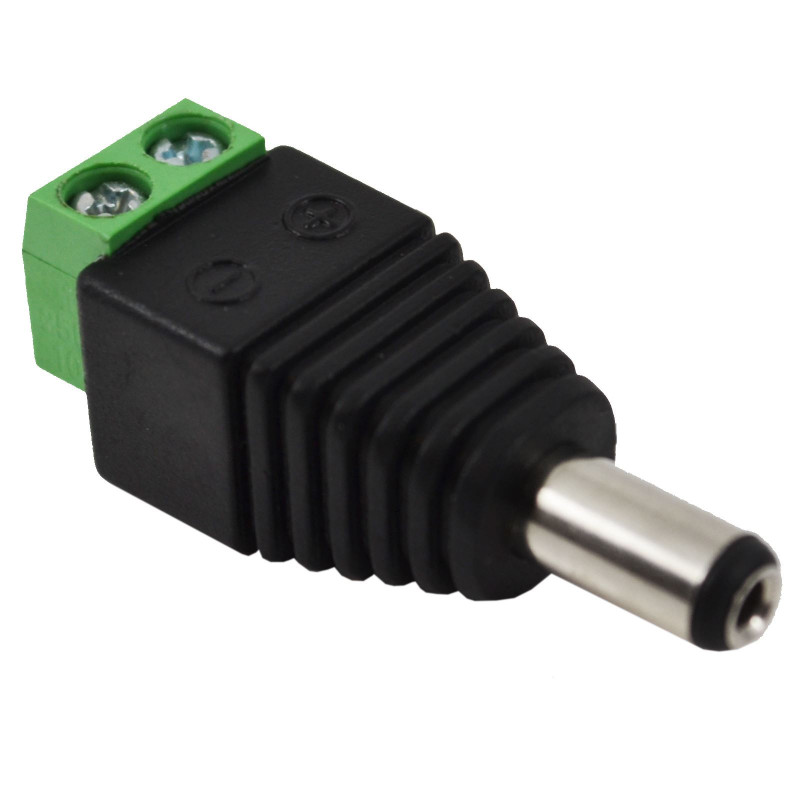


 Fig 1. Mechanism of launching machine[1]
 Fig 2. Shuttlecock Launching Machine[2]
The basic concept of this invention employs a pair of articulated counter rotating wheels for gripping and propelling the shuttlecock nose or cap member, a shuttlecock dispenser which positions shuttlecocks led in queue and a loading mechanism which simply pushes the queue shuttlecock into the gap of the rotating wheels thereby causing contact between the shuttlecock cap and the ejecting wheels. This invention provides a highly versatile shuttlecock launcher avoiding the foregoing and other shortcomings and disadvantages of prior constructions. Accordingly, it is also the objective of the present invention to provide a launcher that is capable of simulating most of the shuttlecock trajectories experienced in the actual playing of badminton. To achieve the foregoing and other objects and in accordance with the purpose of the present invention, a shuttlecock-throwing machine is provided to permit delivery of successive shuttlecocks at different frequency, trajectory and speed in a desired direction of a player's court and which is of relatively simplified construction for economical manufacture and minimum cost of maintenance and repair.
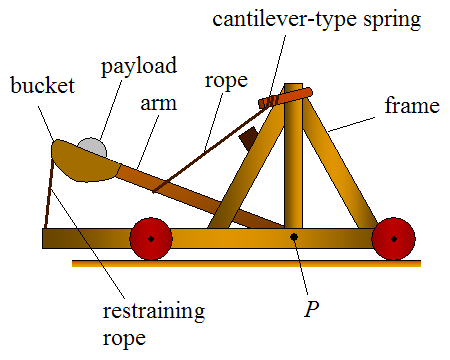
CATAPULT(LAUNCHER)
| S.I NO | Components or Parts used | Mechanism/Working principle Identified | Links |
|---|---|---|---|
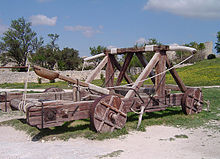
| (1.) | Bucket or pouch | A catapult uses the sudden release of stored potential energy to propel its payload. Most convert tension or | https://youtu.be/HiX04bY0y88 |
| (2.) | Payload | torsion energy that was more slowly and manually built up within the device before release, via springs, bows, twisted | https://youtu.be/yi4p8ZR4n28 |
| (3.) | Restraining rope | rope, elastic, or any of numerous other materials and mechanisms. A catapult is a launching device that allows | https://youtu.be/jTBDc19eW2o |
| (4.) | Arm | us to experimentally observe projectile motion. Once the ball is launched, the only forces acting are gravity and air | https://youtu.be/EgCOU9diW0g |
| (5.) | Rope | resistance. Elastic energy is used in a catapult, potential energy is stored as elastic energy. This energy results from | https://patents.google.com/patent/CA2314203C/en?q=catapult&oq=catapult |
| (6.) | Cantilever-type spring | the force put in as the muscular push or pull needed to stretch, bend, or twist some sort of elastic material that is | https://patents.google.com/patent/US7562843B2/en?q=catapult&oq=catapult |
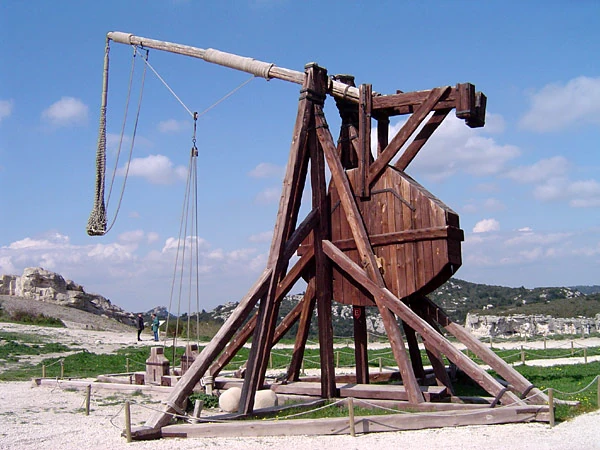
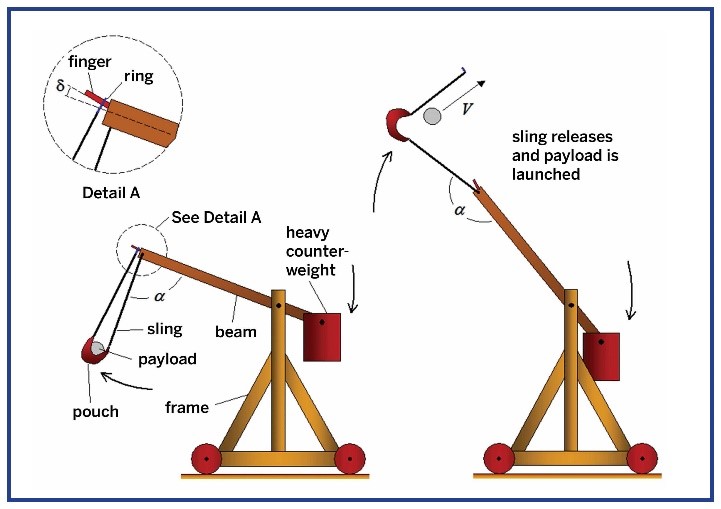
| (7.) | Frame | attached to the throwing arm. For a trebuchet, the potential energy is gravitational. A catapult works on | |
| (8.) | Heavy counter-weight | Newtons 3rd law of motion, because when we pull an elastic band, it automatically returns to its original | |
| (9.) | Beam | position. The more you pull the more force it generates. This is the same when you pull or compress a spring. | |
| (10.) | Wheels | The action is stored as energy and is released as a reaction with an equal and opposite force. |
|REFERENCES|
(1.)Ober, Josiah (1987), "Early Artillery Towers: Messenia, Boiotia, Attica, Megarid", American Journal of Archaeology, 91 (4): 569–604 (569).
(2.)Citation:"The trebuchet, invented in China between the fifth and third centuries B.C.E., reached the Mediterranean by the sixth century C.E. "
(3.)Chisholm, Hugh, ed. (1911). "Catapult" . Encyclopædia Britannica (11th ed.). Cambridge University Press.
(4.) Hacker, Barton C (1968), "Greek Catapults and Catapult Technology: Science, Technology, and War in Ancient World", Technology and Culture, 9 (1): 34–50.
(5.) PAUL E. CHEVEDDEN, The Invention of the Counterweight Trebuchet: A Study in Cultural Diffusion Archived 2014-06-10 at the Wayback Machine, p.71, p.74, See citation:"The traction trebuchet, invented by the Chinese sometime before the fourth century B.C." in page 74.