Source Address Hexadecimal (In the middle pane of Wireshark-highlight "Source" and the hex will be highlighted in the lower pane): 97 65 76 f8
Destination Address Dotted Decimal: 192.168.0.131
Destination Address Hexadecimal: c0 a8 00 83
Question 2 - IP Version and Header Length Fields (2 Points)
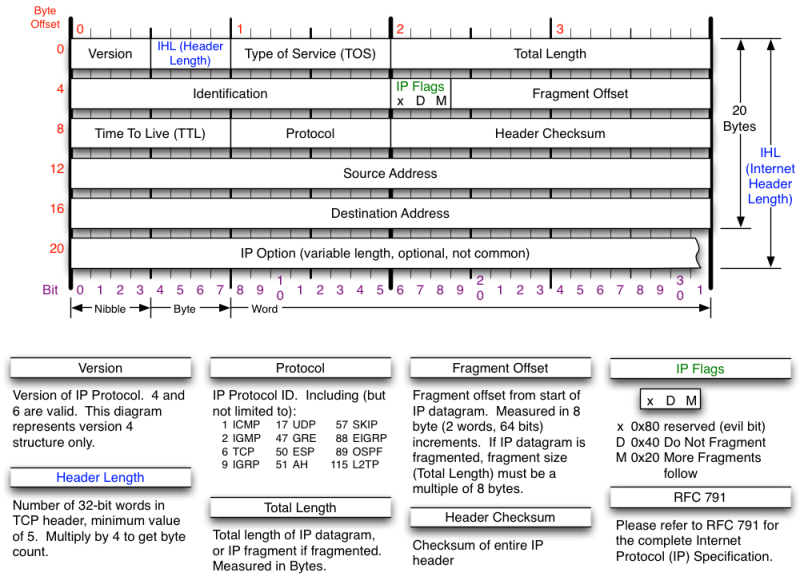
The Version Field is the first 4 bits of the IP header
What is the IP Version of your packet in decimal?: 4
What is the version in binary (4 bits)?: 0100
The Header Length Field is the next 4 bits and indicates the number of
What is the Header Length in binary (4 bits)?: 0101
What is that binary value converted to decimal?: 5
What is that decimal value multiplied by 4? It should equal the number of bytes in the header: 20 bytes
Question 3- Protocol Field (1 Point)
What is the protocol field value of the IP packet header in hexadecimal?: 06
What protocol does that stand for?: TCP
Question 4 - Time to Live (TTL) Field (1 Point)
What is the Time-to-Live (TTL) value of the packet in hexadecimal?: 3b
What is the Time-to-Live (TTL) value of the packet in decimal?: 59
Question 5 - TTL Field Research (3 Points)
What is the primary purpose of the TTL field? In other words, what is it intended to prevent? (a sentence or two): The TTL field prevents a packet from looping infinitely.
How does the TTL value achieve this purpose? (a few sentences): TTL achieves this by setting a value that counts down between hops and causes the packet to expire at 0.
Question 6 - TTL Field and Source (1 Point)
An IP packet with your computer IP as Source: What is the TTL Value?: 128
An IP packet with your computer as Destination: What is the TTL Value?: 59
Are they different? If so, why?: They are different because the distance is know so the TTl can be reduced