ED1 - A-Division-2018-2019/Team-8 GitHub Wiki
INFORMATION ABOUT THE EXISTING PRODUCTS IN MARKET .
1. PROSTHETIC HAND .
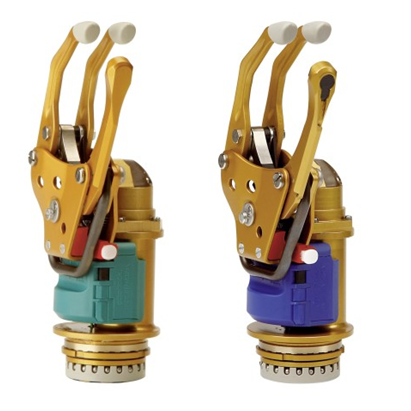
Grasping large and small objects, lightweight and heavy, fragile and robust: combined with myoelectrically controlled arm prostheses, the SensorHand Speed and VariPlus Speed artificial hands make it possible for the user to hold objects, grasp and be active. The special feature is that the hands can open for a quick reaction – in real time – similar to a natural hand. This gives you spontaneity and the ability to use our prosthetic hand almost naturally. Myoelectric prostheses generally respond to the respective muscle signals of the wearer. Up to six control programmes with the VariPlus Speed make it possible to tailor the hand prosthesis to the individual needs of the user – depending on whether the wearer can control one or two muscle signals. The gripping force and gripping speed can also be adjusted
2.Wheel Chair.
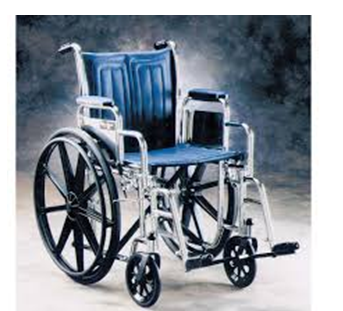
Physically challenged persons may not be able to steer their wheelchair conveniently with the available assistive technologies. Though there are many methods available in recent times to enable their motility, they require efficient and precise control which is most of the times not possible. In recent times there are various control systems that are developed and under developing stage especially for people with various disorders and disabilities. In this project each eye will be having IR transmitter and receiver. Transmitter IR will transmit the light over iris and reflected light will received by IR receiver. Depending upon the intensity of reflected light falling on the receiver, the controller will be understand the user intention of wheelchair movement. Now controller will take the decision of moving forward, left or right as long as IR receiver receives the directions information from the user. DC motors are used to apply torque to the individual wheels so that direction control can be ensured. This system enables the patient to have command over the chair, its direction of movement and the system will also will also sense and alarm the user about the obstacles in the path to avoid any severe consequences the accelerometer monitors the inclination of the wheelchair. This wheelchair helps the patient to move in environments with ramps and doorways of little space by establishing communication between human eye iris and IR sensor. self-propelled manual wheelchair incorporates a frame, seat, one or two footplates (footrests) and four wheels: usually two caster wheels at the front and two large wheels at the back. There will generally also be a separate seat cushion. The larger rear wheels usually have push-rims of slightly smaller diameter projecting just beyond the tyres; these allow the user to the chair by pushing on them without requiring them to grasp the tyres. Manual wheelchairs generally have brakes that bear on the tyres of the rear wheels, however these are solely a parking brake and in-motion braking is provided by the user's palms bearing directly on the push-rims. As this causes friction and heat build-up, particularly on long downslopes, many wheelchair users will choose to wear padded wheelchair gloves. Manual wheelchairs often have two push handles at the upper rear of the frame to allow for manual propulsion by a second person, however many active wheelchair users will remove these to prevent unwanted pushing from people who believe they are being helpful.
3. Hearing Aid
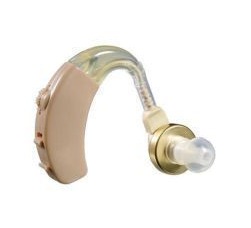
A hearing aid is a device designed to improve hearing by making sound audible to a person with hearing loss. Hearing aids are classified as medical devices in most countries, and regulated by the respective regulations. Small audio amplifiers such as PSAS or other plain sound reinforcing systems cannot be sold as "hearing aids".A hearing aid and a telephone are "compatible" when they can connect to each other in a way that produces clear, easily understood sound. The term "compatibility" is applied to all three types of telephones (wired, cordless, and mobile). There are two ways telephones and hearing aids can connect with each other: • Acoustically: the sound from the phone's speaker is picked up by the hearing aid's microphone.
• Electromagnetically: the signal inside the phone's speaker is picked up by the hearing aid's "telecoil" or "T-coil", a special loop of wire inside the hearing aid.
Note that telecoil coupling has nothing to do with the radio signal in a cellular or cordless phone: the audio signal picked up by the telecoil is the weak electromagnetic field that is generated by the voice coil in the phone's speaker as it pushes the speaker cone back and forth. The electromagnetic (telecoil) mode is usually more effective than the acoustic method. This is mainly because the microphone is often automatically switched off when the hearing aid is operating in telecoil mode, so background noise is not amplified. Since there is an electronic connection to the phone, the sound is clearer and distortion is less likely. But in order for this to work, the phone has to be hearing-aid compatible. More technically, the phone's speaker has to have a voice coil that generates a relatively strong electromagnetic field. Speakers with strong voice coils are more expensive and require more energy than the tiny ones used in many modern telephones; phones with the small low-power speakers cannot couple electromagnetically with the telecoil in the hearing aid, so the hearing aid must then switch to acoustic mode. Also, many mobile phones emit high levels of electromagnetic noise that creates audible static in the hearing aid when the telecoil is used. A workaround that resolves this issue on many mobile phones is to plug a wired (not Bluetooth) headset into the mobile phone; with the headset placed near the hearing aid the phone can be held far enough away to attenuate the static. Another method is to use a "neckloop" (which is like a portable, around-the-neck induction loop), and plug the neckloop directly into the standard audio jack (headphones jack) of a smart phone (or laptop, or stereo, etc.). Then, with the hearing aids' telecoil turned on (usually a button to press), the sound will travel directly from the phone, through the neckloop and into the hearing aids' telecoils
4.Voice Controlled Wheel Chair For Physically Disabled People
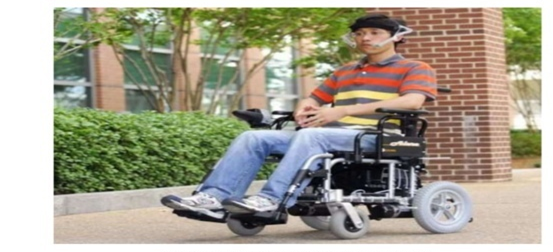
According to ijret In the paper on “Voice Operated Intelligent Wheelchair” ,Matlab software is used for input signal processing and that signal is given to the ARM Processor LPC2138 which is used to control the movement of wheel chair by controlling the DC motors. Input to Matlab is provided with the help of headphone according to input signal, controller will decide the operations of two DC motors. In the paper on “Voice operated Speed Control of Wheel Chair for Physically Challenged Using Arduino” input is provided to the Arduino which is used to control the motion of wheel chair with the help of voice command . A switch is used to switch between the input methods. The Arduino controls the movement of wheel chair based on the input signal received from any one of input methods. For movement of wheel chair two DC motors are used.
5.Deka Bionic Arm.
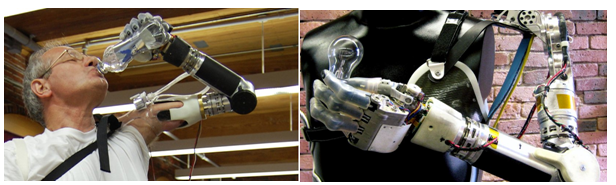
The prosthetic arm, which was created by Segway inventor Dean Kamen, could be controlled through its user's thoughts and is capable of performing complex functions. The mind-controlled prosthetic, called the DEKA Arm, can detect up to 10 movements and is the same size and weight as a natural human arm, according to a statement from the FDA first spotted by Bloomberg. The DEKA Arm detects electrical activity caused by the contraction of muscles close to where the prosthesis is attached. Those electrical signals are then sent to a computer processor in the DEKA Arm, which triggers a specific movement.
6.Button hook and zip pull.
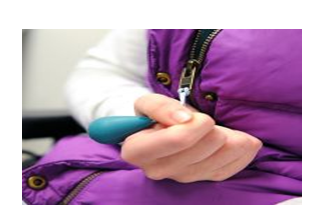
A button hook usually consists of a thick handle and a wire loop. The wire loop is pushed through the button hole and looped over the button, then pulled back through the button hole to fasten. Button hooks can be difficult to use at first and need practice to use effectively, especially with one hand. It may help if the edges of the garment can be held steady, and if the buttonhole is on your relatively more able side. As an alternative, you may wish to consider adapting some of your clothing with different fastenings to make it quicker and easier to fasten. A zip pull is a clip-on ring or piece of cord with a hook at one end and a tab at the other to assist with fastening zips. These can be useful if you have difficulty gripping a standard zip tag, or difficulty reaching a zip.
7.OBI Robot.

Obi is a robot designed to help disabled people feed themselves with less assistance. Created by the robotics firm Design, Obi features four separate bowls for food and a robotic arm with a spoon that can learn the delivery location after being shown once by a caregiver. Obi has portion control settings, interchangeable spoons (both the spoons and the bowls are dishwasher- and microwave-safe), and a spill-proof surface for easy clean up. The robotic arm is highly agile; it can scrape the sides of bowls and adjust itself depending on the type and amount of food it picks up, as well as detect collisions.
The direct solution for the divyangs which are available in market are like :-
1.Wheel chair:- which can be manually used by the person who is supposed to ride it . And the person can automate the wheel chair by installing motor into it .
2.Prosthetic Leg :- A instrument which can be used by the persons which are unable to walk in their day to day life . The prosthetic leg is a very good source for the locomotion .
3.Prosthetic Hand:- A instrument which is used by the persons who lost their hand during physical injury . The use of the prosthetic hand made the life of the handicapped person easier to do their work like eating , drinking the liquids and grabbing the any substance .
4.Hearing Aid :- A instrument which is used by the deaf persons to hear the voice clearly . Many instrument came into existence in the market but this instrument made a drastic change in usage by deaf persons . This instrument is less cost compared to another handicapped helping devices.
INFORMATION RELATED TO THE PROBLRMS OF PHYSICALLY DISABLED PEOPLES :-
ARTICLE ABOUT THE HANDICAPED PEOPLES .
-An article in sanjevaani newspaper 3,Dec 2017.
Physically handicapped people assuming little or no use of legs or feet, particularly, since paraplegia springs to mind very often have difficulties rising from bed, getting into their chair, dressing below the waist, moving from chair to toilet and back (and wiping themselves before returning), reaching for any items on or above standard-height vanities and kitchen cabinets and above centerline in refrigerators, finding and using common furniture such as couches and recliners, getting through house doors (especially closing doors behind them), getting from door to parking lot over curbs, getting from chair to vehicle (sometimes riding in their own chair in a specially-equipped van), driving, exiting their vehicle (usually but not always made easier by a rear-exit ramp), getting from parking lot into many institutions or places of business over curbs and up steps and over thresholds, reaching over standard-height counters, reaching higher grocery-store shelves and cooler cases, fueling their vehicles at self-serve stations, getting around in narrow business aisles (especially when "normally-abled" people have parked their shopping carts in the middle of the aisle and are jabbering to someone on a cellphone), traveling by any form of mass transit (bus, train, airplane), passing through metal detectors, and traversing any sort of staircases or (even short) vertical blockades (curbs, steps, et al) in general, using public restrooms, eating in bench-only or counter-only diners, using any sort of conventional weighing scales, traveling on any unpaved surface (sand, gravel, grass, dirt, mud, etc).
They may have difficulties with keeping their lower extremities warm enough in very cold weather. They may experience bedsores and DVT from so much time spent in their chairs. Most will never be able to ride horseback or on a motorcycle or ATV or snowmobile or bicycle. A great many will never be able to swim any significant distance. Cattle guards and barred road or sidewalk grates may be impassible to a person in a chair.
Some may unknowingly experience additional injury in their lower extremities, and - if allergic - could die from a bee sting or insect bite without ever even knowing that it had happened. A paraplegic person with complete below-the-waist neuropathy and also with clotting issues (not uncommon) may bleed to death in their chair without ever knowing that their skin has been broken. Their blood volume and pressure may be more sensitive to slight changes, and they may be more difficult to dose accurately with pharmaceuticals.
COMMON PROBLEM WHICH FACED BY THE DIVYANGS .
Specific to nature of disability. Following are few may applicable generally to all;
-
indifference shown by others
-
Takes more time in performing tasks than normal people
-
Absence of adequate infrastructure
-
Dependency for movements. In India getting a driving license is not that easy
-
Additional costs
-
Emotional disturbances. Most occasions it get hidden and not expressed.
CASE STUDY OF HANDICAPPED REPORTS.
- a case study published on 3rd Dec in on Quora by a handicapped person .
-
Physical barriers – When a building has steps, my wheelchair cannot access it and I am therefore disabled. However, when there is a ramp or lift I am enabled and not disabled.
-
Attitudinal barriers – When I roll up to a London bus, sometimes the driver seems overwhelmed at the need to press a button to activate the ramp. When their attitude is around my needs being an additional difficulty, I am disabled. However, when they are trained that the ramp is simple, it only takes 2 additional minutes and that I have an equal right to enter that bus, I am enabled and not disabled.
-
Organisational barriers – If I apply for a job, a test is part of the recruitment process and I require additional time to write; I would ask if this is ok. If an employer refused to make these ‘reasonable adjustments’ (as part of the Disability Discrimination Act) I would be disabled. If they would allow for my needs, enable me to illustrate my ability to do the job well and choose me as the best candidate; I am enabled and not disabled. Unfortunately, many of these barriers still exist and ‘disable’ people everyday: • In 2009 47% of disabled people who privately rent their homes are obliged to live in accommodation that is not adapted for their needs
• 23 per cent of disabled people have no qualifications, compared with 9 per cent of non-disabled people
• 40% believe that their choice of subjects or courses was restricted because of the attitude of teaching staff or because of inaccessible premises
• Employment rate for INDIA disabled adults of working age is around 50%, 25% less than the overall working age population
• Disabled people are twice as likely to live in relative poverty as non-disabled people
• There are 277,000 adults supported by Local Authorities in institutional care (24 hour monitoring, nursing support and sharing the service with other disabled people) in England
• 44% of disabled people have missed social events or family gatherings because of barriers related to their impairment
• 55% of disabled people felt they are unable to engage in hobbies or pastimes as often as they would like because of barriers linked to their impairment
• 42% of disabled people said that they have been unable to go on holiday as often as they would like because of barriers linked to their impairment .Even if public transport is accessible (most still isn’t), disabled people are almost twice as likely as non-disabled people to say that they are fearful of travelling on it.